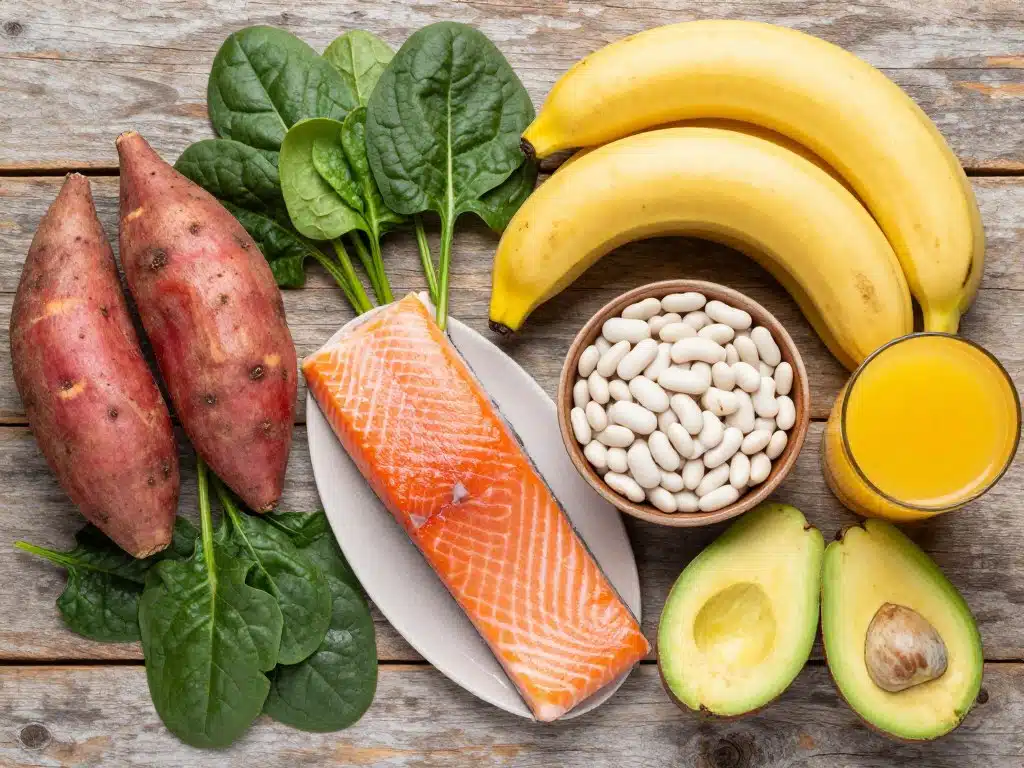
- A cup of white beans carries more than twice the potassium of a banana, and beet greens carry three times as much.
- A 20,995-person trial found a potassium-enriched salt substitute cut stroke by 14%, major cardiovascular events by 13%, and death from any cause by 12% over five years.
- That trial excluded anyone with kidney disease or on potassium-raising medication, exactly the group where this advice reverses.
- Most people fall short of the 2,600-3,400 mg daily target, and food closes that gap safely; supplements should only be taken under medical supervision.
Top 18 Foods Rich in Potassium: The Best Sources by Amount
Bananas get the reputation, but they aren’t close to the top. These figures come from USDA food composition data, ordered by potassium per serving.[4]
| Food | Serving | Potassium (mg) |
| Beet greens, cooked | 1 cup | 1,309 |
| Dried apricots | 1/2 cup | 1,101 |
| White beans, cooked | 1 cup | 1,004 |
| Lima beans, cooked | 1 cup | 955 |
| Sweet potato, baked | 1 medium | 952 |
| Potato, baked with skin | 1 medium | 925 |
| Acorn squash, cooked | 1 cup | 896 |
| Spinach, cooked | 1 cup | 839 |
| Tomato sauce | 1 cup | 811 |
| Lentils, cooked | 1 cup | 731 |
| Kidney beans, cooked | 1 cup | 717 |
| Avocado | 1 medium | 708 |
| Prune juice | 1 cup | 707 |
| Yogurt, plain low-fat | 1 cup | 573 |
| Salmon, cooked | 3 oz | 534 |
| Orange juice | 1 cup | 496 |
| Cantaloupe, cubed | 1 cup | 473 |
| Banana | 1 medium | 422 |
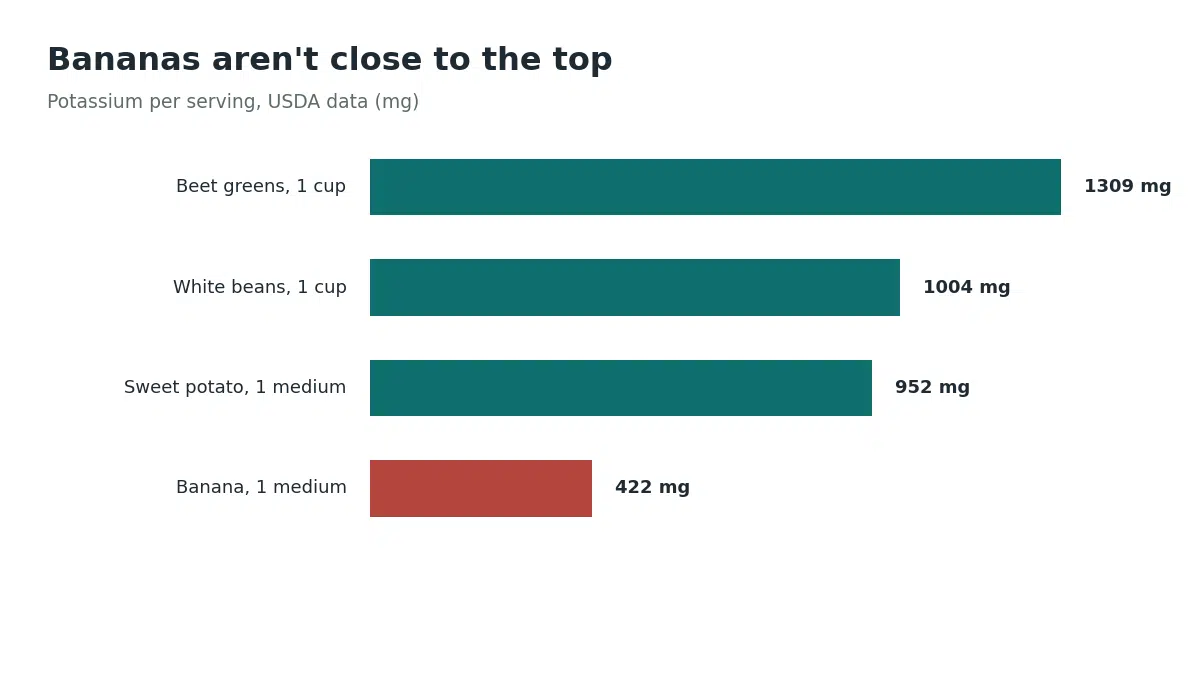
A cup of white beans carries more than twice the potassium of a banana. Beet greens carry three times as much.
A closer look at each one
1. Beet greens. The leafy tops that come attached to fresh beets, and the part most people throw away. They cook down like chard or spinach in a few minutes with garlic and oil, and a single cup delivers more potassium than any other common food.
2. Dried apricots. Drying removes the water and leaves the minerals behind, which is why half a cup outranks almost everything on this list. That same concentration is why anyone told to limit potassium is usually told to limit dried fruit first. Unsulfured apricots look brown rather than orange and taste no different.
3. White beans. Cannellini, navy and great northern beans all land in this range. Canned works as well as dried for potassium purposes, and rinsing them cuts the added sodium without washing out much of the mineral.
4. Lima beans. Sold as butter beans in some stores, and the frozen ones are as good as any. They have a starchier texture than other beans, which makes them better in soups and stews than in salads.
5. Sweet potato. One medium baked sweet potato covers close to a third of a day’s target, and it brings a large amount of vitamin A alongside. Bake or roast rather than boil, and leave the skin on.
6. Potato with skin. An ordinary baked potato sits within a whisker of the sweet potato, which surprises people who have filed potatoes under empty calories. Much of the potassium sits directly under the skin, so peeling costs you a meaningful share of it.
7. Acorn squash. Winter squashes generally do well here, and acorn is among the best. Halve it, roast it cut side down, and scoop it out; butternut is a reasonable substitute if that is what you have.
8. Spinach. Cooking collapses the volume dramatically, so a cup of cooked spinach represents a large bag of raw leaves and a correspondingly large amount of potassium. Anyone prone to calcium oxalate kidney stones should raise spinach with their doctor, since it is also high in oxalate.
9. Tomato sauce. Cooking tomatoes down concentrates them, which is why sauce beats fresh tomatoes by a wide margin. The catch is sodium, since most jarred sauces carry a lot of it, and sodium is the thing you are trying to offset.
10. Lentils. The most convenient legume on the list, because they need no soaking and cook in about twenty minutes. They also bring a substantial amount of fiber, which is useful if you are working on more than one thing at once.
11. Kidney beans. Comparable to lentils for potassium and a staple of chili and stews. One genuine safety note: raw and undercooked red kidney beans contain a compound that causes severe stomach upset, so dried beans must be boiled hard before simmering. Canned beans are already cooked and carry no such risk.
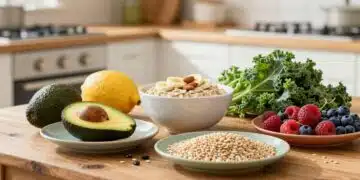
12. Avocado. A whole medium avocado outranks a banana by a wide margin, and it brings fiber and monounsaturated fat with it. It is also calorie-dense, so it works better as a component of a meal than as an unlimited addition.
13. Prune juice. Among the highest-potassium drinks available, and it carries sorbitol, which has a mild laxative effect. That makes it useful if constipation is also in the picture and worth pacing yourself on if it is not.
14. Plain yogurt. The only dairy entry, and the word plain is doing the work. Flavored and fruit-on-the-bottom versions carry substantial added sugar, and our look at how yogurt labels vary within one brand covers how wide that gap gets.
15. Salmon. The only fish or meat to make the list at this level, and it delivers omega-3 fats and vitamin D alongside the potassium. Canned salmon counts and costs considerably less than fresh.
16. Orange juice. A genuinely good source, though a whole orange gives you fiber that the juice does not, at roughly half the potassium. If you drink it, treat it as a serving rather than something to sip through the day.
17. Cantaloupe. Mostly water, which makes it a light way to add several hundred milligrams without much else. It works well in hot weather when appetite is low.
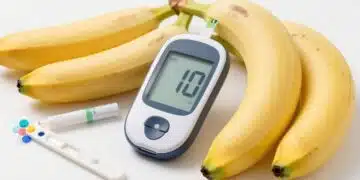
18. Banana. Last on the list, and still a perfectly reasonable food. Its real advantage is that it needs no preparation, no refrigeration and no cooking, which is why it became the potassium food everyone can name.
How Much You Actually Need
The adequate intake is 2,600 mg a day for women and 3,400 mg for men, and most people don’t reach it. Average intake sits around 2,320 mg for women and 3,016 mg for men.[2]
That shortfall is the reason this topic matters. It isn’t that potassium is exotic; it’s that the foods rich in potassium are the ones people eat least, namely vegetables, beans and fruit, while sodium arrives in abundance through processed food.
The ratio is what does the work. Sodium makes your body hold water, raising blood volume and pressure. Potassium helps your kidneys let sodium go. Most Western diets have those two exactly the wrong way round.[3]
The Strongest Evidence: Salt Substitutes and Stroke
Most nutrition advice rests on observational data. This one has a large randomized trial behind it.
The Salt Substitute and Stroke Study, published in the New England Journal of Medicine in 2021, enrolled 20,995 people across 600 villages in rural China, all of them either stroke survivors or over 60 with high blood pressure. Half the villages switched to a salt substitute made of 75% ordinary salt and 25% potassium chloride. The rest carried on as usual.[1]
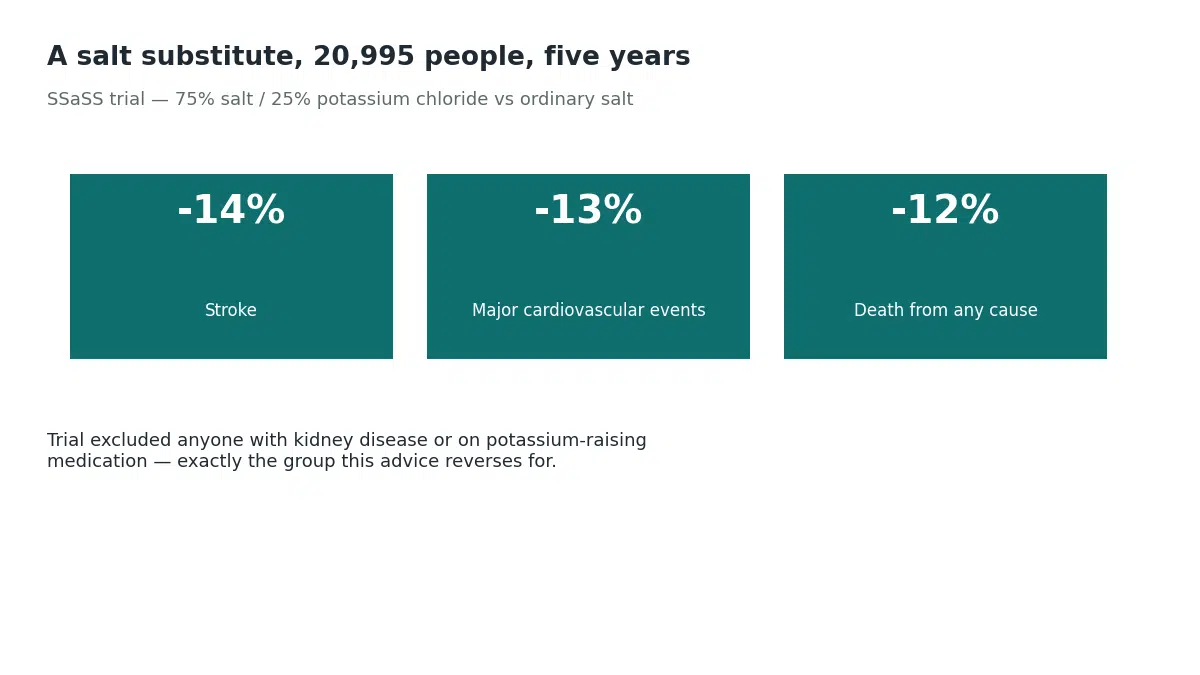
After five years: stroke down 14%, major cardiovascular events down 13%, death from any cause down 12%. From changing what was in the salt cellar.
Two caveats matter as much as the result. The trial excluded anyone with chronic kidney disease, anyone on potassium-sparing diuretics, and anyone taking potassium supplements, precisely the people at risk of potassium building up. And blood potassium wasn’t routinely measured, so milder episodes could have gone unnoticed.
Read properly, SSaSS says two things at once: potassium is genuinely protective for most people, and the researchers were careful to keep the vulnerable out of it.
Who Should Be Careful?
Talk to your doctor before increasing potassium if you:
- Have chronic kidney disease or reduced kidney function. Healthy kidneys excrete what you don’t need. Damaged ones can’t, and potassium accumulates
- Take an ACE inhibitor (ramipril, lisinopril) or an ARB (losartan, candesartan). Both raise blood potassium, and both are extremely common blood-pressure drugs
- Take a potassium-sparing diuretic such as spironolactone or amiloride, where the name says what it does
- Have type 2 diabetes, which damages kidney function over years, often silently
- Have heart failure, where several standard medications push potassium up
Salt substitutes are the specific trap. Products sold as “low sodium” or “lite salt” often replace much of the sodium with potassium chloride, and a person told to cut salt for their blood pressure may be on exactly the medication that makes that swap risky. Check the ingredients, and ask before switching.
High blood potassium can cause muscle weakness, nausea and a slow or irregular heartbeat. Severe cases cause dangerous rhythm disturbances, and it can develop with very few warning signs.[2]
Never take potassium supplements without medical supervision. Food releases potassium gradually; a supplement can raise blood levels fast. Supplements are a prescribing decision, not a shopping one.
Getting More Into Your Day
For everyone in the clear, this is straightforward and doesn’t need a plan.
Add a can of beans to whatever you’re already cooking: soup, salad, pasta sauce, chili. That single move is worth more potassium than three bananas.
Bake potatoes and sweet potatoes with the skin on, since much of the potassium sits just beneath it. Use tomato-based sauces. Put yogurt and dried apricots in reach for snacking.
On cooking method: potassium is a mineral, so heat doesn’t destroy it, but boiling leaches it into the water. Roast, bake or steam, or use the cooking liquid in the dish. That same fact runs in reverse for anyone restricting potassium, which is why kidney diets often recommend boiling and draining vegetables.
Four Myths Worth Correcting
“Bananas are the best source.” They’re mid-table. Beans, beet greens, sweet potatoes, spinach and dried apricots all beat them comfortably. Our guide to bananas and blood sugar covers where they do and don’t fit.
“You need a supplement.” Almost nobody does. Food is both sufficient and safer, because absorption is gradual.
“Cramp means you’re low on potassium.” Night cramps are common and usually have nothing to do with it. Dehydration, medication and simple aging are more likely explanations, and a blood test settles it.
“Salt substitutes are a safe swap for anyone.” They’re an excellent swap for many people and a genuine hazard for others. See the section above.
When Symptoms Need a Doctor, Not a Diet Change
An irregular heartbeat can mean potassium is too low or too high, and you cannot tell which from how you feel. Guessing and eating more is the wrong move.
See a doctor rather than adjusting your diet if you have:
- An irregular, racing or unusually slow heartbeat
- Muscle weakness severe enough to affect climbing stairs or lifting
- Fatigue lasting weeks that rest doesn’t touch
- Ongoing vomiting or diarrhea, which strips potassium quickly
- Known kidney disease and any new symptoms at all
A basic blood test measures potassium directly and costs very little. It is the only way to know which direction you’re off in, and our guide to reading electrolyte results explains what else appears on the same panel.
Common Questions About Foods Rich in Potassium
Which foods rich in potassium beat bananas?
Beans, leafy greens and starchy vegetables are the reliable sources; fruit is convenient rather than concentrated.
Can eating too much potassium be dangerous?
Supplements and potassium-based salt substitutes are the usual culprits, not vegetables.
Are salt substitutes worth using?
That trial deliberately excluded people with kidney disease or on potassium-raising medication. If either applies to you, ask your doctor first.
Does cooking destroy potassium?
Roast, bake or steam to keep it. If you’ve been told to restrict potassium, boiling and draining is used deliberately for the opposite reason.
Do night cramps mean I’m low on potassium?
If cramps come with weakness or an irregular heartbeat, that’s worth a blood test rather than a dietary guess.
The Bottom Line
Most people are short of potassium, and the fix is beans, vegetables and fruit rather than anything from a bottle. The evidence that it lowers blood pressure and stroke risk is about as good as nutrition evidence gets.
But this is one of the few nutrients where the standard advice reverses completely for a large group of people: anyone with kidney disease, or on the blood-pressure medications that raise potassium. If that’s you, the right move is a conversation with your doctor, not a longer shopping list.
SOURCESOur Editorial Standards
HealthMagHub is built on primary sources: peer-reviewed research, clinical practice guidelines, and health agencies such as the NIH, CDC, and FDA. Read our editorial standards to see how we research, cite, and update our articles.
- Neal B, Wu Y, Feng X, et al. Effect of Salt Substitution on Cardiovascular Events and Death. N Engl J Med. 2021;385:1067-1077 (SSaSS, NCT02092090). nejm.org
- National Institutes of Health, Office of Dietary Supplements. Potassium: Fact Sheet for Health Professionals. ods.od.nih.gov
- Harvard T.H. Chan School of Public Health, The Nutrition Source. Potassium. nutritionsource.hsph.harvard.edu
- U.S. Department of Agriculture. FoodData Central. fdc.nal.usda.gov
Disclaimer: This article is general information, not medical advice. Potassium is one of the nutrients where individual circumstances change the advice completely. If you have kidney disease, diabetes, heart failure, or take an ACE inhibitor, ARB or potassium-sparing diuretic, speak to your doctor before increasing potassium intake or using a salt substitute. Never take potassium supplements without medical supervision.