Should diabetics eat banana? For most people with diabetes, yes. Bananas aren’t off-limits, and the American Diabetes Association doesn’t ban any fruit.
What changes the answer isn’t the banana. It’s the size, the ripeness, what you eat it with, and how your own body handles it. Those four things matter far more than any number printed on a chart.
There are also two situations where the usual advice doesn’t apply, and both are covered below.
- Most people with diabetes can eat bananas. The ADA doesn’t ban any fruit, and size, ripeness and pairing matter more than the fruit itself.
- Green-tipped bananas have more resistant starch and a gentler effect on glucose than heavily spotted, fully ripe ones.
- A banana is a poor choice for treating low blood sugar, because its fiber slows absorption when speed matters. Use glucose tablets instead.
- The main exception is diabetic kidney disease, where bananas’ high potassium content may need to be limited.
Should Diabetics Eat Banana? What’s Actually Inside One
A medium banana holds roughly 27 grams of carbohydrate, of which about 3 grams is fiber and about 14 grams is sugar. Around 105 calories, very little protein, essentially no fat.
It’s also a genuinely useful source of potassium and vitamin B6, with some vitamin C.
Size varies more than people expect. A small banana is nearer 23 grams of carbohydrate, and a large one can reach 35. That’s a meaningful difference if you’re counting, and “one banana” isn’t a fixed quantity.
Ripeness Changes More Than You’d Think
A firm, green-tipped banana contains a good deal of resistant starch, the kind that behaves more like fiber and passes through the small intestine largely undigested.
As the fruit ripens, that resistant starch converts to simple sugars. Same banana, same weight, faster absorption. A heavily spotted banana behaves noticeably differently from a firm one.
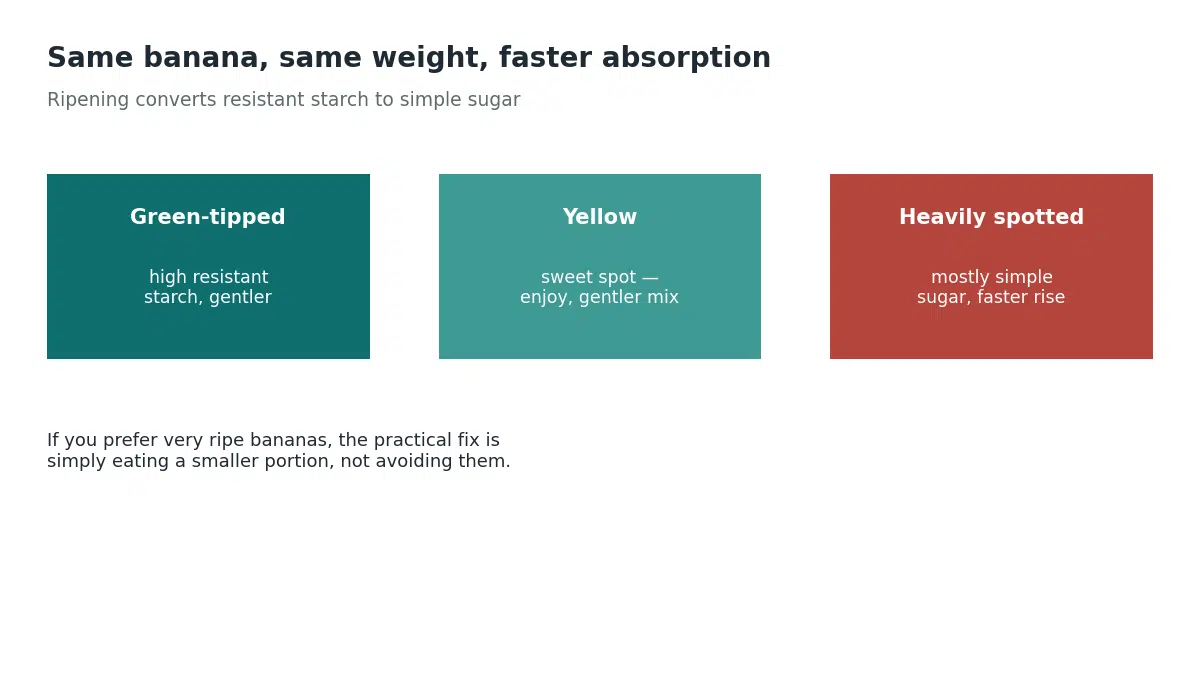
The practical version: yellow with green tips is the sweet spot. Sweet enough to enjoy, gentler on glucose than a fully ripe one. If you prefer them very ripe, eat less.
Why the Glycemic Index Is a Weak Guide Here
You’ll find tables assigning bananas a precise glycemic index number, usually somewhere around 51. Treat those figures with caution.
Published GI values come from small groups of test subjects eating a food in isolation, and they vary substantially between studies and between individual bananas. More importantly, the same food produces markedly different glucose responses in different people. Two people with diabetes can eat the identical banana and see quite different results.[3]
That’s why the ADA’s 2026 standards lean toward individualized nutrition rather than fixed rules, and why continuous glucose monitoring is now recommended much more widely, including for many people with type 2 diabetes who wouldn’t previously have been offered it.[1]
Your own numbers beat any published table. Which brings us to the one piece of homework worth doing.
Test Your Own Response
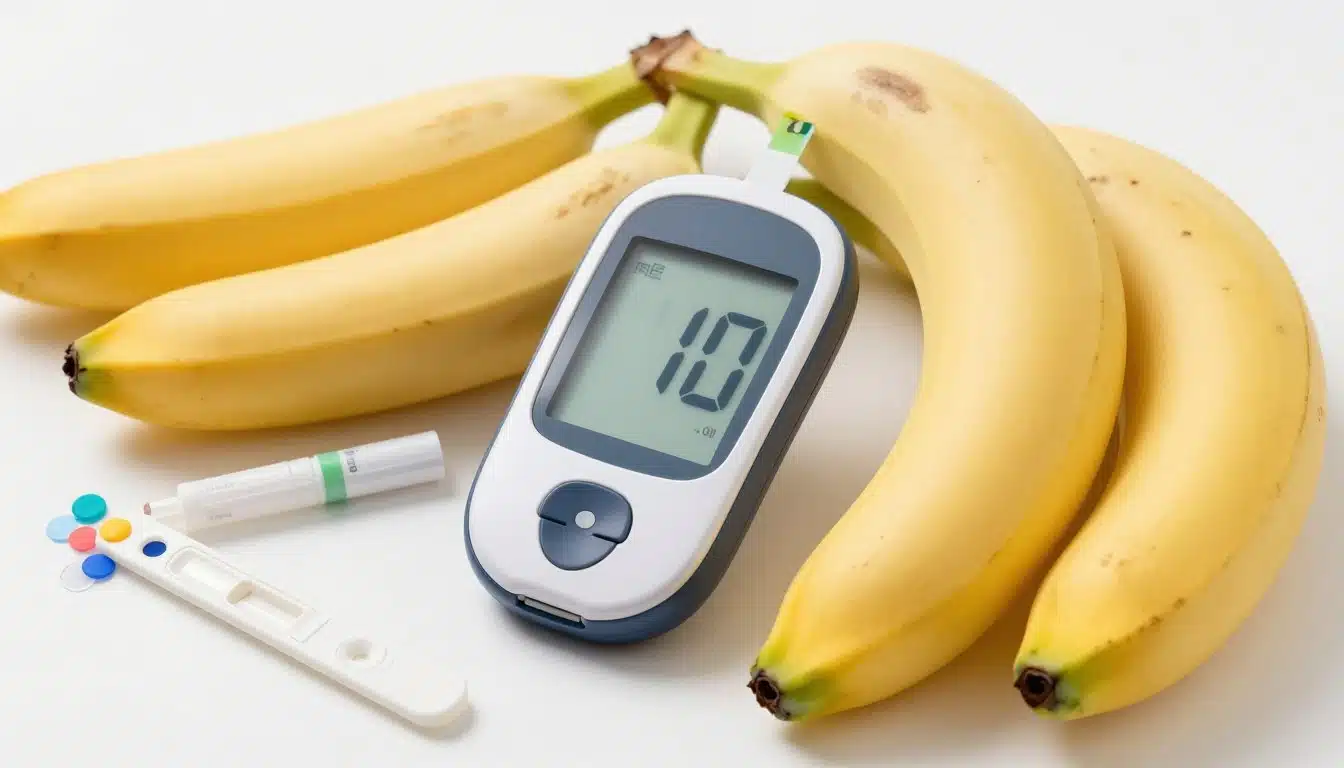
Check your glucose just before eating, then again about two hours after you start. Note the banana’s size, its ripeness, and what you ate alongside it.
Repeat it a couple of times. What you’re looking for is your own pattern: whether a half banana with yogurt behaves differently from a whole one on its own, and whether mornings are worse than afternoons.
Deliberately not offered here: a target number for how much your glucose “should” rise. Post-meal targets are set by your clinician for your situation, and a figure pulled from an article isn’t yours. Take your readings to your diabetes team and let them interpret them.
Pairing Does the Heavy Lifting
A banana eaten alone empties from the stomach quickly. Add protein or fat and the whole thing slows down.[2]
Combinations that work well: half a banana with Greek yogurt, cottage cheese, a spoon of nut butter, or a handful of nuts. Sliced into oatmeal alongside something protein-containing. With eggs at breakfast rather than instead of them. If you’re building breakfasts around this, our guide to breakfast cereals for diabetics covers the base, and our look at whether Yoplait yogurt is healthy is worth reading before you pick a pot, since many are heavily sweetened.
The other lever is timing around movement. Muscles take up glucose more readily after activity, so a banana after a walk or a workout often behaves better than the same banana at rest.
Processed forms are a different matter. Dried banana chips concentrate the sugar and are usually fried and sweetened. Banana bread is mostly flour and added sugar. Smoothies break up the fiber structure and make it very easy to drink two bananas’ worth without noticing.
Two Situations Where This Advice Changes
If You Have Diabetic Kidney Disease
Bananas are one of the highest-potassium common foods. When kidney function is reduced, the kidneys clear potassium less well, and high blood potassium can cause dangerous heart rhythm problems. People with chronic kidney disease are often asked to limit high-potassium foods, with bananas among the first named. Certain blood pressure medicines used in diabetes, including ACE inhibitors and ARBs, raise potassium further. If you have any degree of kidney involvement, ask your team about potassium before making bananas a daily habit. This is the single most important exception on this page.
If You Take Insulin or a Sulfonylurea
Carbohydrate needs matching to medication, and the ratios involved are set individually. This article deliberately gives no insulin-to-carbohydrate ratios and no dosing timings. Yours come from your diabetes team and don’t transfer between people.
What’s worth saying is that a banana is a poor choice for treating low blood sugar, which surprises people.
The Low Blood Sugar Rule Worth Knowing
For glucose below 70 mg/dL (3.9 mmol/L), ADA guidance is 15 grams of fast-acting carbohydrate, then recheck after 15 minutes and repeat if still low.[1]
Pure glucose is preferred, meaning glucose tablets or gel. Foods high in fat or protein should be avoided for initial treatment, because they slow absorption exactly when you need speed.
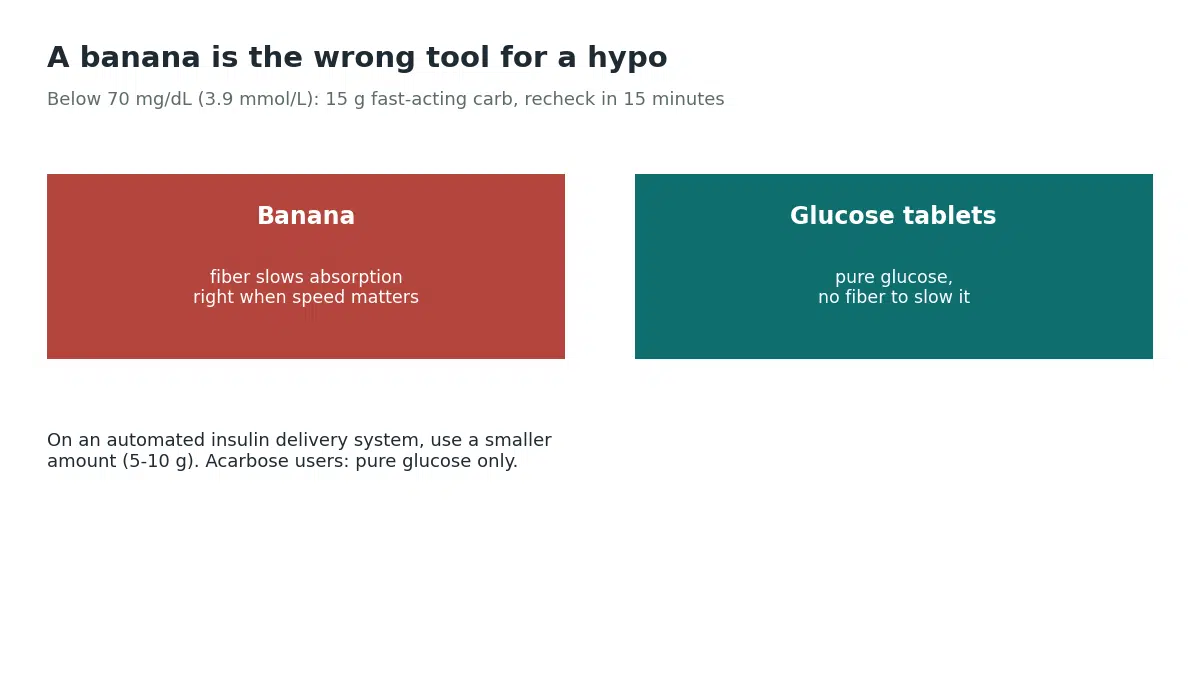
A banana contains fiber and takes longer to act than glucose tablets. It isn’t the right tool for a low. Keep glucose tablets rather than relying on fruit.
If you use an automated insulin delivery system, the recommended amount is smaller, typically 5–10 grams. If you take acarbose, use pure glucose only, because acarbose blocks the breakdown of other sugars.
Seek urgent medical help for a low that doesn’t respond to two rounds of treatment, or for confusion, seizures or loss of consciousness. And seek same-day care for signs of very high glucose, which can indicate diabetic ketoacidosis: excessive thirst, passing large amounts of urine, deep rapid breathing, nausea and vomiting, or a fruity smell on the breath.
How Bananas Compare to Other Fruit
Berries carry noticeably less carbohydrate per serving than bananas and are an easy swap when you want volume for fewer carbs. Apples and pears eaten with the skin bring more fiber. Citrus sits somewhere in between.
Bananas beat all of them on potassium, which is a genuine advantage for blood pressure, unless kidney disease makes it a drawback, as above.
Whole fruit consistently outperforms fruit juice. Juice removes the fiber and concentrates the sugar, and regular juice drinking tracks with worse outcomes in long-term studies while whole fruit does not. Dried fruit concentrates sugar the same way.
Rotating fruits is more useful than fixating on which single one is “allowed.”
The Bigger Picture
The ADA is explicit that there’s no single ideal carbohydrate amount for people with diabetes. It’s individualized.[1] Any article quoting you a fixed grams-per-meal figure is describing someone else’s plan.
What the evidence supports more consistently is the overall pattern: plenty of vegetables, whole rather than processed carbohydrate sources, adequate protein, and eating in a way you can actually sustain.[2] Mediterranean-style and lower-carbohydrate patterns both have good evidence behind them, which is itself a hint that the exact configuration matters less than the quality.
Cutting out a banana while everything else stays the same is unlikely to be the thing that moves your A1C. Overly restrictive eating is also hard to maintain, and plans people abandon don’t help anyone. If gut health is part of what you’re working on, fermented foods are a reasonable addition alongside.
A registered dietitian or diabetes educator will get you further than any general article, and many insurance plans cover it with a referral.
Frequently Asked Questions
Should diabetics eat banana, or avoid it entirely?
Most people with diabetes can eat bananas. The ADA doesn’t prohibit any fruit, and eliminating nutritious whole foods isn’t necessary for good control.
Size, ripeness and pairing matter more than whether you eat one at all. The main exception is diabetic kidney disease, where potassium may need limiting.
How much banana is a reasonable portion?
Half a medium banana, or a whole small one, is a sensible starting point, roughly 12 to 23 grams of carbohydrate. A large banana can reach 35 grams, which is a lot from one food.
There’s no universal figure, because carbohydrate targets are individualized. Test your own response and take it to your diabetes team.
Are green bananas better for blood sugar?
Generally yes. Firmer, green-tipped bananas contain more resistant starch, which behaves like fiber rather than sugar.
Ripening converts that starch to simple sugars, so a heavily spotted banana absorbs faster than a firm one of the same size. Yellow with green tips is a practical compromise.
Is a banana good for treating low blood sugar?
No. Use glucose tablets instead. ADA guidance is 15 grams of fast-acting carbohydrate for glucose below 70 mg/dL, rechecking after 15 minutes, with pure glucose preferred.
A banana’s fiber slows absorption at exactly the moment speed matters. Keep glucose tablets rather than relying on fruit.
Should I avoid bananas if I have kidney problems?
Ask your team. Bananas are among the highest-potassium common foods, and reduced kidney function means potassium clears less well, so high levels can cause dangerous heart rhythm problems.
ACE inhibitors and ARBs, both widely used in diabetes, push potassium up further. This is the exception that matters most.
What is the glycemic index of a banana?
Published values cluster around 51 for a ripe banana, lower for a firmer one, but treat those numbers loosely.
GI values come from small test groups eating foods in isolation, and the same food produces genuinely different responses in different people. Your own meter tells you more than any table.
What should I eat with a banana?
Protein or fat. Greek yogurt, cottage cheese, nut butter, nuts, or eggs alongside all slow gastric emptying and blunt the rise.
Timing helps too. After a walk or a workout, muscles take up glucose more readily than at rest.
Are banana chips or smoothies as good as fresh?
No. Dried banana chips concentrate the sugar and are typically fried and sweetened. Banana bread is mostly flour and added sugar.
Smoothies break up the fiber and make it easy to drink two bananas without noticing. Whole fruit is consistently the better option.
SOURCESOur Editorial Standards
HealthMagHub is built on primary sources: peer-reviewed research, clinical practice guidelines, and health agencies such as the NIH, CDC, and FDA. Read our editorial standards to see how we research, cite, and update our articles.
- American Diabetes Association. Glycemic Goals, Hypoglycemia, and Hyperglycemic Crises: Standards of Care in Diabetes, 2026. diabetesjournals.org
- Mayo Clinic. Diabetes diet: Create your healthy-eating plan. mayoclinic.org
- Harvard Health. The lowdown on glycemic index and glycemic load. health.harvard.edu
Disclaimer: This article is general information, not medical advice. Carbohydrate and insulin needs are individual, so speak to your diabetes team before changing your diet or medication, especially if you have kidney disease.