The amount of caffeine in green tea varies based on several factors. These include the tea variety, brewing method, water temperature, and steeping time. An 8-ounce cup of green tea generally contains between 20 to 50 milligrams of caffeine. This range makes green tea a moderate caffeine source compared to other popular beverages.
This comprehensive guide explores everything about green tea caffeine content. You’ll learn exactly how much caffeine different green tea varieties contain, how they compare to coffee and other drinks, and what health effects to expect. We’ll also cover ways to manage your caffeine intake while still enjoying the numerous benefits of green tea.
Does Green Tea Has Caffeine: The Scientific Answer
Yes, green tea contains caffeine naturally. The Camellia sinensis plant, which produces all true teas including green, black, white, and oolong varieties, creates caffeine as a natural defense mechanism. This compound protects the tea plant from insects and pests while it grows.
The caffeine content in green tea develops in the tea leaves themselves. Younger tea leaves and buds typically contain higher caffeine levels than mature leaves. Processing methods also influence final caffeine amounts in your cup.
Green tea undergoes minimal oxidation during processing, which helps preserve certain compounds. This light processing affects not just flavor and color, but also how much caffeine remains in the final product compared to more heavily processed teas.
How Caffeine Forms in Tea Plants
The tea plant naturally produces caffeine in its leaves as part of its growth cycle. Environmental factors like altitude, climate, and soil composition influence caffeine production. Plants growing at higher elevations often develop higher caffeine concentrations.
Growing conditions affect the final amount of caffeine in your tea. Shade-grown teas, for example, typically contain more caffeine than plants grown in full sunlight. The plant responds to reduced light by producing more caffeine and other compounds.
Factors Affecting Caffeine Levels
Tea Plant Factors
- Age of tea leaves (younger = more caffeine)
- Growing altitude and elevation
- Shade vs. sun exposure
- Specific tea cultivar variety
- Harvest season and timing
- Soil nutrients and composition
Brewing Factors
- Water temperature during steeping
- Steeping duration and time
- Amount of tea leaves used
- Loose leaf vs. tea bags
- Multiple infusions from same leaves
- Water quality and mineral content
How Much Caffeine in Green Tea: Specific Numbers
Understanding exactly how much caffeine green tea contains helps you make informed choices. An average 8-ounce cup green tea delivers approximately 25 to 50 milligrams of caffeine. This amount represents roughly one-third to one-half the caffeine found in a similar serving of coffee.
The wide range exists because multiple variables affect final caffeine levels. Premium whole-leaf teas often contain more caffeine than lower-quality tea bags. Brewing technique also plays a significant role in how much caffeine ends up in your cup.
Standard Caffeine Measurements
Most green teas fall within a predictable caffeine range. A typical serving contains enough caffeine to provide gentle energy without the intensity associated with coffee. These measurements assume standard brewing practices with water around 175°F and steeping for 2-3 minutes.
| Green Tea Type | Serving Size | Caffeine Content | Caffeine Range |
| Standard Green Tea | 8 oz (240 ml) | 35 mg average | 25-50 mg |
| Matcha Powder | 8 oz (240 ml) | 70 mg average | 60-80 mg |
| Sencha | 8 oz (240 ml) | 30 mg average | 20-40 mg |
| Gyokuro | 8 oz (240 ml) | 45 mg average | 35-55 mg |
| Bancha | 8 oz (240 ml) | 20 mg average | 15-25 mg |
| Decaf Green Tea | 8 oz (240 ml) | 5 mg average | 2-8 mg |
Brewing Time and Caffeine Extraction
The longer you steep your green tea, the more caffeine extracts into the water. Caffeine is water-soluble and begins releasing from tea leaves immediately upon contact with hot water. Most caffeine releases within the first 30 seconds to one minute of steeping.
If you want to reduce caffeine per serving, try shorter steeping times. A quick 1-2 minute steep extracts less caffeine while still delivering flavor. Conversely, steeping for 5 minutes or longer maximizes caffeine extraction along with stronger, potentially bitter flavors.
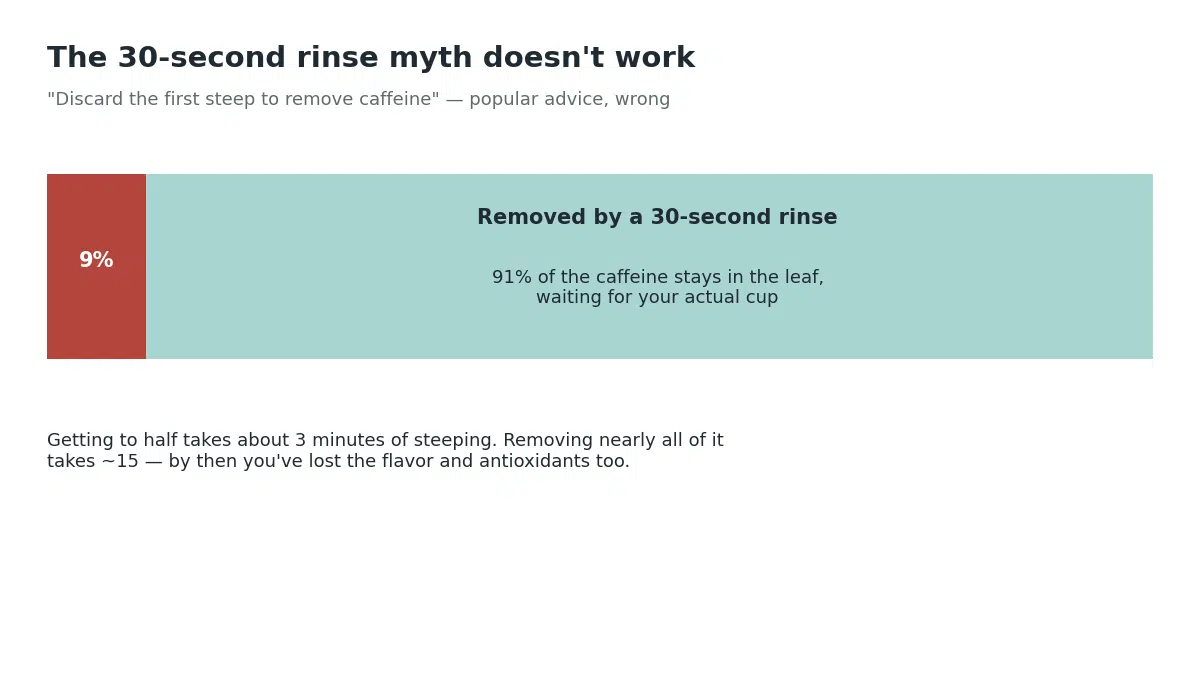
Brewing Tip: To reduce caffeine naturally, pour hot water over your tea leaves, steep for 30 seconds, then discard that first infusion. The second steeping will contain significantly less caffeine while maintaining most flavor compounds and antioxidants.
Green Tea vs Coffee Caffeine: Complete Comparison

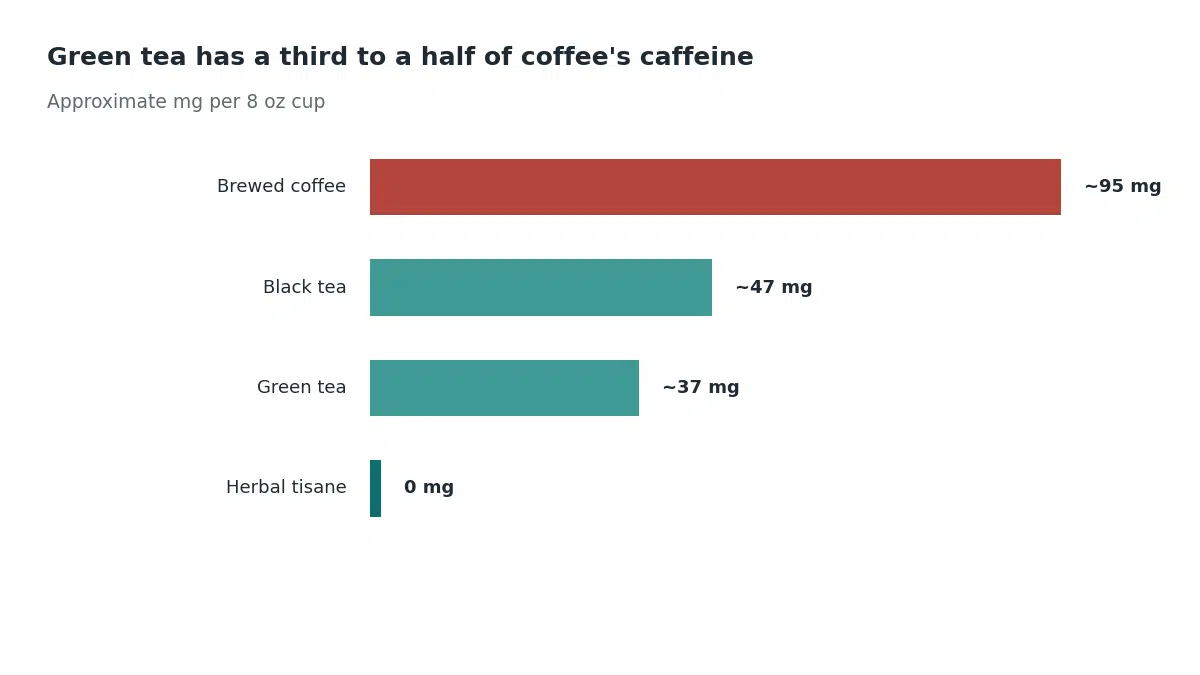
When comparing green tea vs coffee caffeine, significant differences emerge. A standard 8-ounce cup of brewed coffee typically contains 95 to 200 milligrams of caffeine. This means coffee delivers roughly three to four times more caffeine than an equivalent serving of green tea.
These differences affect how your body responds. The lower caffeine green tea contains often provides gentler, more sustained energy compared to coffee’s more intense but potentially shorter-lived effects. Many people find green tea offers alertness without the jitters or crash sometimes associated with higher caffeine drinks.
Comprehensive Caffeine Content Across Beverages
Understanding where green tea fits among other caffeinated beverages helps you manage total daily intake. The following comparison shows typical caffeine amounts in common drinks, all measured as 8-ounce servings unless otherwise noted.
| Beverage Type | Serving Size | Average Caffeine | Comparison to Green Tea |
| Green Tea | 8 oz | 35 mg | Baseline (1x) |
| Black Tea | 8 oz | 47 mg | 1.3x more |
| White Tea | 8 oz | 28 mg | 0.8x (less) |
| Oolong Tea | 8 oz | 38 mg | 1.1x more |
| Brewed Coffee | 8 oz | 95 mg | 2.7x more |
| Espresso | 1 oz (shot) | 64 mg | Per oz: 8x more |
| Energy Drink | 8 oz | 80 mg | 2.3x more |
| Cola Soda | 12 oz | 34 mg | Similar levels |
| Hot Chocolate | 8 oz | 5 mg | 0.14x (much less) |
Why Green Tea Feels Different
Beyond just caffeine content, green tea contains L-theanine, an amino acid that affects how caffeine works in your body. This compound promotes relaxation without drowsiness and may smooth out caffeine’s stimulating effects. The combination creates what many describe as “calm alertness.”
This synergistic effect explains why drinking green tea often feels distinctly different from consuming the same amount of caffeine through coffee or energy drinks. The presence of L-theanine alongside caffeine may help reduce common caffeine-related issues like anxiety or restlessness.
Different Types of Green Tea and Their Caffeine Levels
Not all green teas deliver the same caffeine experience. Various cultivation methods, processing techniques, and tea varieties produce different caffeine content levels. Understanding these differences helps you select teas matching your caffeine preferences.
Japanese Green Teas
Japanese tea culture produces several distinct green tea varieties. Each type offers unique flavor profiles and varying levels of caffeine based on growing and processing methods.
- Matcha: This powdered tea contains the highest caffeine among green teas because you consume the entire ground leaf. One serving delivers 60-80 mg of caffeine, nearly double regular brewed green tea.
- Gyokuro: Shade-grown for several weeks before harvest, this premium tea develops intense flavor and elevated caffeine content around 35-55 mg per cup.
- Sencha: The most popular Japanese green tea provides moderate caffeine at 20-40 mg per serving. Its balanced profile suits regular daily consumption.
- Bancha: Made from later-harvest leaves, this tea offers milder flavor and lower caffeine content at 15-25 mg per cup, ideal for evening drinking.
- Genmaicha: Blended with roasted rice, this tea provides reduced caffeine since each serving contains less actual tea leaf, typically 15-20 mg per cup.
- Hojicha: Roasting reduces caffeine content significantly, delivering only 10-15 mg per serving while creating a unique toasted flavor.
Chinese Green Teas
Chinese tea traditions span thousands of years and include numerous green tea varieties. Processing methods like pan-firing create distinct characteristics affecting both taste and caffeine levels.
- Longjing (Dragon Well) contains 30-45 mg caffeine per 8-ounce serving
- Gunpowder green tea delivers 35-50 mg due to tightly rolled leaves
- Biluochun provides moderate 25-40 mg caffeine content
- Mao Feng offers 20-35 mg with its delicate processing
- Jasmine green tea varies by base tea, typically 25-45 mg
- Chunmee delivers 30-45 mg with its distinctive tangy profile
Factors Within Tea Types
Even within a specific tea type, individual products vary in caffeine content. Premium whole-leaf versions generally contain more caffeine than broken leaves or fannings. First-flush spring harvests often deliver higher caffeine than later seasonal pickings.
The specific part of the tea plant used also matters. Tips and young leaves concentrate more caffeine than mature lower leaves. This explains why bud-only teas typically provide stronger caffeine effects than teas using predominantly mature leaves.
Health Benefits and Effects of Caffeine in Green Tea
The caffeine in green tea contributes to several health benefits when consumed appropriately. This natural stimulant affects multiple body systems, influencing everything from brain function to metabolism. Understanding these effects helps you maximize benefits while minimizing potential concerns.
Cognitive and Mental Benefits
Caffeine primarily works by blocking adenosine receptors in your brain. Adenosine promotes relaxation and sleepiness, so blocking it increases alertness and focus. The moderate caffeine in green tea provides these cognitive benefits without overwhelming your system.
Research suggests the combination of caffeine and L-theanine in green tea may enhance cognitive performance more effectively than caffeine alone. This pairing can improve attention, reaction time, and memory performance. Many people report better sustained concentration compared to other caffeinated beverages.
Physical Energy Effects
- Increased alertness and wakefulness
- Enhanced physical endurance capacity
- Improved reaction times
- Elevated metabolic rate temporarily
- Potential fat oxidation support
- Reduced perception of physical effort
Mental Performance Benefits
- Better focus and concentration
- Enhanced short-term memory
- Improved mood and motivation
- Faster information processing
- Reduced mental fatigue
- Greater task accuracy
Metabolic and Physical Health Effects
Caffeine influences metabolism by stimulating your central nervous system. This stimulation can temporarily increase metabolic rate and energy expenditure. Some research indicates that green tea compounds, including caffeine, may support healthy weight management when combined with proper diet and exercise.
The catechins in green tea work alongside caffeine to potentially enhance these metabolic effects. Studies suggest this combination may improve fat oxidation during exercise. However, individual responses vary significantly based on genetics, tolerance, and lifestyle factors.
Antioxidant and Long-Term Benefits
While caffeine receives much attention, green tea delivers numerous other beneficial compounds. Polyphenols, particularly epigallocatechin gallate (EGCG), provide powerful antioxidant properties. These compounds may help protect cells from oxidative stress and support overall health.
Regular green tea consumption has been associated with various long-term health outcomes in observational studies. The moderate caffeine content contributes to these benefits without the higher amounts found in coffee that some individuals find excessive.
Research Note: According to Mayo Clinic, moderate caffeine consumption up to 400 mg daily appears safe for most healthy adults. This amount equals roughly 8-10 cups of green tea per day, though individual tolerance varies.
Potential Side Effects and Caffeine Sensitivity
While green tea offers many benefits, the caffeine it contains can cause unwanted effects in some individuals. Understanding potential green tea side effects caffeine helps you consume it safely and adjust intake as needed for your personal tolerance.
Common Caffeine-Related Side Effects
Most people tolerate the moderate caffeine in green tea without issues. However, sensitivity varies widely based on genetic factors, regular consumption patterns, body weight, medications, and overall health status. Some individuals experience effects even with small amounts.
Consuming too much caffeine or drinking green tea too late in the day can interfere with sleep quality. Caffeine has a half-life of 3-5 hours, meaning it takes that long for your body to eliminate half the consumed amount. Effects can persist 8-12 hours after consumption.
Mild Side Effects
- Difficulty falling asleep at night
- Slight restlessness or jitteriness
- Increased urination frequency
- Mild digestive discomfort
- Slight headaches upon withdrawal
- Temporary increase in heart rate
More Serious Concerns
- Anxiety or nervousness feelings
- Significant sleep disruption
- Rapid or irregular heartbeat
- Stomach upset or acid reflux
- Tremors or muscle twitching
- Persistent headaches or dizziness
Who Should Limit Green Tea Caffeine
Certain groups should exercise extra caution with caffeine consumption. Pregnant women are typically advised to limit total daily caffeine to 200 mg or less. Children and adolescents have lower recommended limits based on body weight.
People with specific health conditions require careful monitoring. Those with anxiety disorders may find even moderate caffeine worsens symptoms. Individuals with heart arrhythmias or high blood pressure should consult healthcare providers about appropriate intake levels.
Important Safety Notice: If you experience chest pain, severe anxiety, irregular heartbeat, or persistent sleep problems after consuming green tea, reduce intake or discontinue use. Consult a healthcare provider if symptoms persist or worsen, especially if you have underlying medical conditions.
Medication Interactions
Caffeine in green tea can interact with various medications. It may increase effects of stimulant drugs or reduce effectiveness of certain sedatives. Green tea can also affect how your body processes specific medications through liver enzyme interactions.
Common medication categories that may interact include blood thinners, certain antibiotics, asthma medications, and some antidepressants. Always inform healthcare providers about your green tea consumption, especially if starting new medications or experiencing unexpected effects.
How to Reduce Caffeine When Drinking Green Tea
If you love green tea but want to minimize caffeine intake, several practical strategies can help. These methods allow you to enjoy tea’s flavor and many benefits while managing caffeine consumption according to your needs and tolerance.
Choosing Lower-Caffeine Varieties
Selecting naturally lower-caffeine teas represents the simplest approach. Bancha, hojicha, and genmaicha typically contain less caffeine than premium varieties like gyokuro or matcha. Later-harvest teas generally deliver reduced caffeine compared to early spring pickings.
Decaf green tea offers another option, removing roughly 97% of original caffeine through processing. The decaffeination process uses water, carbon dioxide, or ethyl acetate to extract caffeine while attempting to preserve beneficial compounds. Some flavor loss occurs, but decaf versions still provide antioxidants and polyphenols.
Brewing Techniques to Lower Caffeine
Your brewing method significantly affects final caffeine levels in each cup. Adjusting water temperature, steeping time, and quantity of tea leaves provides control over caffeine extraction without switching tea types.
- Use Cooler Water: Brewing with water around 160-170°F instead of 175-180°F slows caffeine extraction while still releasing flavor compounds effectively.
- Shorten Steeping Time: Reduce steeping to 1-2 minutes instead of 3-5 minutes. Most flavor develops early while caffeine continues extracting throughout steeping.
- Discard First Infusion: Steep leaves for 30 seconds in hot water, pour off this first brew, then prepare your drinking cup with the second infusion for reduced caffeine.
- Use Fewer Leaves: Decrease the amount of tea leaves used per cup. Instead of 1 teaspoon per 8 ounces, try 1/2 teaspoon for lighter brew with less caffeine.
- Dilute Your Tea: Prepare tea at normal strength, then dilute with additional hot water to taste. This reduces caffeine per volume consumed.
- Cold Brew Method: Steeping tea leaves in cold water for 6-12 hours extracts fewer milligrams caffeine while creating smooth, sweet flavor profiles.
Managing Daily Intake Strategically
When you drink tea matters as much as how much you consume. Enjoying green tea earlier in the day prevents caffeine from interfering with nighttime sleep. Most experts suggest avoiding caffeinated beverages at least 6 hours before bedtime.
Spacing out consumption throughout the day maintains steadier energy levels without peaks and crashes. Instead of drinking multiple cups green tea rapidly, distribute intake across morning and early afternoon hours for sustained benefits.
| Reduction Method | Caffeine Reduction | Flavor Impact | Ease of Implementation |
| Choose Decaf Green Tea | 95-97% reduction | Moderate flavor loss | Very easy (purchase decision) |
| Select Low-Caffeine Varieties | 30-50% lower than average | Different flavor profile | Easy (tea selection) |
| First Infusion Rinse | 50-70% reduction | Minimal flavor impact | Moderate (extra step) |
| Shorter Steeping Time | 20-40% reduction | Lighter, milder taste | Easy (timing adjustment) |
| Cooler Water Temperature | 15-30% reduction | Smoother, less astringent | Easy (temperature control) |
| Cold Brew Method | 30-50% reduction | Sweet, smooth, different | Moderate (time required) |
| Use Fewer Leaves | Proportional to reduction | Weaker overall flavor | Very easy (measurement) |
Balancing Benefits and Caffeine Management
You don’t necessarily need to eliminate caffeine entirely to address concerns. Finding your personal optimal intake level maintains green tea benefits while avoiding unwanted effects. Some people thrive with 3-4 cups daily, while others prefer limiting to 1-2 cups.
Experimenting with different varieties and brewing methods helps identify what works for your body. Pay attention to how you feel after consumption, noting any sleep disruption, anxiety, or digestive changes. Adjust accordingly to find your ideal balance.
When to Consult Healthcare Providers About Caffeine
Most healthy adults tolerate green tea caffeine without medical concerns. However, certain situations warrant professional guidance about consumption. Understanding when to seek advice ensures safe enjoyment while addressing individual health needs.
Medical Conditions Requiring Guidance
Several health conditions interact with caffeine consumption. Cardiovascular issues including heart arrhythmias, high blood pressure, or previous heart problems require careful monitoring. Caffeine affects heart rate and blood pressure temporarily, potentially triggering symptoms in susceptible individuals.
Anxiety disorders and panic conditions often worsen with caffeine intake. The stimulant properties that provide alertness can amplify anxiety symptoms. If you have diagnosed anxiety or experience panic attacks, discuss appropriate caffeine limits with mental health professionals.
- Pregnancy or breastfeeding situations requiring intake guidelines
- Heart conditions or irregular heartbeat patterns
- Anxiety disorders or panic attack history
- Sleep disorders beyond occasional insomnia
- Digestive issues like GERD or ulcers
- Osteoporosis or bone health concerns
- Liver disease affecting caffeine metabolism
Medication Interactions to Discuss
Before adding green tea to your routine while taking medications, consult prescribing physicians. Caffeine and other tea compounds can alter medication effectiveness or increase side effect risks. This applies to both prescription and over-the-counter drugs.
Blood thinning medications like warfarin potentially interact with vitamin K in green tea. Stimulant medications combined with caffeine may create excessive stimulation. Some antibiotics, antidepressants, and asthma medications also show interaction potential requiring professional guidance.
Professional Guidance: According to National Center for Complementary and Integrative Health, while green tea is generally safe for most adults, it’s important to discuss consumption with healthcare providers if you have medical conditions or take medications regularly.
Signs You Should Reduce Intake
Your body provides signals when caffeine consumption exceeds personal tolerance. Persistent sleep difficulties, especially trouble falling asleep despite tiredness, often indicate excessive intake. Caffeine consumed even 6-8 hours before bedtime can disrupt sleep architecture.
Increased anxiety, irritability, or feeling “on edge” throughout the day suggests overstimulation. Digestive problems including stomach upset, acid reflux, or frequent bathroom trips may also signal that you should reduce consumption or switch to lower-caffeine alternatives.
Frequently Asked Questions About Green Tea and Caffeine
Does green tea has caffeine naturally?
Yes, green tea contains caffeine naturally. The Camellia sinensis plant produces caffeine as a natural compound in its leaves. An 8-ounce cup of green tea typically contains 25-50 milligrams of caffeine, though amounts vary based on tea type, growing conditions, and brewing methods.
All true teas from the Camellia sinensis plant—including green, black, white, and oolong—naturally contain caffeine. The processing method affects final amounts, but complete caffeine removal requires special decaffeination processes.
How much caffeine in green tea compared to coffee?
Green tea contains significantly less caffeine than coffee. An 8-ounce cup of brewed coffee delivers 95-200 mg of caffeine, while the same serving of green tea provides only 25-50 mg. This means coffee typically contains 3-4 times more caffeine than green tea.
This difference affects how your body responds. Green tea’s lower caffeine content, combined with L-theanine, often provides gentler, more sustained energy without the jitters or crash some people experience with higher-caffeine beverages like coffee.
Which type of green tea has the most caffeine?
Matcha contains the highest caffeine among green teas, with 60-80 mg per 8-ounce serving. Because matcha involves consuming the entire ground tea leaf rather than just an infusion, you ingest all the caffeine present in the leaves.
Among brewed green teas, Gyokuro ranks highest with 35-55 mg per cup. This premium Japanese tea grows under shade for several weeks before harvest, increasing caffeine concentration. Regular sencha and Chinese green teas typically contain moderate amounts of 25-40 mg per serving.
Does decaf green tea contain any caffeine?
Decaf green tea still contains small amounts of caffeine, typically 2-8 mg per 8-ounce cup. The decaffeination process removes approximately 95-97% of caffeine, but eliminating 100% proves nearly impossible with current methods.
For most people sensitive to caffeine, these trace amounts don’t cause noticeable effects. However, individuals extremely sensitive to caffeine or those advised to avoid it completely should be aware that even decaf green tea isn’t entirely caffeine-free.
How does steeping time affect caffeine in green tea?
Longer steeping times extract more caffeine from tea leaves. Most caffeine releases within the first 30-60 seconds of steeping, with continued extraction throughout the brewing period. A 5-minute steep extracts significantly more caffeine than a 2-minute steep.
To reduce caffeine content, steep your green tea for only 1-2 minutes instead of 3-5 minutes. This shorter time still develops flavor while limiting caffeine extraction. For even lower caffeine, discard the first 30-second infusion, then use the leaves for a second steeping.
Can I drink green tea before bed?
Drinking regular green tea before bed may disrupt sleep for many people due to its caffeine content. Caffeine has a half-life of 3-5 hours, meaning effects can persist 8-12 hours after consumption. For most individuals, caffeine consumed within 6 hours of bedtime interferes with sleep quality.
If you enjoy evening tea, choose decaf green tea or naturally low-caffeine varieties like hojicha or genmaicha. Alternatively, switch to caffeine-free herbal teas in the evening to avoid sleep disruption while still enjoying a relaxing warm beverage.
Is the caffeine in green tea different from coffee caffeine?
The caffeine molecule itself remains chemically identical whether found in green tea or coffee. However, green tea feels different because it contains L-theanine, an amino acid that promotes relaxation and modulates caffeine’s stimulating effects.
This combination creates what many describe as “calm alertness” rather than the jittery feeling sometimes associated with coffee. The lower caffeine amount in tea also contributes to gentler effects. These factors explain why people often experience different sensations from tea versus coffee despite consuming the same stimulant.
How many cups of green tea equal one cup of coffee?
Approximately 3-4 cups of green tea equal the caffeine content of one 8-ounce cup of coffee. If coffee contains 95 mg caffeine and green tea averages 35 mg, you’d need roughly three servings of tea to match one serving of coffee.
However, this calculation only considers caffeine amounts. The experience differs due to L-theanine in green tea and the gradual consumption pattern when drinking multiple cups over time versus one concentrated coffee serving. Many people find tea’s distributed caffeine provides more sustained energy.
Does green tea caffeine cause anxiety?
Caffeine can trigger or worsen anxiety symptoms in susceptible individuals, though green tea’s moderate amounts cause fewer problems than high-caffeine beverages. The L-theanine in green tea may actually help counteract caffeine-induced anxiety by promoting relaxation without drowsiness.
People with diagnosed anxiety disorders or high caffeine sensitivity should monitor their response carefully. Start with small amounts and observe effects. If you notice increased nervousness, heart palpitations, or worsened anxiety symptoms, reduce intake or switch to decaf green tea.
Can children drink green tea?
Children can consume green tea in moderation, but parents should consider the caffeine content. Pediatric guidelines suggest limiting caffeine based on body weight—typically no more than 2.5 mg per kilogram of body weight daily. A 50-pound child shouldn’t exceed about 56 mg caffeine daily.
This means one cup of green tea might approach or exceed recommended limits for younger or smaller children. Consider offering decaf green tea or diluting regular tea with water. Always consult pediatricians about appropriate caffeine intake for your child’s specific age and health status.
Does green tea dehydrate you like coffee?
Green tea doesn’t cause dehydration for most people consuming moderate amounts. While caffeine has mild diuretic effects, the fluid you consume in tea more than compensates for increased urination. Research shows caffeinated beverages still contribute to daily hydration needs.
With green tea’s relatively low caffeine levels compared to coffee, diuretic effects remain minimal. Drinking 3-4 cups green tea daily contributes positively to hydration status. Only excessive caffeine intake (over 500-600 mg daily) might affect fluid balance noticeably.
Will green tea interfere with iron absorption?
Green tea can reduce non-heme iron absorption (the type found in plant foods) when consumed with meals. Compounds called tannins bind to iron, making it less available for absorption. This effect concerns people with iron deficiency or those relying on plant-based iron sources.
To minimize this interaction, drink green tea between meals rather than with food. Wait at least one hour after eating before consuming tea. Adding vitamin C-rich foods or lemon to meals helps counteract tannins’ iron-blocking effects. People with diagnosed iron deficiency should discuss tea consumption with healthcare providers.
How much green tea is safe to drink daily?
Most healthy adults can safely consume 3-5 cups of green tea daily, providing 75-250 mg total caffeine. This amount falls well within the 400 mg daily caffeine limit considered safe by health authorities. This range also delivers beneficial antioxidants without excessive caffeine exposure.
Individual tolerance varies based on caffeine sensitivity, body weight, medications, and health conditions. Some people thrive with 6-8 cups daily, while others experience side effects from just 1-2 cups. Start with smaller amounts and adjust based on how you feel, monitoring for sleep disruption, anxiety, or digestive issues.
Does bottled green tea have caffeine?
Bottled green tea products typically contain caffeine, though amounts vary significantly by brand. Commercial bottled teas may contain 15-60 mg per 16-ounce bottle. Check nutrition labels for specific caffeine content, as manufacturers must disclose this information.
Bottled teas often contain less caffeine than home-brewed versions because they’re diluted or use tea extracts rather than brewed leaves. Many bottled varieties also add sugar, artificial sweeteners, or other ingredients not present in pure brewed green tea. For maximum health benefits and caffeine control, home-brewing remains preferable.
Can I build tolerance to green tea caffeine?
Yes, regular caffeine consumption leads to tolerance development over time. Your body adapts by producing more adenosine receptors to compensate for caffeine’s blocking effects. This means you may need increasing amounts to achieve the same alertness and energy effects.
Tolerance develops within 1-2 weeks of regular consumption. This explains why long-term coffee or tea drinkers often don’t feel as stimulated as when they first started. Taking periodic breaks from caffeine (even just 2-3 days) can help reset tolerance levels and restore sensitivity to lower doses.
Does green tea caffeine affect blood pressure?
Caffeine can temporarily increase blood pressure by 3-10 points, typically within 30-60 minutes of consumption. This effect lasts 3-4 hours before returning to baseline. People who regularly consume caffeine often develop tolerance, experiencing smaller blood pressure changes.
For most healthy individuals, green tea’s moderate caffeine doesn’t significantly impact blood pressure long-term. However, people with hypertension or heart conditions should monitor their response and consult healthcare providers about appropriate intake. Some studies suggest green tea compounds may actually support cardiovascular health despite the caffeine content.
Is green tea caffeine bad for pregnancy?
Pregnant women are generally advised to limit total caffeine intake to 200 mg or less daily. This guideline accommodates 4-6 cups of green tea depending on strength, though individual recommendations vary. Excessive caffeine during pregnancy has been associated with increased risks in some studies.
Green tea also contains compounds that may affect folate metabolism, an important consideration during pregnancy. Pregnant women should discuss tea consumption with their healthcare providers to determine appropriate amounts based on their total caffeine intake from all sources and individual health factors.
Does green tea have more caffeine than black tea?
No, green tea typically contains less caffeine than black tea. An 8-ounce cup of green tea averages 25-50 mg caffeine, while black tea contains 40-70 mg per serving. The difference results from processing methods and oxidation levels.
Black tea undergoes full oxidation, which affects various compounds but doesn’t eliminate caffeine. Both tea types originate from the same plant, but processing, growing conditions, and specific leaf selection ultimately determine final caffeine content. White tea generally contains even less than green, while oolong falls between green and black levels.
Can I drink green tea on an empty stomach?
Some people tolerate green tea on an empty stomach without issues, while others experience nausea or discomfort. The combination of caffeine and tannins can irritate sensitive stomachs, particularly when consumed without food. This effect varies significantly among individuals.
If you experience stomach upset when drinking tea before eating, try consuming it with a light snack or after meals. Using lower water temperatures and shorter steeping times reduces tannin extraction, making tea gentler on your stomach. People prone to acid reflux should especially avoid drinking green tea on an empty stomach.
Making Informed Choices About Green Tea and Caffeine
Understanding that does green tea has caffeine helps you make informed beverage choices aligned with your health goals and lifestyle needs. Yes, green tea naturally contains caffeine, typically ranging from 25-50 milligrams per 8-ounce cup. This moderate amount provides gentle energy and alertness without the intensity of coffee or energy drinks.
The caffeine in green tea works differently than other sources due to accompanying L-theanine. This unique combination creates balanced effects—sustained focus without jitters or crashes. Many people find this makes green tea an ideal choice for maintaining steady energy throughout the day.
Your personal tolerance and health status determine optimal intake levels. Most healthy adults safely enjoy 3-5 cups green tea daily, gaining both caffeine’s benefits and the beverage’s powerful antioxidants. Those sensitive to caffeine can choose lower-caffeine varieties, adjust brewing methods, or select decaf green tea alternatives.
Remember that numerous factors influence final caffeine content—tea variety, growing conditions, processing methods, and especially your brewing technique. Experimenting with different types and preparation methods helps you find the perfect balance for your needs.
The health benefits of green tea extend far beyond its caffeine content. Polyphenols, catechins, and other compounds provide antioxidant properties that may support overall wellness. When consumed mindfully in appropriate amounts, green tea becomes a valuable addition to a healthy lifestyle.
Pay attention to timing—enjoying tea earlier in the day prevents sleep disruption. Monitor your body’s responses and adjust consumption accordingly. If you experience unwanted effects, reduce intake or consult healthcare providers, especially if you have underlying health conditions or take medications.
Medical Disclaimer
Important Health Information
The content provided in this article serves educational and informational purposes only. It should not replace professional medical advice, diagnosis, or treatment from qualified healthcare providers. Always consult with licensed medical professionals regarding questions about caffeine consumption, green tea intake, or any health concerns.
Individual responses to caffeine vary significantly based on genetics, health status, medications, and lifestyle factors. The information presented here may not apply to your specific situation. Before making dietary changes or adjusting caffeine intake, especially if you have medical conditions, take medications, are pregnant or breastfeeding, seek personalized guidance from your healthcare provider.
While research supports various health benefits associated with green tea and moderate caffeine consumption, individual outcomes differ. Some people may experience sensitivity, adverse reactions, or interactions with medications. The general guidelines described represent typical responses and should not be interpreted as guarantees or medical recommendations.
Caffeine affects multiple body systems including cardiovascular, nervous, digestive, and endocrine systems. People with heart conditions, anxiety disorders, sleep disorders, digestive problems, or other health issues should exercise particular caution and obtain professional medical guidance before consuming caffeinated beverages regularly.
If you experience adverse reactions after consuming green tea—including but not limited to chest pain, severe anxiety, irregular heartbeat, persistent insomnia, or digestive distress—discontinue use immediately and consult healthcare professionals. Pregnant women, children, adolescents, and individuals with specific medical conditions require specialized guidance about appropriate caffeine intake.
HealthMagHub does not endorse specific products, brands, or commercial interests. Information presented aims to educate readers about green tea, caffeine content, and general health principles. Research findings continue evolving, and recommendations may change as new evidence emerges.
This article does not create a healthcare provider-patient relationship. For personalized dietary recommendations, medical diagnoses, treatment plans, or health assessments, establish relationships with qualified local healthcare professionals who can evaluate your individual circumstances and provide appropriate care.
The caffeine content ranges provided represent typical values but may vary significantly based on numerous factors. Always check product labels and consult manufacturers for specific caffeine information when precise amounts matter for your health situation.