

Most natural remedies for nose congestion are about moisture and drainage. The two that do the most work are saline rinsing and steam, and they cost almost nothing.
Worth understanding first: a blocked nose is mostly swollen tissue, not excess mucus. Blood vessels lining the nasal passages dilate in response to a virus, an allergen or an irritant, and the swelling narrows the airway. That’s why blowing your nose harder doesn’t fix it.
This page covers what genuinely helps, how to rinse without the one serious risk, and two things about pharmacy decongestants worth knowing before you buy any.
- Saline rinsing and steam do the most work — but rinsing needs sterile or boiled water, never straight tap water.
- Oral phenylephrine (“PE” tablets) doesn’t work — under 1% is absorbed, per the FDA’s own 2023 advisory finding.
- Decongestant sprays like oxymetazoline cause rebound congestion after 3 days — never use them longer.
- Persistent one-sided blockage, or congestion lasting beyond 10 days, needs a doctor rather than more home remedies.
Natural Remedies for Nose Congestion: Saline Rinsing, Done Safely
Flushing the nasal passages with salt water physically removes mucus, allergens and irritants, and adds moisture to inflamed tissue. It’s the most effective thing on this list. It’s reasonable to do once or twice daily while congested.
The water matters more than anything else here
Never use water straight from the tap. The FDA warns that tap water isn’t sterile. Organisms that are harmless to swallow can cause serious, occasionally fatal, infections when introduced into the nasal passages.
Use distilled or sterile water, or tap water boiled for several minutes and cooled. Rinse the device after every use and let it air dry completely.
To make the solution: about a quarter to half a teaspoon of non-iodized salt in a cup of safe water, with an optional pinch of baking soda to reduce stinging. Body temperature, not hot.
To use it: lean forward over the sink, tilt your head so one nostril points down, breathe through your mouth, and pour or squeeze into the upper nostril. Blow gently afterwards, one nostril at a time. Never pinch both shut.
A squeeze bottle is easier to control than a neti pot if you’re new to it. Saline sprays are a weaker but more portable option.
Steam, Humidity and Warmth
Warm moist air thins mucus and soothes irritated tissue. It won’t shorten a cold, but it makes one considerably more bearable.
A hot shower is the simplest version, and taking one before bed clears passages when you most need them clear. A bowl of hot water with a towel over your head works too. Let it cool enough that the steam is comfortable rather than scalding, and keep children away from bowls of hot water entirely.
A humidifier running overnight keeps bedroom air from drying your nose out, which is the main reason congestion is worse by morning in winter. Aim for 30–50% humidity. Clean the unit every few days — an unclean humidifier disperses bacteria and mold into the air you’re breathing, which is worse than dry air.
A warm compress across the nose and cheeks for ten minutes eases sinus pressure and costs nothing.
If you have asthma, check with your doctor before steam inhalation. Hot vapor triggers bronchospasm in some people.
Sleep Position and Fluids
Congestion reliably worsens at night, and the reason is mostly mechanical. Lying flat removes gravity’s help with drainage, and blood flow to the head increases in a horizontal position, adding to tissue swelling.
Sleep propped up — extra pillows or a wedge, aiming for a gentle incline rather than a folded neck. Side sleeping helps too; the upper nostril often opens within ten or fifteen minutes.
Drink enough that mucus stays thin and mobile. Water, warm herbal teas, broths. Nothing exotic required, and a hot drink delivers a little steam alongside the fluid.
Alcohol is worth skipping while congested. It dehydrates and dilates nasal blood vessels, which is precisely the wrong direction.
On dairy: it doesn’t increase mucus production, despite the persistent belief. It can make existing mucus feel thicker in the mouth. If you notice that, skip it; otherwise it’s not a problem.
Herbs and Aromatics: What They Actually Do
Menthol and eucalyptus create a strong sensation of clearer breathing. That sensation is largely a cooling effect on nerve receptors rather than a measurable opening of the airway. That doesn’t make it useless, since feeling less blocked at 2am has real value, but it’s worth knowing what you’re getting.
Ginger and turmeric have anti-inflammatory properties in general. As tea, they’re pleasant and hydrating; expecting them to clear a blocked nose overstates the case.
Spicy food — capsaicin, wasabi, horseradish — makes your nose run and briefly flushes things through. The effect lasts twenty minutes or so. Genuinely useful before a meeting, not a treatment.
Essential oil cautions. Never put essential oils inside the nose, and never apply them undiluted to skin. Menthol and eucalyptus products should not be used on or near the face of infants and young children — they can cause breathing difficulties. Camphor is toxic if swallowed, and camphor-containing rubs have poisoned children who ingested them. Keep these out of reach.
Two Things Worth Knowing About Pharmacy Decongestants
People reach for natural remedies partly to avoid these, so both are worth being precise about.
Oral phenylephrine doesn’t work
This is the more surprising one. In 2023 an FDA advisory committee voted unanimously that oral phenylephrine is not effective as a nasal decongestant, after a review found the body absorbs less than 1% of an oral dose. In November 2024 the FDA proposed removing it from the over-the-counter monograph entirely.
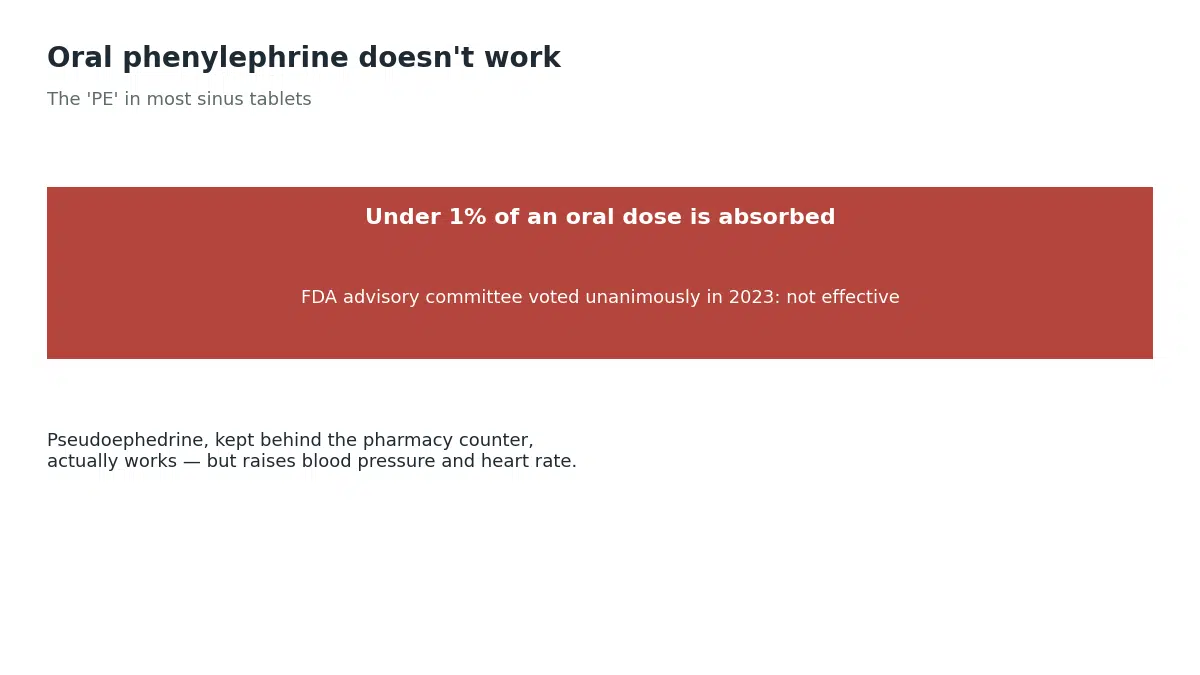
It’s the active ingredient in a great many products labeled “PE” or “sinus.” They remain on shelves while the process runs. If you’ve been buying one and finding it does nothing, that’s the explanation, and it isn’t you.
Pseudoephedrine, kept behind the pharmacy counter, does work. It also raises blood pressure and heart rate, so it needs care if you have hypertension, heart disease, thyroid problems or glaucoma, and it should not be combined with an MAOI antidepressant. Ask the pharmacist rather than guessing.
Decongestant sprays cause rebound congestion
Oxymetazoline sprays — Afrin and similar — work extremely well for about three days. Used beyond that, the nose becomes dependent and congestion returns worse each time the dose wears off. Breaking that cycle is genuinely unpleasant.
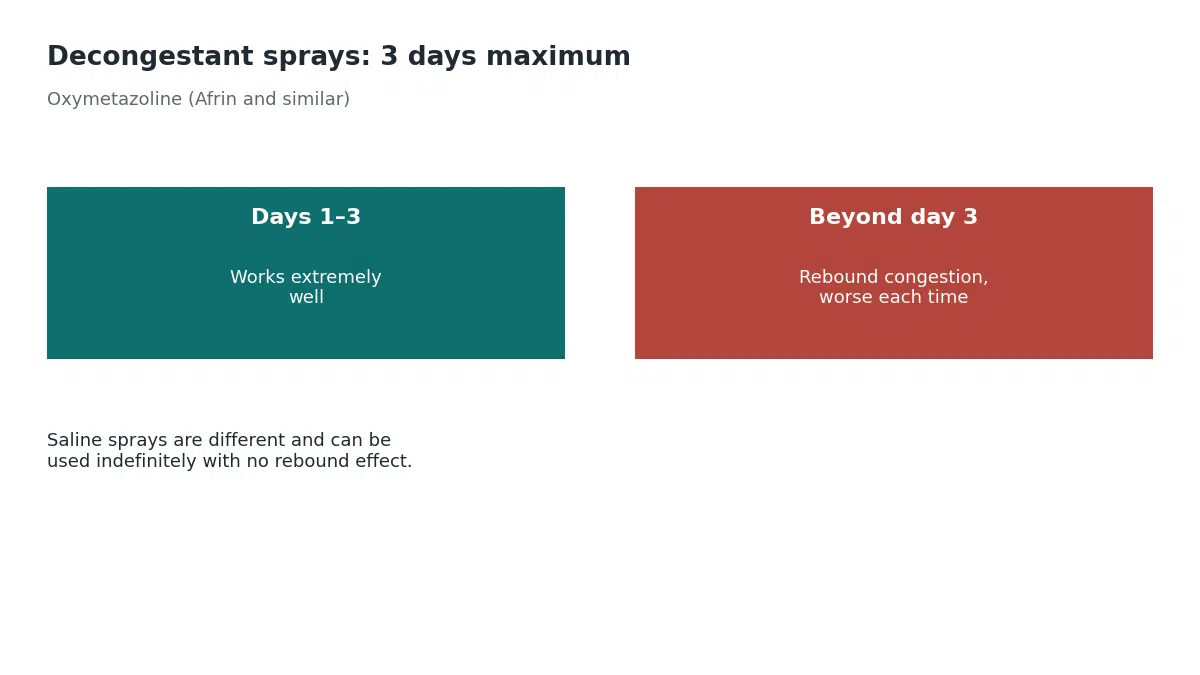
Three days maximum, and don’t top it up. Saline sprays are different and can be used indefinitely.
Worth mentioning to your doctor: several common medications cause nasal congestion as a side effect, including some blood pressure drugs. If yours started when a prescription did, say so, and check your blood pressure readings before adding any oral decongestant.
Reducing What Sets It Off
If congestion keeps returning rather than following colds, the cause is usually environmental or allergic.
Wash bedding weekly in hot water and use allergen-proof mattress and pillow covers — dust mites are a common overnight trigger. Keep pets out of the bedroom if you react to them. Vacuum with a HEPA filter. Fix damp promptly, since mold follows. Avoid scented sprays, candles and harsh cleaners, which irritate nasal passages directly.
Smoking and secondhand smoke inflame nasal membranes more than anything else on this list.
Seasonal allergy congestion responds better to a steroid nasal spray or an antihistamine than to any of the measures above — our guide to late-summer allergies covers what tends to be in the air and when.
When to Get It Checked
Seek urgent care for: swelling or redness around the eye, eye pain, double vision or trouble moving the eye; severe headache with neck stiffness or confusion; a swollen forehead; or difficulty breathing. These can indicate infection spreading beyond the sinuses and are rare but serious.
Book an appointment if:
- Congestion lasts beyond about ten days without improving
- You improve, then get abruptly worse — the pattern that suggests a bacterial infection following a viral one
- High fever, or severe pain focused in one part of the face
- One nostril is persistently blocked with no obvious cause
- There’s blood-stained discharge that keeps recurring
- It keeps coming back through the year
The one-sided blockage is worth naming specifically. Colds and allergies affect both sides. Persistent one-sided obstruction can mean a polyp, a deviated septum or, occasionally, something requiring proper investigation.
For babies: any congestion in an infant under three months needs medical advice, and sooner if it interferes with feeding, since young babies breathe mainly through the nose. Saline drops and a bulb syringe are the appropriate tools; most oral cold medicines are not suitable for young children.
Frequently Asked Questions
What are the most effective natural remedies for nose congestion?
Saline rinsing does the most, followed by steam and sleeping propped up. All three work on the actual problem — swollen tissue and stuck mucus — rather than masking it.
Adequate fluids keep mucus thin, and a humidifier stops overnight drying. Menthol and eucalyptus mainly change how blocked you feel rather than how blocked you are.
Is it safe to use tap water in a neti pot?
No. The FDA warns that tap water isn’t sterile, and organisms harmless to swallow can cause serious infections when flushed into the nasal passages.
Use distilled or sterile water, or boil tap water for several minutes and let it cool. Rinse and air-dry the device after every use.
Why doesn’t my Sudafed PE do anything?
Because oral phenylephrine appears not to work. An FDA advisory committee voted unanimously in 2023 that it isn’t effective, after finding the body absorbs less than 1% of an oral dose, and the FDA proposed removing it from the OTC monograph in November 2024.
Pseudoephedrine, sold from behind the pharmacy counter, does work, but it raises blood pressure and heart rate, so check with the pharmacist first.
How long can I use a decongestant nasal spray?
Three days at most. Oxymetazoline sprays work well initially, but beyond about three days the nose rebounds — congestion returns worse each time the dose wears off, and the dependency is hard to break.
Saline sprays are different and carry no such limit.
Why is my nose more blocked at night?
Lying flat removes gravity’s help with drainage, and blood flow to the head increases when horizontal, which adds to the swelling. Bedroom air is often drier overnight too.
Sleeping propped up, running a humidifier, and a hot shower before bed all help. Dust mites in bedding are worth ruling out if it’s a nightly pattern.
Does dairy make congestion worse?
It doesn’t increase mucus production, despite how firmly people believe it does. It can coat the mouth and make existing mucus feel thicker.
If you notice that, skip it while you’re unwell. Otherwise there’s no reason to avoid it.
Are essential oils safe for children with congestion?
Menthol and eucalyptus products shouldn’t be used on or near the faces of infants and young children — they can cause breathing difficulties. Camphor is toxic if swallowed and has poisoned children who got into rubs.
Saline drops, a bulb syringe and a cool-mist humidifier are the appropriate tools for young children.
When should congestion be seen by a doctor?
If it lasts beyond ten days without improving, if you get better then abruptly worse, if there’s high fever or severe one-sided facial pain, or if one nostril stays blocked with no clear cause.
Seek urgent care for swelling or pain around the eye, vision changes, severe headache with confusion or neck stiffness, or difficulty breathing.
SOURCESOur Editorial Standards
HealthMagHub is built on primary sources: peer-reviewed research, clinical practice guidelines, and health agencies such as the NIH, CDC, and FDA. Read our editorial standards to see how we research, cite, and update our articles.
- U.S. Food and Drug Administration. Is Rinsing Your Sinuses With Neti Pots Safe? fda.gov
- U.S. Food and Drug Administration. FDA proposes ending use of oral phenylephrine as an OTC monograph nasal decongestant active ingredient (November 2024).
- NIH Office of Dietary Supplements. Vitamin C — Consumer Fact Sheet. ods.od.nih.gov
Disclaimer: This article is general information, not medical advice, diagnosis or treatment. Persistent or recurring congestion has causes that need identifying rather than managing indefinitely at home. Speak to a pharmacist before taking an oral decongestant if you have high blood pressure, heart disease, thyroid problems, glaucoma, or take an MAOI antidepressant. Seek urgent care for swelling or pain around the eye, vision changes, severe headache with confusion or neck stiffness, or difficulty breathing. Any congestion in an infant under three months should be assessed by a doctor.