
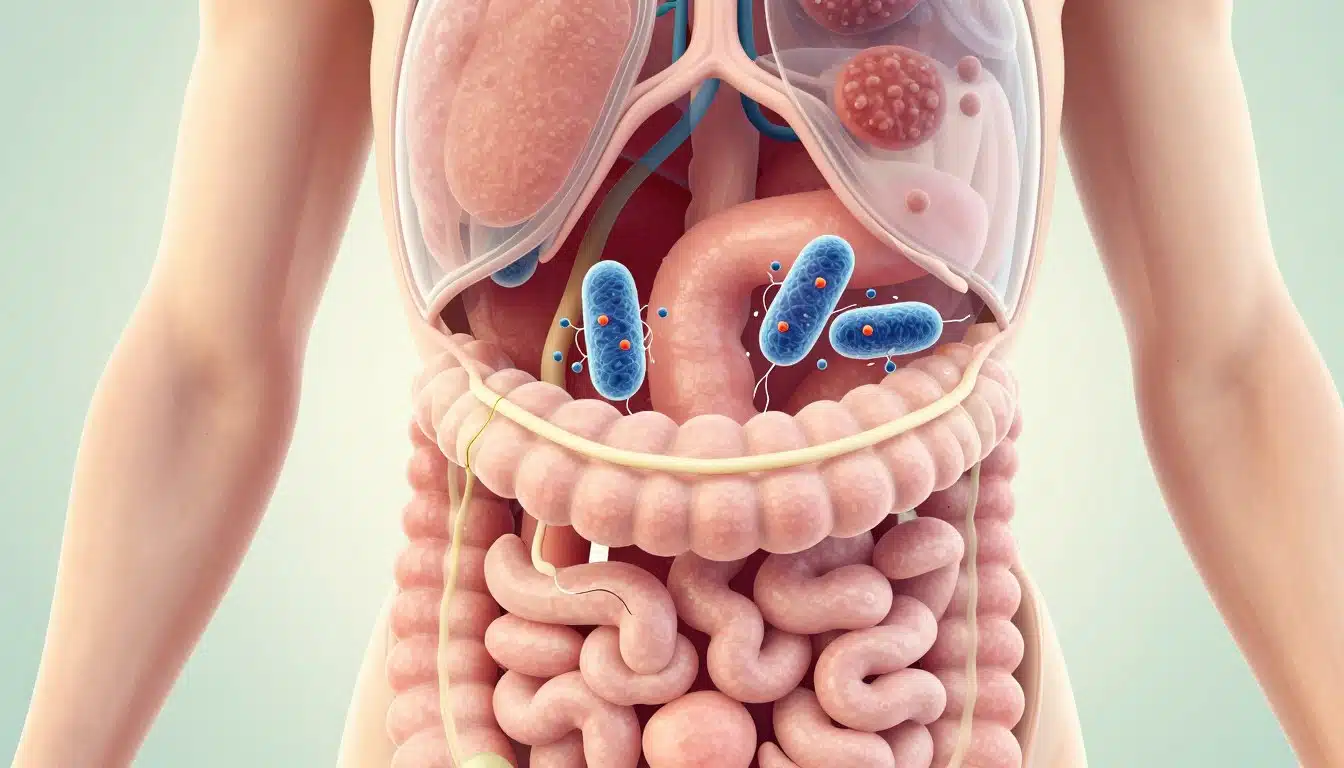
What usually explains the two together is the treatment rather than the infection: antibiotics disturb the bacteria living in your gut, and loose stools follow. That’s common and usually settles.
Two situations are worth taking seriously though, and they’re the reason this article exists rather than stopping at “it’s the antibiotics.”
- A bladder infection doesn’t directly cause diarrhea. Antibiotics disrupting your gut bacteria are the usual explanation.
- 3+ unformed stools in 24 hours after antibiotics could mean C. difficile, and the risk stays elevated for up to 3 months, not just during the course.
- Never take an anti-diarrheal for antibiotic-related diarrhea without checking first, because it can worsen C. difficile.
- A UTI is a common cause of sepsis. Fever with shivering, confusion, or severe back pain need emergency care.
Get Urgent Help For These
A UTI that has spread is one of the commonest causes of sepsis. Call 911 or go to an emergency department if you have:
- Fever with violent shivering or shaking, or a temperature below normal
- New confusion, slurred speech or difficulty staying awake, which in older adults may be the only sign of a serious urinary infection
- Severe pain in your back or side, below the ribs
- Fast breathing, a racing heart, or feeling faint when you stand
- Passing very little or no urine over a day
- Mottled, blotchy or unusually pale skin
- A feeling that something is badly wrong
Also seek same-day care for severe diarrhea with blood or mucus, vomiting that stops you keeping fluids down, or UTI symptoms that are getting worse despite two or three days of antibiotics.
Can Bladder Infection Cause Diarrhea? Why UTI and Diarrhea Show Up Together
The antibiotics, most of the time
Your gut holds an enormous population of bacteria that keeps digestion running normally. Antibiotics prescribed for a UTI don’t distinguish between the bacteria causing the infection and the ones doing useful work in your bowel.
Lose enough of the useful ones and water absorption and bowel movement patterns change. The result is loose stools, typically starting within a few days of the first dose and settling within a week or two of finishing.
Being genuinely unwell
Any significant infection can suppress appetite and cause nausea. If a kidney infection is involved, nausea and vomiting are common features of the illness itself rather than of the medication.
Sometimes it’s simply two things at once
Gastroenteritis and a UTI can coincide. Certain E. coli strains cause bowel illness while different strains cause urinary infections. They’re not the same organisms behaving in two places.
And some conditions produce both sets of symptoms without either being an infection of the bladder. Appendicitis, diverticulitis and pelvic inflammatory disease can all irritate the bladder while causing bowel symptoms. If the picture doesn’t fit a straightforward UTI, that’s worth saying to a doctor rather than assuming.
The One to Watch: C. difficile
Most antibiotic-associated diarrhea is a nuisance. A minority is Clostridioides difficile, an overgrowth that takes hold once antibiotics have cleared space for it, and that one needs treating.
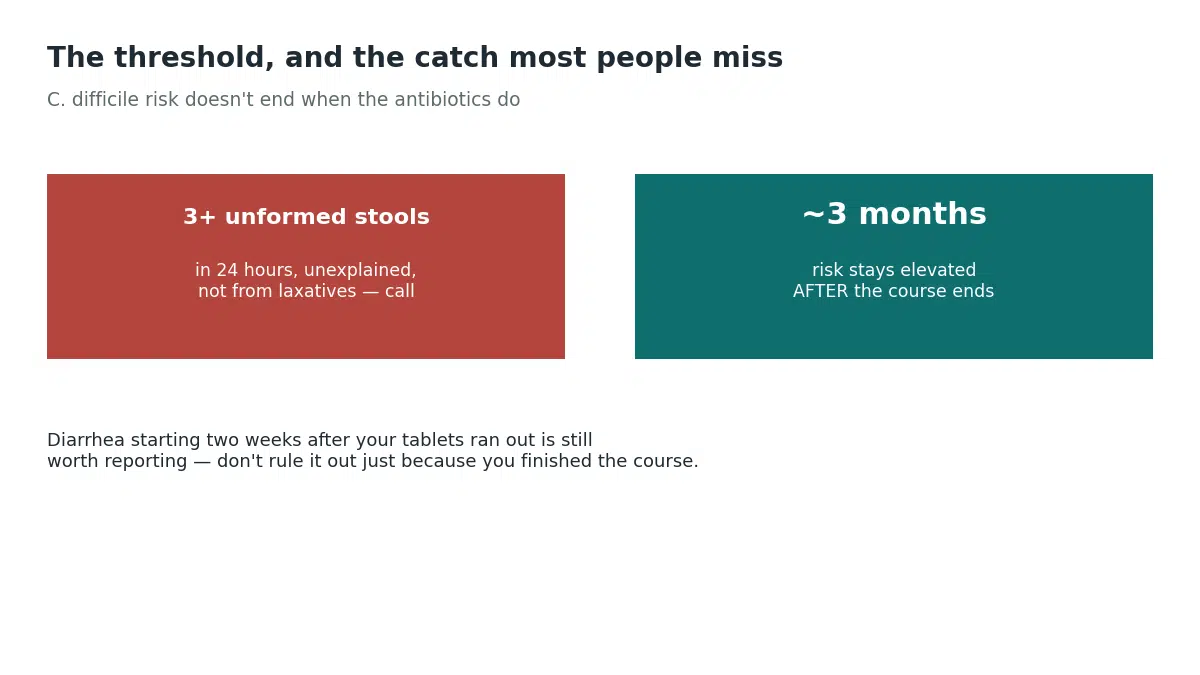
The threshold clinicians use is straightforward: three or more unformed stools in 24 hours, unexplained, in someone not taking laxatives.[1] That’s the point to call rather than wait.
Two things about it that catch people out.
First, it doesn’t only happen while you’re taking the antibiotic. Risk stays elevated for weeks after you finish, concentrated in the roughly three months following a course. Diarrhea that starts two weeks after your tablets ran out is still worth reporting.
Second, the antibiotics most associated with it include ones routinely used for UTIs.
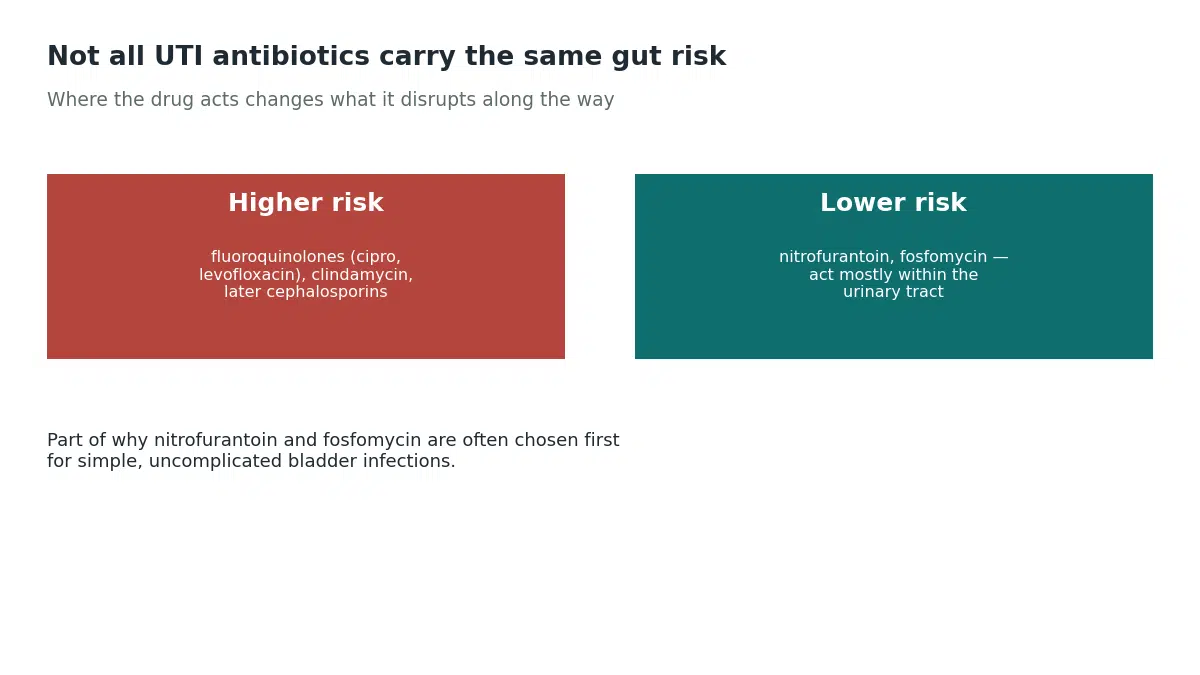
Fluoroquinolones such as ciprofloxacin and levofloxacin sit alongside clindamycin and the later-generation cephalosporins as the highest-risk group. Nitrofurantoin and fosfomycin, which act largely within the urinary tract, carry less of this risk, which is part of why they’re often preferred for simple bladder infections.[2]
Do not reach for an anti-diarrheal. Loperamide and similar medicines slow the bowel. If C. difficile is behind the diarrhea, slowing things down keeps the toxin in contact with the bowel wall and can make a serious complication more likely.
If your diarrhea is watery, frequent and came after antibiotics, call your doctor before taking anything to stop it.
Untreated, C. difficile can progress to severe colitis and worse, so this is worth a phone call rather than a wait-and-see. It’s also treatable, and recognized early it’s usually straightforward.
What a Bladder Infection Normally Feels Like
A straightforward bladder infection produces a recognizable cluster: burning when you pass urine, needing to go often and urgently, passing only small amounts, cloudy or strong-smelling urine, and an ache or pressure low in the pelvis. Some blood in the urine is possible.[3]
Notably absent from that list: high fever, back pain, vomiting. When those appear, the infection has usually moved up to the kidneys.
Signs it’s reached the kidneys
- Fever and shivering
- Pain in the back or side, below the ribs, often on one side
- Nausea and vomiting
- Feeling genuinely ill rather than just uncomfortable
- Confusion, particularly in older adults
Kidney infections need treating promptly. They’re the usual route from an ordinary UTI to something serious.
A note on older adults
Urinary infections in elderly people often skip the classic symptoms entirely and present as sudden confusion, unsteadiness or a fall. That’s worth knowing.
The reverse also holds, and matters: bacteria showing up in the urine of an older adult with no urinary symptoms usually doesn’t need antibiotics. Treating it anyway doesn’t help and adds to exactly the C. difficile risk described above. If a positive dipstick is the only finding, it’s reasonable to ask whether treatment is genuinely needed.
Managing Both at Once
Finish the antibiotic course unless a doctor tells you otherwise. Stopping early risks the infection returning and needing another, longer course.
Fluids matter more than usual. You’re losing water from the diarrhea while also needing to flush the urinary tract. Prolonged diarrhea also strips bicarbonate, which is one reason it can show up as a low CO2 on a blood test. Water-rich foods such as cucumbers help alongside drinks, and an oral rehydration solution is worth having if losses are significant.
Take antibiotics with food if they upset your stomach, unless the label says otherwise. Nitrofurantoin in particular is better tolerated with a meal.
Probiotics may help. The evidence for reducing antibiotic-associated diarrhea is reasonable rather than overwhelming. Space them a couple of hours from the antibiotic dose. Skip them if you’re significantly immunocompromised without asking first. Fermented foods are a reasonable route once you’re eating normally again.
Eat gently while symptoms last. Stick to plain, bland food, and go easy on caffeine and alcohol, both of which irritate the bladder.
Don’t take leftover antibiotics from a previous infection. Wrong drug, wrong length, and it makes the next infection harder to treat.
Reducing the Odds Next Time
Drink enough that you’re passing pale urine regularly. Don’t hold on for hours. Empty your bladder after sex. Wipe front to back. Cotton underwear, and out of wet swimwear promptly.
If you’re getting UTIs repeatedly, meaning two or more in six months or three in a year, that’s a conversation rather than a cycle to keep repeating. Options exist: low-dose preventive antibiotics, a single dose taken after sex, and for postmenopausal women, vaginal estrogen, which has good evidence for reducing recurrence.[4]
Cranberry products have some support for preventing recurrent infections, though not for treating an active one. If you take warfarin, check before starting cranberry supplements, because there’s a documented interaction.
Fewer infections means fewer antibiotic courses, which means less of the gut disruption this whole article is about.
Frequently Asked Questions
Can bladder infection cause diarrhea directly?
The antibiotics are the usual explanation, since they disrupt the bacteria in your gut. Feeling generally unwell, or having a kidney infection, can also cause nausea and appetite loss.
When is diarrhea after UTI antibiotics serious?
Call your doctor rather than waiting it out. C. difficile is treatable but can progress to severe colitis if it’s missed.
Can C. difficile start after I’ve finished the antibiotics?
Diarrhea beginning two weeks after your tablets ran out is still worth mentioning, and worth mentioning that you took antibiotics recently.
Should I take Imodium for diarrhea during UTI treatment?
For mild loose stools with no other symptoms it may be fine, but that’s a call for your doctor or pharmacist rather than the medicine cabinet.
Which UTI antibiotics are hardest on the gut?
Nitrofurantoin and fosfomycin act largely within the urinary tract and carry less of this risk, which is part of why they’re often chosen first for uncomplicated bladder infections.
When does a UTI become an emergency?
In older adults, sudden confusion or a fall may be the only sign. Don’t wait for classic urinary symptoms to appear.
Do probiotics prevent antibiotic diarrhea?
Space them a couple of hours from the antibiotic dose and continue for a while afterwards. Ask first if your immune system is significantly compromised.
Can I stop the antibiotics if they’re upsetting my stomach?
Call your prescriber instead. They can often switch you to something gentler on the gut, or advise on managing the side effects.
SOURCESOur Editorial Standards
HealthMagHub is built on primary sources: peer-reviewed research, clinical practice guidelines, and health agencies such as the NIH, CDC, and FDA. Read our editorial standards to see how we research, cite, and update our articles.
- Clostridioides difficile Infection: Update on Management. American Family Physician. aafp.org
- Merck Manual Professional Edition. Clostridioides difficile Infection. merckmanuals.com
- Mayo Clinic. Urinary tract infection (UTI): symptoms and causes. mayoclinic.org
- Harvard Health. Urinary tract infection. health.harvard.edu
Disclaimer: This article is general information, not medical advice, diagnosis or treatment. Urinary infections need proper diagnosis, and antibiotic choice depends on factors specific to you. Never stop or change a prescribed antibiotic without speaking to your prescriber. Seek emergency care for fever with shivering, new confusion, severe back or side pain, fast breathing, very little urine output, or mottled skin. A urinary infection is a common source of sepsis. Contact your doctor before taking any anti-diarrheal medicine for diarrhea that began during or after antibiotics.