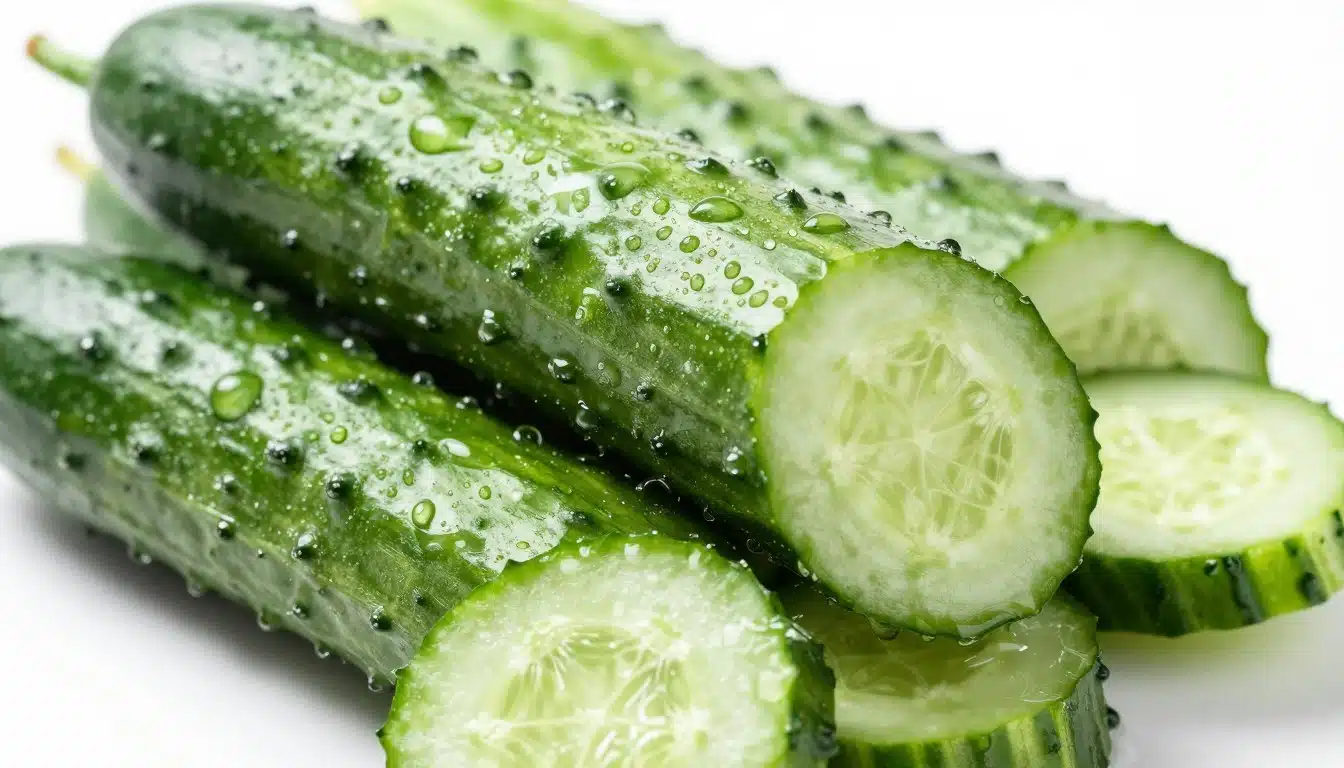
Do cucumbers have electrolytes? Yes, but not many.
A cucumber gives you a useful amount of potassium, a little magnesium and calcium, and almost no sodium. What it really gives you is water, about 96% by weight, which is why it feels so hydrating on a hot day.
That’s the short answer. Here’s what the numbers actually look like, and where cucumber does and doesn’t help.
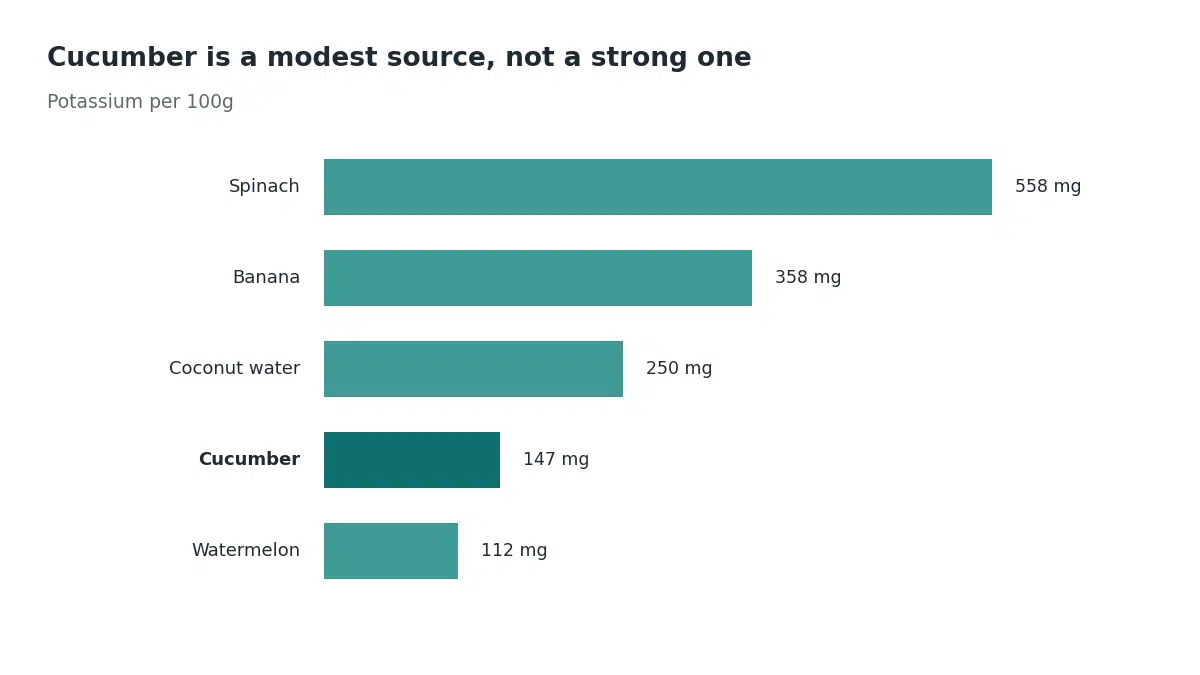
- A cucumber has 147 mg potassium per 100g, which is modest compared to spinach (558mg) or banana (358mg) but more than watermelon (112mg).
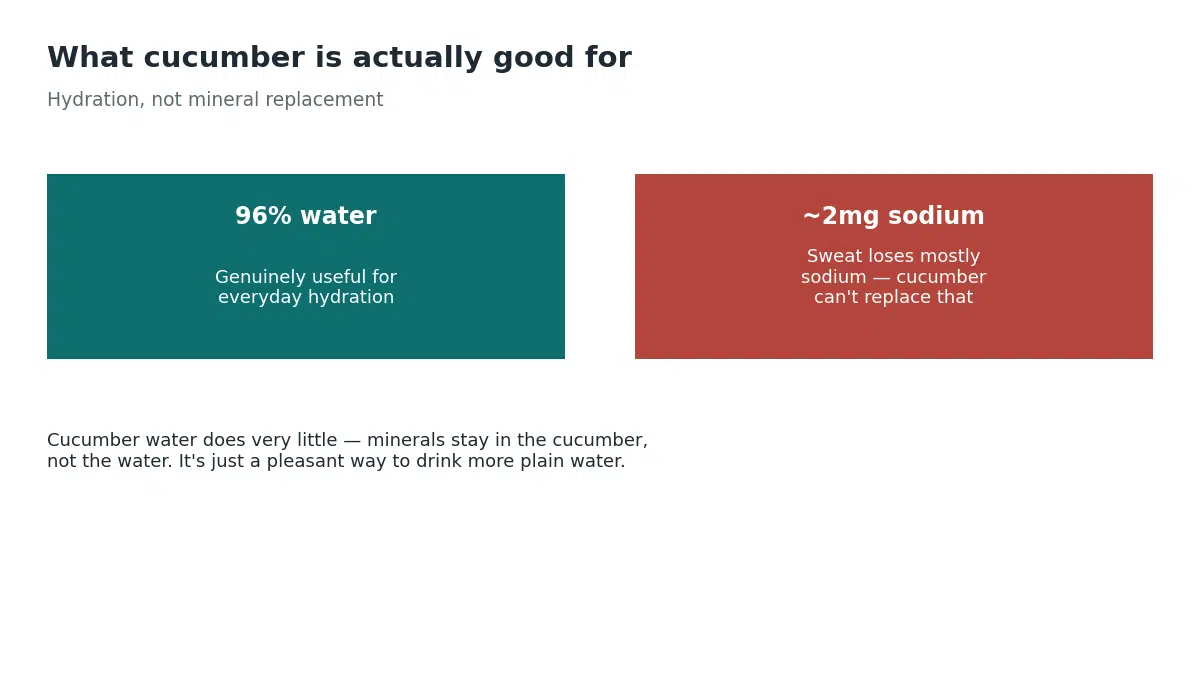
- Cucumber is 96% water, which is genuinely useful for everyday hydration, but almost sodium-free, so it can’t replace what heavy sweat loses.
- Cucumber water does very little, because the minerals stay in the cucumber rather than the water.
- If you have chronic kidney disease or take warfarin, cucumber’s potassium and vitamin K content are worth watching.
Do Cucumbers Have Electrolytes? What’s Actually Inside
Figures below are per 100g of raw cucumber with skin, from the USDA FoodData Central database.[1]
| Mineral | Per 100g | Per whole cucumber (~300g) |
|---|---|---|
| Potassium | 147 mg | ~440 mg |
| Magnesium | 13 mg | ~39 mg |
| Calcium | 16 mg | ~48 mg |
| Sodium | 2 mg | ~6 mg |
Potassium is the one that matters here. A whole cucumber covers roughly 10 to 15% of an adult’s daily potassium, depending on which reference intake you use.
Magnesium and calcium are present but minor, under 10% of daily needs. The sodium content is negligible, which is a genuine advantage if you’re watching salt.
How That Compares
Cucumber is a middling electrolyte source that happens to be excellent at hydration. The comparison makes that clear.
| Food (per 100g) | Potassium | Magnesium | Sodium | Water |
|---|---|---|---|---|
| Cucumber | 147 mg | 13 mg | 2 mg | 96% |
| Banana | 358 mg | 27 mg | 1 mg | 75% |
| Coconut water | 250 mg | 25 mg | 105 mg | 95% |
| Spinach | 558 mg | 79 mg | 79 mg | 91% |
| Watermelon | 112 mg | 10 mg | 1 mg | 92% |
Spinach has nearly four times the potassium and six times the magnesium. A banana has more than twice the potassium.
So if your goal is minerals, cucumber isn’t the efficient choice. If your goal is fluid with a few minerals attached and almost no calories or sugar, it’s very good at that.
What This Means in Practice
For everyday hydration, cucumber is genuinely useful. Roughly 20% of most people’s fluid intake comes from food rather than drinks, and water-rich vegetables contribute to that. Eating a cucumber is a reasonable way to take in fluid and a bit of potassium at once.
For replacing what you lose in heavy sweat, it isn’t enough. Sweat loses mostly sodium, and cucumber contains essentially none. After prolonged intense exercise, a proper electrolyte drink or salted food does a job that cucumber can’t.
Cucumber water does very little. Steeping slices in water transfers flavor and only trace minerals; almost everything stays in the cucumber. It’s a pleasant way to drink more water, which has its own value. Just don’t count it as mineral intake.
The potassium is worth having if you’re managing blood pressure. Potassium helps offset sodium’s effect, and cucumber delivers it with virtually no salt attached. It won’t treat hypertension on its own, but as part of a potassium-rich diet it contributes. Our guide to potassium-rich foods covers stronger sources.
When to Be Careful
Cucumber is safe for almost everyone. Three exceptions are worth naming.
Chronic kidney disease. Damaged kidneys struggle to clear potassium, and high blood potassium can affect heart rhythm. If you’ve been told to limit potassium, cucumber counts toward that limit, so follow your clinician’s guidance rather than general advice.
Warfarin and similar blood thinners. Cucumber contains vitamin K, which affects how warfarin works. The issue isn’t eating it, it’s varying how much you eat week to week. Keep intake steady.
Melon or squash allergy. Cucumber is in the same plant family. People with pollen allergies sometimes get oral itching from it, a cross-reaction called oral allergy syndrome, usually mild but worth knowing.
Beyond that, the fiber can cause bloating in sensitive people. Peeling or deseeding usually helps.
The Bottom Line
Cucumbers contain electrolytes: mainly potassium, plus small amounts of magnesium and calcium. The amounts are modest.
What makes cucumber worth eating isn’t its mineral density. It’s that you get fluid, a bit of potassium, fiber and almost no sodium, sugar or calories, in something most people are happy to eat plain.
Eat it because it’s an easy vegetable to get into your day. Don’t eat it expecting it to replace a sports drink, and don’t expect cucumber water to do much of anything beyond making plain water more appealing.
Common Questions
Can cucumber replace an electrolyte drink after exercise?
Not after heavy or prolonged exercise. Sweat loses mostly sodium, and cucumber has almost none. For light activity or general hydration it’s fine; for serious sessions you need sodium from another source.
Does cucumber help with muscle cramps?
Possibly, if the cramps come from low potassium or magnesium, but that’s only one of several causes, and the evidence linking cramps to electrolyte levels is weaker than commonly assumed. Cramping that’s persistent or severe deserves medical assessment rather than a dietary fix.
Should I eat the skin?
Yes, if you like it. The skin holds most of the fiber and some of the minerals. Wash it well; peel it if the texture bothers you or if it causes bloating.
Are pickled cucumbers the same?
Nutritionally, no. Pickling adds a large amount of sodium, which reverses cucumber’s main advantage if you’re watching salt. The potassium survives, but a pickle is a very different food from a fresh cucumber.
SOURCESOur Editorial Standards
HealthMagHub is built on primary sources: peer-reviewed research, clinical practice guidelines, and health agencies such as the NIH, CDC, and FDA. Read our editorial standards to see how we research, cite, and update our articles.
- U.S. Department of Agriculture. FoodData Central. fdc.nal.usda.gov
Disclaimer: This article is general information, not medical or dietary advice. Anyone with kidney disease, heart conditions, or who takes medication affected by potassium or vitamin K should follow their clinician's guidance on dietary intake rather than general recommendations.