
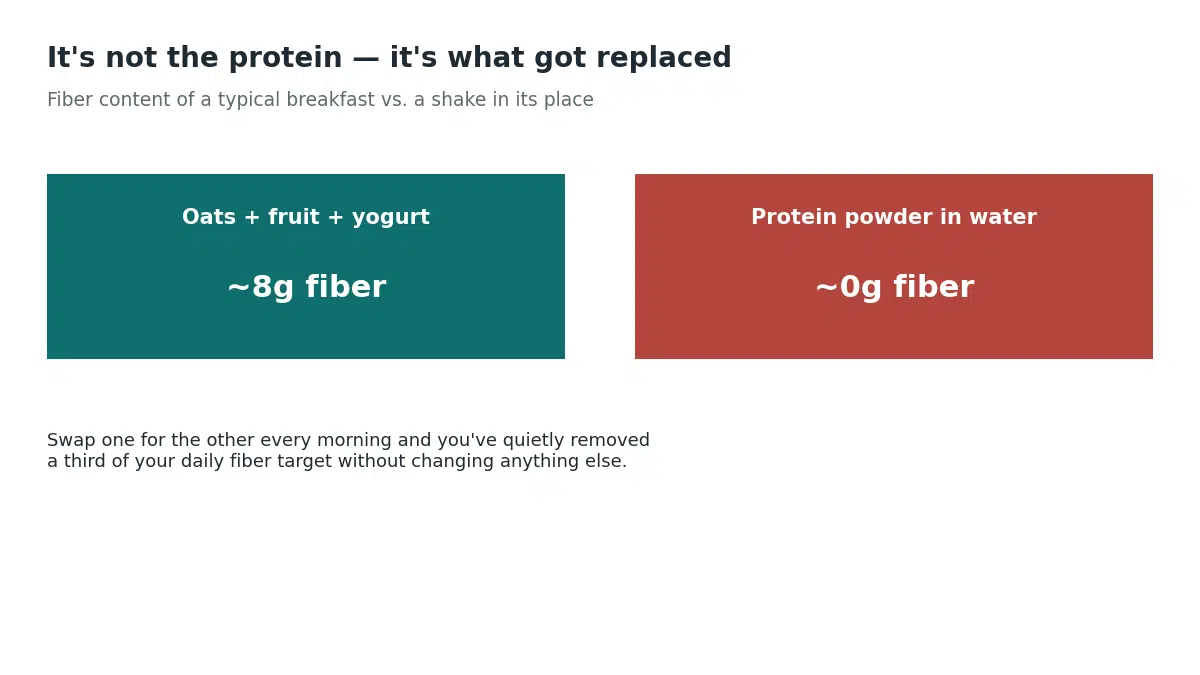
A breakfast of oats, fruit and yogurt carries maybe 8 grams of fiber. A scoop of protein powder in water carries close to zero. Swap one for the other every morning and you’ve quietly removed a third of your daily fiber without changing anything else.
That’s the whole mechanism in most cases, and it’s fixable without giving up the powder.
- Protein powder isn’t inherently constipating. Most powders contain almost no fiber, so using one as a meal replacement removes fiber from your day.
- Adding a tablespoon of ground flaxseed or chia to the shake addresses the actual cause and is the highest-yield fix.
- A 2025 report found 47% of tested protein powders exceeded a regulatory heavy-metal threshold, so look for NSF Certified for Sport or Informed Choice marks.
- Chronic kidney disease is a reason to check with a doctor first, because reduced kidney function often means limiting protein, not increasing it.
Will Protein Powder Cause Constipation? Why It Happens
Displacement is the main one. Most protein powders contain no meaningful fiber. Used as an addition to meals they’re neutral; used as a meal replacement they subtract fiber from your day.
Most adults are advised to get somewhere around 25–35 grams of fiber daily, and most people in Western countries fall well short before any shake is involved.[3] Replacing a meal makes an existing gap wider.
Fluid is the second. Fiber needs water to work. Without it, added fiber can make things firmer rather than softer. If you’re increasing protein and fiber at the same time, water isn’t optional.
Speed of change is the third. Going from a modest protein intake to several shakes a day in a week gives your gut nothing to adapt with. The same amount introduced over a few weeks is usually tolerated far better.
And sometimes the answer is simpler than any of these: whey concentrate contains lactose, and if you’re lactose intolerant the symptoms may be bloating and cramping rather than constipation specifically. Whey isolate contains substantially less.
Fixing It Without Giving Up the Powder
Put the fiber back in the shake. A tablespoon of ground flaxseed or chia adds roughly 3–5 grams. A handful of berries adds a few more. Spinach blends in without affecting the taste much. Rolled oats thicken it and add more still.
This is the single highest-yield fix, because it addresses the actual cause rather than working around it.
Drink more water than feels necessary. A full glass with the shake itself, and more across the day. Pale urine is the usual rough gauge.
Build up gradually. Half servings for the first week or two, increasing as you tolerate it. Do the same with fiber. A sudden jump from 12 grams to 35 causes its own bloating and cramping.
Move. Physical activity stimulates gut motility, and this is one of the better-supported non-drug approaches to constipation generally. A walk after meals counts.
Use the powder as a supplement, not a substitute. Alongside meals rather than instead of them, the fiber problem largely disappears. Our guide to high-protein snacks covers whole-food options that bring fiber with them, and fermented foods are worth including for gut health alongside.
If you’re using shakes specifically as meal replacements for weight loss, our guide to meal replacement shakes covers how that’s actually been studied.
Which Powder Is Least Likely to Cause Problems
Whey isolate if you tolerate dairy. It has less lactose than concentrate and digests easily.
Pea or hemp if you don’t. Hemp carries the most fiber of the common options, which works in your favor here.
Collagen is easy on the gut but shouldn’t be your main protein source. It lacks tryptophan and is a poor-quality protein by the usual measures.
Beyond that, shorter ingredient lists tend to cause fewer problems than long ones full of thickeners and sugar alcohols. Sugar alcohols in particular, anything ending in “-itol,” cause digestive upset in a lot of people.
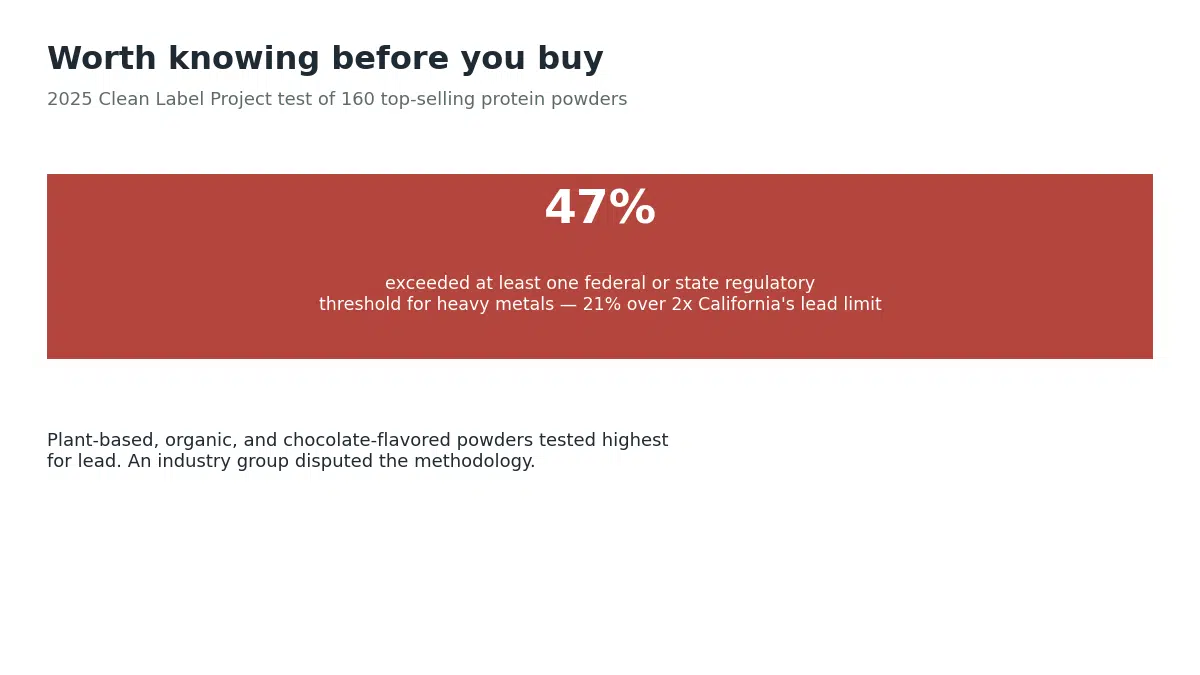
Worth knowing before you buy. A 2025 Clean Label Project report tested 160 top-selling protein powders and found 47% exceeded at least one federal or state regulatory threshold for heavy metals, with 21% more than double California’s Proposition 65 limit for lead.[1]
The pattern was consistent: plant-based powders averaged around three times more lead than whey-based ones, organic products around three times more lead than non-organic, and chocolate-flavored around four times more lead than vanilla. Plants take these metals up from soil, and cocoa is a known source.
An industry group disputed the methodology, so treat the exact figures as contested. The practical takeaway is uncontroversial though: third-party testing marks like NSF Certified for Sport or Informed Choice are worth looking for, and vanilla whey is a lower-contaminant starting point than organic chocolate plant protein.
How Much Protein Is Actually Needed
A lot of protein-related digestive trouble comes from consuming considerably more than there’s any use for.
General health sits around 0.8 grams per kilogram of body weight daily. People training seriously for strength or endurance are commonly advised somewhere in the region of 1.6–2.2 grams per kilogram, and there’s little evidence of additional benefit above that range.[2]
Most people already get a substantial share of that from food. The gap a powder actually needs to fill is usually smaller than the marketing implies, often one scoop, not three.
If you have kidney disease, this is a conversation for your doctor. Reduced kidney function often means protein intake needs limiting rather than increasing, and protein supplements are among the things nephrology teams specifically ask about. Don’t start one on your own if you have any degree of chronic kidney disease.
When Constipation Isn’t About the Protein
It’s easy to attribute a change in bowel habit to the newest thing you started. Sometimes the timing is coincidental, and a few patterns need looking at regardless of what you’re drinking.
See a doctor promptly for:
- Blood in your stool, or black tarry stools
- A persistent change in bowel habit lasting more than a few weeks, particularly if you’re over 50
- Unexplained weight loss
- Persistent abdominal pain, or a lump you can feel
- Constipation alternating with diarrhea
- Anemia, or fatigue that doesn’t fit
These are the symptoms that warrant investigation for bowel conditions including colorectal cancer, and they shouldn’t be filed under “protein powder side effect” while you experiment with flaxseed.
Also worth an appointment: no bowel movement for several days with pain or vomiting, constipation that doesn’t respond to more fiber and fluid over a couple of weeks, or new constipation that started with a new medication. Opioids, iron tablets, some antidepressants and some blood pressure drugs are all common culprits.
Frequently Asked Questions
Will protein powder cause constipation on its own?
Add fiber to the shake, drink more water, and use it alongside meals rather than instead of them, and the problem generally resolves.
How much fiber should I be getting?
A tablespoon of ground flaxseed or chia in the shake adds roughly 3–5 grams; berries, oats or spinach add more. Increase fiber gradually, not all at once.
Which protein powder is easiest on digestion?
Shorter ingredient lists cause fewer problems, and sugar alcohols ending in “-itol” upset a lot of people.
Do protein powders contain heavy metals?
Look for NSF Certified for Sport or Informed Choice testing marks. Non-chocolate whey or collagen products tested lowest.
Should I stop taking protein powder if I’m constipated?
Most people resolve it without stopping. If it persists beyond a couple of weeks despite those changes, that’s worth a conversation with a doctor rather than more experimenting.
How much water do I need with protein powder?
Pale urine is a reasonable rough gauge.
Is protein powder safe if I have kidney problems?
This applies to any degree of chronic kidney disease, not just advanced stages.
When should constipation be checked by a doctor?
Don’t attribute those to a supplement. They warrant investigation regardless of what you’ve recently started taking.
SOURCESOur Editorial Standards
HealthMagHub is built on primary sources: peer-reviewed research, clinical practice guidelines, and health agencies such as the NIH, CDC, and FDA. Read our editorial standards to see how we research, cite, and update our articles.
- Clean Label Project. Protein Powder Category Report (2025). cleanlabelproject.org
- Harvard Health Publishing. Nutrition. health.harvard.edu
- Mayo Clinic. Nutrition and healthy eating. mayoclinic.org
Disclaimer: This article is general information, not medical or dietetic advice. Protein needs vary with body size, activity and health status. Speak to your doctor before using protein supplements if you have chronic kidney disease, liver disease, or are pregnant. Seek medical assessment for blood in the stool, black tarry stools, unexplained weight loss, persistent abdominal pain, or a change in bowel habit lasting more than a few weeks. These need investigating rather than attributing to a supplement.