


If you’re looking for the best supplements for brain fog, something probably happened this week that rattled you. A name that wouldn’t come. A sentence that trailed off mid-meeting. A room you walked into with no idea why.
That fuzzy, one-step-behind feeling is one of the most common complaints people bring to their doctor in their 40s. But here’s the honest answer up front: a supplement is rarely the thing that fixes it.
Most brain fog at this age traces back to something else: short sleep, a thyroid that has drifted, low B12, a medication, or plain relentless stress. This guide covers what the evidence actually supports, what to rule out first, and the symptoms that mean you should stop reading and get medical help.
- Brain fog is a symptom, not a diagnosis — most of its causes are treatable.
- Supplements help most when they correct an actual deficiency — B12 is the clearest example.
- The evidence for ginkgo biloba in healthy adults is weak, despite how heavily it’s marketed.
- Sudden confusion or trouble speaking is a medical emergency, not brain fog — call 911.
What Brain Fog Actually Is
Brain fog isn’t a medical diagnosis. No doctor will write it on your chart. It’s a plain-English label for a cluster of symptoms: trouble concentrating, mental tiredness that sleep doesn’t fix, words sitting just out of reach, and a sense of moving through the day at half speed.
That distinction matters more than it sounds. Because brain fog is a symptom rather than a disease, chasing it with a supplement is a bit like taking a painkiller for a sore tooth. You might feel better for an afternoon. Whatever is causing it is still there.
Why Brain Fog Gets Worse in Your 40s
Several things tend to land at once in this decade. Sleep gets shorter and more broken. Work and family demands peak at the same time. And hormones start shifting. Perimenopause brings its own foggy stretch for many women, while men see more gradual changes in testosterone.
None of that means your brain is failing. The National Institute on Aging notes that occasional forgetfulness is a normal part of getting older, and that plenty of memory complaints come from conditions that can be treated.
The trap is assuming a pill is the answer before you’ve checked what’s underneath. Our guide to natural supplements to improve focus and concentration in adults goes deeper into the options, but the checklist below comes first.
Rule These Out Before You Buy Any Supplement
Each of these can produce fog that looks exactly like age-related decline. Each one also has a real fix, which is more than any supplement on this page can claim.
- Low vitamin B12. Deficiency can cause fatigue, neurological changes and anemia. It’s more likely if you’re over 50, eat little or no animal food, or take long-term acid reflux or diabetes medication.
- Thyroid problems. An underactive thyroid slows everything down, thinking included.
- Iron deficiency or anemia. Common in women who still menstruate, and a frequent cause of fatigue plus fog.
- Sleep apnea. Loud snoring plus waking up unrefreshed is worth a sleep study, not a nootropic.
- Depression and anxiety. Both blunt concentration and memory, sometimes before the mood symptoms are obvious.
- Medication side effects. Antihistamines, sleep aids and several blood pressure drugs can all dull thinking.
A basic blood panel covers several of these in a single appointment. It’s the cheapest, highest-yield step you can take.
Best Supplements for Brain Fog: What the Evidence Shows
This is where most articles hand you a ranked list. The reality is messier. Evidence for cognitive supplements in healthy adults is thin, and the strongest results almost always come from correcting a deficiency rather than topping up someone who’s already fine.
Vitamin B12, But Only If You’re Low
B12 deficiency is a recognized and reversible cause of neurological symptoms, and correcting it can genuinely help. Some people are deficient despite eating enough, because of absorption problems or long-term medication use.
If your levels are already normal, don’t expect much. The NIH Office of Dietary Supplements reports that trials giving B vitamins for six to 24 months found no apparent effect on episodic memory, executive function or processing speed. Test first, then supplement, not the other way round.
Omega-3 Fatty Acids (EPA and DHA)
Omega-3s are structural components of your brain cell membranes, and the case for eating oily fish is solid. As a supplement for thinking, the results are modest and inconsistent.
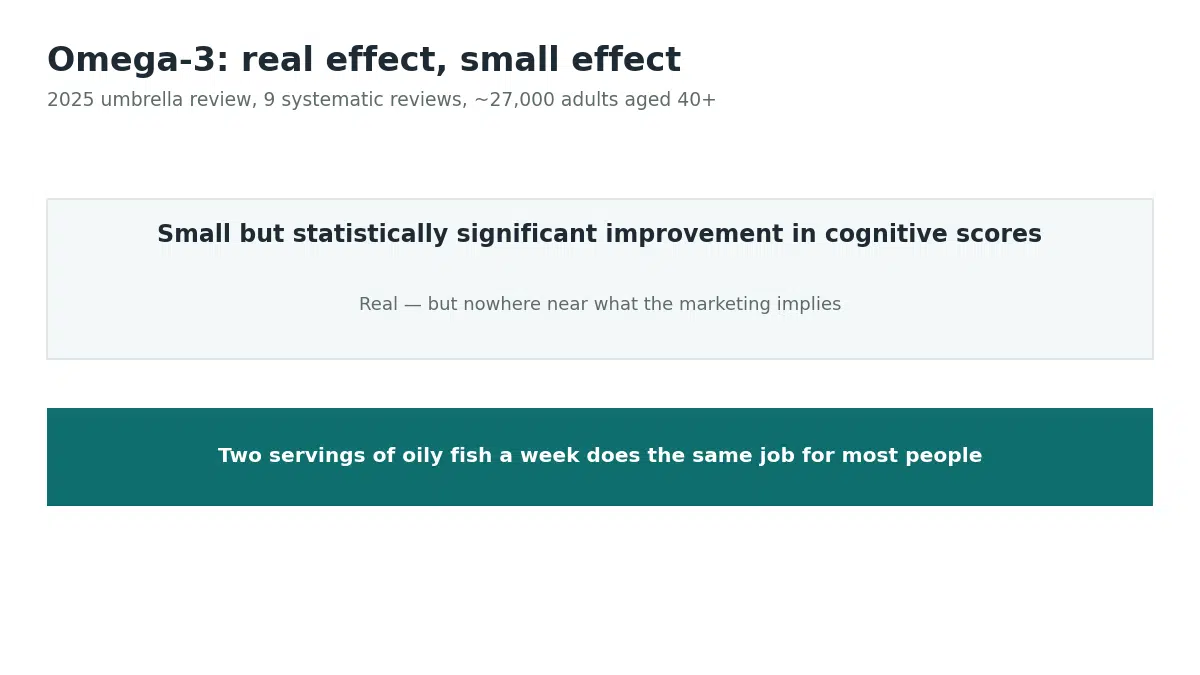
A 2025 umbrella review pooling nine systematic reviews across roughly 27,000 adults aged 40 and over found a small but statistically significant improvement in cognitive scores. Real, but nowhere near what the marketing implies. Two servings of oily fish a week does the same job for most people. If you rarely eat fish, a supplement is a sensible way to close the gap.
Phosphatidylserine
This is the one brain ingredient the FDA has allowed a health claim for, but read the fine print. It’s a qualified claim, which means any product using it must also carry a disclaimer saying the FDA has concluded there is little scientific evidence supporting it.
That’s a fair summary of where things stand. The early positive studies used a form derived from cow brain that’s no longer sold; today’s soy and sunflower versions have shown weaker effects. Possibly worth trying. Not worth big expectations.
Ginkgo Biloba
Ginkgo turns up in almost every brain formula on the shelf, and the evidence doesn’t justify its place there. The Ginkgo Evaluation of Memory study followed more than 3,000 older adults taking 120 mg twice daily for a median of six years and found no less cognitive decline than with placebo.
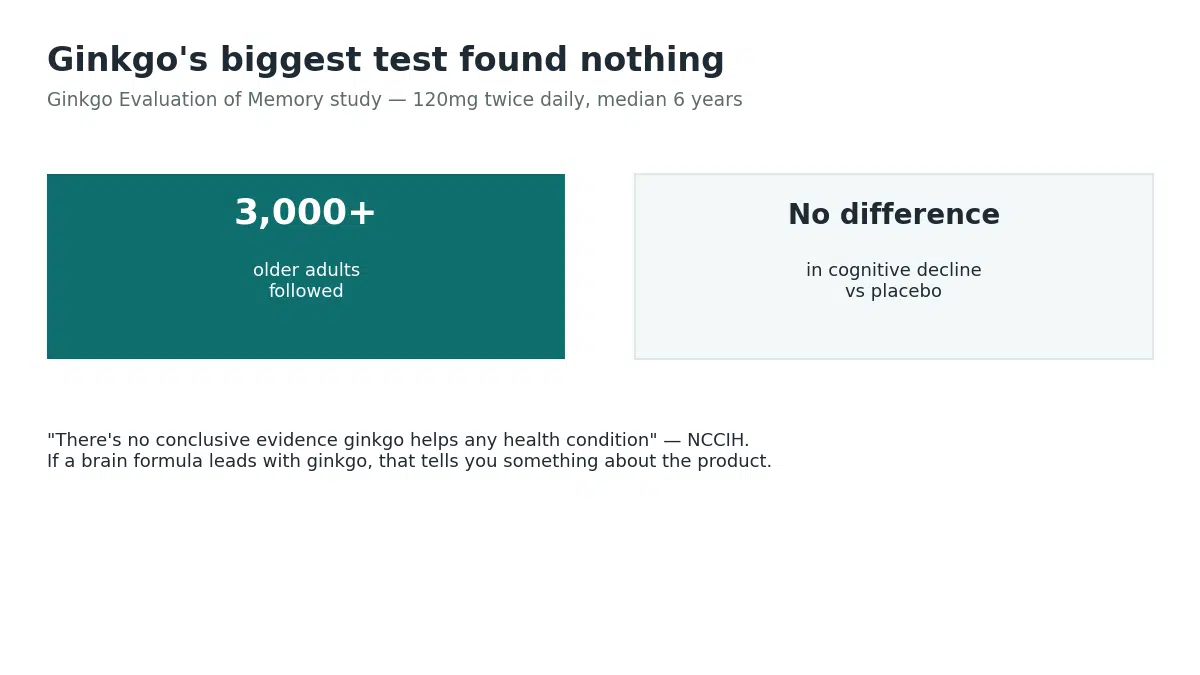
The National Center for Complementary and Integrative Health puts it bluntly: there’s no conclusive evidence ginkgo helps any health condition, and it hasn’t been shown to prevent or slow dementia. If a product leads with ginkgo, that tells you something about the product.
Supplement Interactions Worth Taking Seriously
“Natural” does not mean “no interactions.” This is the part brain-supplement marketing skips entirely.
Ginkgo may increase bleeding risk in people taking anticoagulant drugs such as warfarin, and it can interact with other medicines too. NCCIH advises talking with your health care provider before using ginkgo if you take any medication at all, and notes it may be unsafe during pregnancy. High-dose fish oil raises similar bleeding questions if you’re already on a blood thinner.
The simplest safeguard costs nothing: take your actual bottles, or photos of the labels, to a pharmacist. Interaction checks are exactly what they’re trained for, and it’s a five-minute conversation.
When Brain Fog Is a Red Flag
Most brain fog is frustrating rather than dangerous. A few patterns are not.
Call 911 immediately if any of these come on suddenly. The CDC lists them as warning signs of stroke:
- Sudden confusion, trouble speaking, or trouble understanding speech
- Sudden numbness or weakness in the face, arm or leg, especially on one side of the body
- Sudden trouble seeing in one or both eyes
- Sudden trouble walking, dizziness or loss of balance
- A sudden severe headache with no known cause
Don’t wait to see whether it passes, and don’t drive yourself. Note the time symptoms started; treatment decisions depend on it.
Book a doctor’s appointment, not an emergency, but don’t let it drift, if:
- Your memory has been getting steadily worse over months rather than staying level
- You’re losing things that used to be automatic — the route somewhere familiar, a bill you’ve always paid
- Family or friends are more worried about your memory than you are
- The fog started after a head injury, a new medication, or an illness
- It comes alongside numbness or tingling in your hands and feet
Habits That Beat Any Supplement for Brain Fog
Sleep is the big one, and it’s the one people trade away first. Your brain consolidates memory overnight, so a run of short nights shows up as exactly the symptoms you’re trying to supplement away. Same bedtime, dark room, no screens in the last hour before bed. Dull advice, but it outperforms anything in a capsule.
Movement comes next. Exercise increases blood flow to the brain and supports thinking skills, and you don’t need to train for a marathon to get there. A brisk half-hour walk most days, plus some strength work, is enough.
Then food. Steady blood sugar means fewer mid-afternoon crashes, so lean on whole foods and go easy on refined sugar. Oily fish, leafy greens and berries are all worth a regular place on your plate, and our breakdown of food sources of tyrosine covers how diet feeds the neurotransmitters behind focus.
How to Choose a Supplement Without Getting Ripped Off
If you decide to try something, a few filters cut out most of the junk.
- Skip proprietary blends. If the label hides doses inside a blend total, you can’t tell whether you’re getting a studied amount or a sprinkle.
- Look for third-party verification such as USP or NSF. Supplements aren’t approved by the FDA before sale, so this is your check that the label matches the contents.
- Be suspicious of speed. Anything promising results in days is selling a feeling, not an effect.
- Give it a fair trial, then stop. Eight to twelve weeks with no honest difference means it isn’t working for you.
Not everything sold for memory comes in a capsule, either. Audio and brain-training programs make their own claims, and they’re worth holding to the same standard: check whether the underlying mechanism has real research behind it, not just testimonials, before paying for a course.
The Bottom Line
Get the boring stuff checked first. A B12 test, a thyroid panel and an honest look at your sleep will do more for your thinking than anything on the supplement shelf. If you want to know what the road further ahead looks like, our guide to the best nootropic supplements for memory loss in seniors covers the later decades.
Supplements are worth considering after that groundwork, not instead of it. And if something about your memory feels sudden or is clearly getting worse, that’s a conversation with a doctor, not a purchase.
Frequently Asked Questions
What is the best supplement for brain fog?
There isn’t a single best one. The supplement most likely to help is the one that corrects a deficiency you actually have, vitamin B12 being the clearest example. If your levels are normal, the realistic expectation from any brain supplement is a small effect at best. That’s why testing before buying is the advice that saves people the most money.
How long does a brain fog supplement take to work?
Most take weeks rather than days, and anything promising overnight clarity is overselling. A reasonable trial is eight to twelve weeks at a consistent dose. If you notice no honest difference by then, stop taking it and put the money toward getting the underlying cause investigated instead.
Is brain fog in your 40s a sign of dementia?
Usually not. Occasional forgetfulness is a normal part of aging, and midlife fog far more often comes from sleep loss, stress, hormonal shifts, medication or a treatable deficiency. What warrants a medical opinion is a pattern that keeps getting worse over months, or that starts interfering with tasks you’ve always handled easily.
Does ginkgo biloba help with brain fog?
The evidence is weak. A large trial following more than 3,000 older adults for a median of six years found no less cognitive decline with ginkgo than with placebo, and NCCIH states there’s no conclusive evidence it helps any health condition. It also may increase bleeding risk with anticoagulants such as warfarin, so check with your provider before using it.
When should brain fog be treated as an emergency?
Call 911 if confusion, trouble speaking, one-sided numbness or weakness, sudden vision loss, loss of balance, or a severe headache come on suddenly. These are stroke warning signs and treatment is time-critical. Ordinary brain fog builds gradually over weeks or months. Anything that arrives in minutes is a different problem.
SOURCESOur Editorial Standards
HealthMagHub is built on primary sources: peer-reviewed research, clinical practice guidelines, and health agencies such as the NIH, CDC, and FDA. Read our editorial standards to see how we research, cite, and update our articles.
- National Institute on Aging. Memory, Forgetfulness, and Aging: What’s Normal and What’s Not. nia.nih.gov
- NIH Office of Dietary Supplements. Vitamin B12 — Fact Sheet for Health Professionals. ods.od.nih.gov
- National Center for Complementary and Integrative Health. Ginkgo. nccih.nih.gov
- Centers for Disease Control and Prevention. Stroke Signs and Symptoms. cdc.gov