Hemorrhoids are swollen veins in the anus and lower rectum, usually from pressure during bowel movements. Straining, sitting too long, chronic constipation or diarrhea, and pregnancy are the common triggers. Softer, bulkier stool means less pushing, which means less pressure on veins that are already irritated.
Here’s what actually moves the needle, how much fiber to aim for, and the point where this stops being a diet question and starts needing a doctor.
- Fiber reduces straining, the main driver of hemorrhoid flare-ups, but it won’t shrink an existing hemorrhoid on its own.
- Most adults benefit from 25 to 35 grams of fiber daily, increased gradually by about 5 grams a week to avoid gas and bloating.
- Split peas and lentils are the most fiber-dense options at roughly 16 grams per cooked cup, followed by black beans at 15 and chickpeas at 12 to 13.
- New bleeding after 45, blood mixed into the stool, or bleeding with weight loss or a change in bowel habits needs a doctor rather than more fiber.
When Rectal Bleeding Needs a Doctor, Not More Fiber
Hemorrhoids commonly cause bright red blood on the toilet paper or in the bowl. That pattern, bright red and on the surface with a known history of hemorrhoids, is usually exactly what it looks like.
But rectal bleeding also has other causes, some of them serious, and it’s worth knowing when to get it checked rather than assuming:
- New bleeding after 45, or any bleeding without a prior hemorrhoid diagnosis
- Blood mixed into the stool rather than sitting on the surface, or dark or black stool
- Bleeding alongside unexplained weight loss, a persistent change in bowel habits, or ongoing abdominal pain
- A family history of colorectal cancer or inflammatory bowel disease
- Bleeding that’s heavy, doesn’t stop, or keeps recurring despite treating the hemorrhoids
Any of these is worth a doctor’s visit before assuming it’s hemorrhoids. Colorectal cancer, anal fissures, and inflammatory bowel disease can all cause bleeding that looks similar at first glance, and catching the wrong one early matters.
How Fiber Actually Helps
Soluble fiber absorbs water and forms a gel, which softens stool and makes it easier to pass without straining. Insoluble fiber adds bulk and speeds transit, which helps prevent the constipation that’s often what triggers a flare-up in the first place.
The National Institute of Diabetes and Digestive and Kidney Diseases recommends increasing fiber intake as a first-line, non-surgical way to ease and prevent hemorrhoid symptoms.[1] Most adults benefit from 25 to 35 grams of fiber daily, and most people eating a typical Western diet fall well short of that.
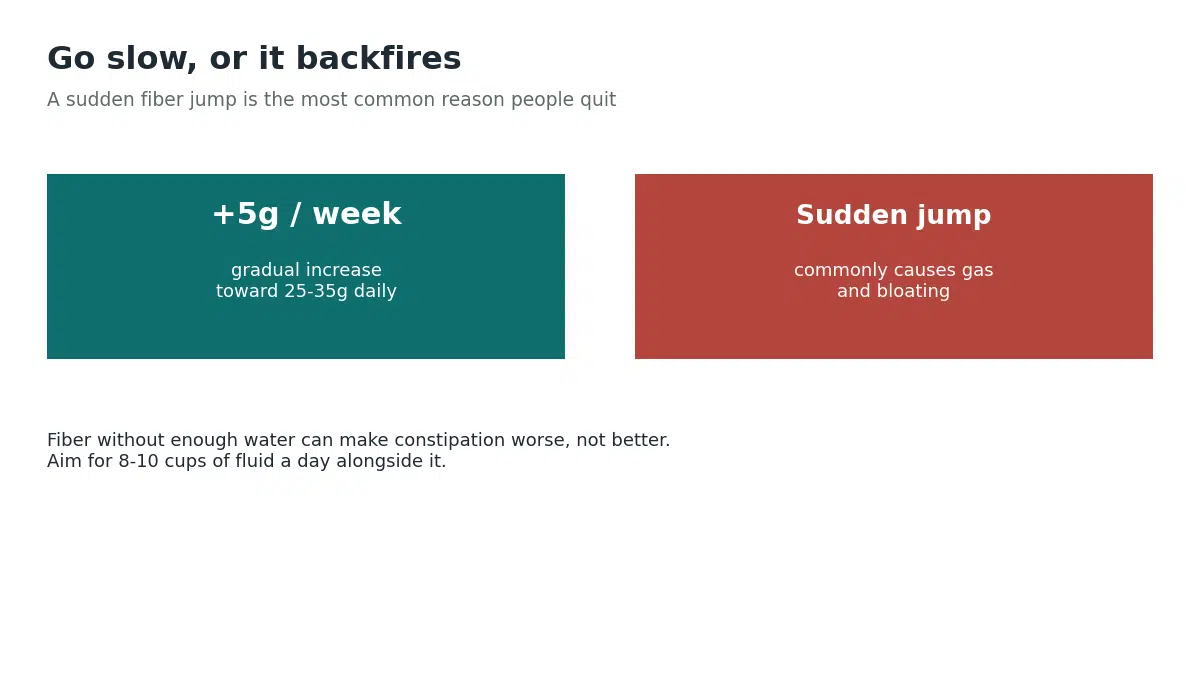
If you’re increasing your intake, do it gradually, roughly 5 grams a week, since a sudden jump commonly causes gas and bloating that puts people off before it helps.
Best High Fiber Foods for Hemorrhoids
The best high fiber foods for hemorrhoids are the ones you’ll eat without having to think about it. Where the grams come from matters less than reaching the daily total, but a handful of foods do far more work per serving than the rest, and knowing which ones makes hitting 25 to 35 grams much less of a chore.
Legumes Do the Most Work Per Serving
Split peas and lentils lead the field at roughly 16 grams per cooked cup. Black beans come in around 15, chickpeas around 12 to 13. Nothing else in a normal grocery run comes close, and a single cup covers close to half a day’s target on its own.
Here’s the catch: legumes are also the foods most likely to cause gas when you add them all at once. Start with half a cup rather than a full one and build up from there. Canned beans count just as much as dried, and rinsing them under the tap washes off most of the added sodium without touching the fiber.
Fruit That Does Double Duty
Raspberries carry around 8 grams a cup, more than any other common fruit. Apples and pears land around 5 to 6 grams each when you eat the skin, and peeling them throws away a meaningful share of that.
Prunes and figs earn a separate mention. A quarter cup of prunes adds about 3 grams of fiber, but it also delivers sorbitol, a sugar alcohol the body absorbs poorly, which pulls water into the bowel and softens stool on its own. In a randomized crossover trial of 40 adults with chronic constipation, dried plums improved both bowel movement frequency and stool consistency more than psyllium at the same fiber dose.[2] A small handful does the job. A large one tends to backfire with cramping.
Vegetables Worth Prioritizing
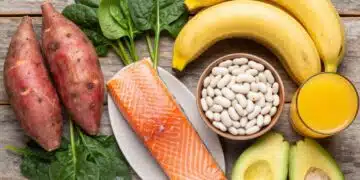
A cooked artichoke is the quiet standout at nearly 10 grams a cup. Sweet potatoes with the skin on give about 6, broccoli and avocado around 5 each, and leafy greens and carrots contribute steadily without topping any chart.
Cooking method matters less than people think. Steaming preserves a bit more than boiling, but any preparation beats none, and a vegetable you’ll actually eat cooked beats one that stays raw in the drawer.
Grains and Seeds: The Easiest Swaps
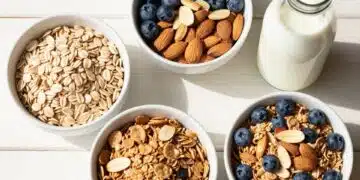
Oats, brown rice, quinoa and bulgur are direct replacements for their refined versions, and that’s exactly what makes them easy. You’re not adding a food to your day, just upgrading one you already eat.
Chia seeds give the biggest return for the smallest effort: a single tablespoon carries about 4 grams, and stirred into yogurt or oatmeal it disappears completely. Air-popped popcorn is a genuinely useful snack here too, at roughly 6 grams for three cups.
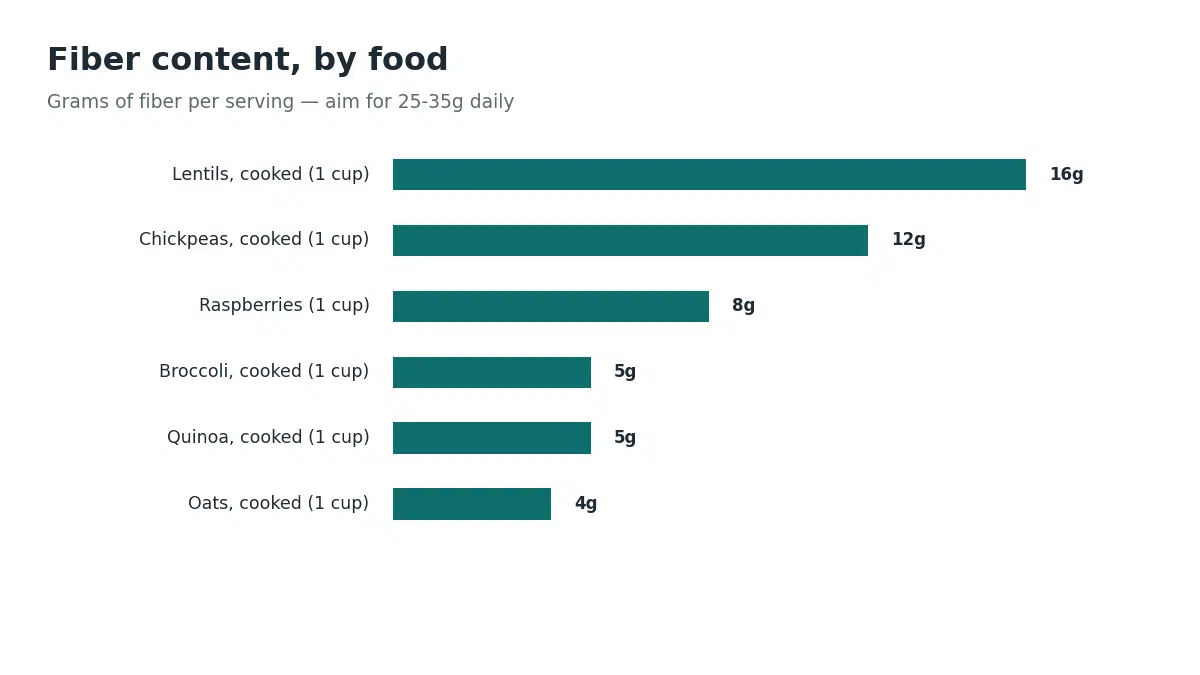
| Food | Serving | Fiber (grams) |
| Split peas, cooked | 1 cup | 16 |
| Lentils, cooked | 1 cup | 15-16 |
| Black beans, cooked | 1 cup | 15 |
| Chickpeas, cooked | 1 cup | 12-13 |
| Artichoke, cooked | 1 cup | 10 |
| Raspberries | 1 cup | 8 |
| Sweet potato, with skin | 1 cup | 6 |
| Pear, with skin | 1 medium | 6 |
| Broccoli, cooked | 1 cup | 5 |
| Avocado | 1 cup | 5 |
| Quinoa, cooked | 1 cup | 5 |
| Chia seeds | 1 tablespoon | 4 |
| Oats, cooked | 1 cup | 4 |
| Prunes | 1/4 cup | 3 |
What 30 Grams Actually Looks Like
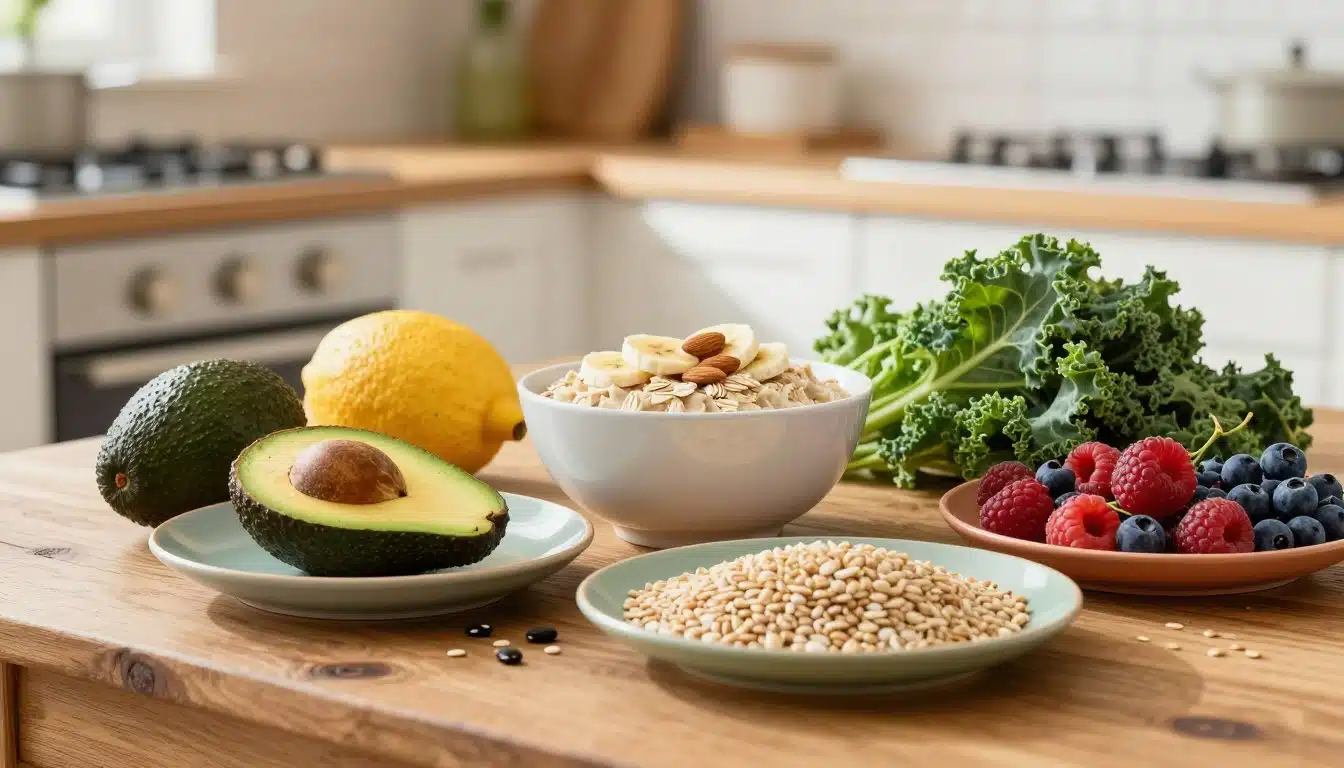
Oatmeal with a tablespoon of chia and a cup of raspberries puts you around 16 grams before lunch. A cup of lentil soup adds another 15. That’s the daily target met by mid-afternoon, with no supplement and nothing unusual in the cart.
Spinach also contributes magnesium, which supports normal muscle function including in the gut. Berries pair well with plain yogurt for breakfast, and bananas, while lower in fiber than most fruit on this list, are an easy everyday addition.
Hydration Is Not Optional
Fiber without enough fluid can make constipation worse rather than better, because soluble fiber needs water to form the gel that softens stool. Aim for around 8-10 cups of fluid a day while increasing fiber intake, and pay attention to urine color as a rough guide: pale yellow is a reasonable sign you’re drinking enough.
What Tends to Make Things Worse
Low-fiber, highly processed food such as white bread, pastries and most packaged snacks contributes to harder stool and more straining.
Excess dairy can be constipating for some people; if you notice a pattern, plain yogurt is usually better tolerated than cheese or milk.
Spicy food doesn’t cause hemorrhoids, but it can irritate an area that’s already inflamed for some people. This varies a lot individually, so there’s no need to avoid it pre-emptively unless you notice it makes symptoms worse.
Beyond Diet
Fiber is one part of managing hemorrhoids, not the whole approach. Don’t strain or sit on the toilet longer than needed. Go when you feel the urge rather than waiting, and don’t push if nothing’s happening. Warm sitz baths several times a day ease discomfort. Over-the-counter creams and suppositories help with symptoms during a flare-up.
If diet and these basic measures aren’t controlling symptoms within a couple of weeks, or if hemorrhoids are recurring frequently, it’s worth seeing a doctor, since there are simple in-office procedures for hemorrhoids that don’t resolve on their own.
Common Questions About High Fiber Foods for Hemorrhoids
How much fiber should I eat for hemorrhoids?
Which food has the most fiber per serving?
Will fiber alone get rid of hemorrhoids?
Do prunes really help, or is that just an old wives’ tale?
Is rectal bleeding always from hemorrhoids?
What foods should I limit?
SOURCESOur Editorial Standards
HealthMagHub is built on primary sources: peer-reviewed research, clinical practice guidelines, and health agencies such as the NIH, CDC, and FDA. Read our editorial standards to see how we research, cite, and update our articles.
- National Institute of Diabetes and Digestive and Kidney Diseases. Hemorrhoids. niddk.nih.gov
- Attaluri A, Donahoe R, Valestin J, Brown K, Rao SSC. Randomised clinical trial: dried plums (prunes) vs. psyllium for constipation. Alimentary Pharmacology & Therapeutics, 2011. doi:10.1111/j.1365-2036.2011.04594.x (PMID 21323688)
- U.S. Departments of Agriculture and Health and Human Services. Food Sources of Dietary Fiber, Dietary Guidelines for Americans 2020-2025. dietaryguidelines.gov
Disclaimer: This article is general information, not medical advice. Rectal bleeding, especially if new, heavy, recurring, or accompanied by weight loss or a change in bowel habits, should be evaluated by a doctor rather than assumed to be hemorrhoids.