

If your hay fever eased off in June and came roaring back now, that’s not your imagination. Allergies in August are a different season with a different cause. Spring is trees, early summer is grass, and late summer belongs almost entirely to ragweed.
That matters practically. It tells you when to start medication, what to avoid, and why the plant most people blame is innocent.
- Ragweed causes 75–90% of late-summer pollen — goldenrod, the plant people usually blame, is almost never the culprit.
- Start medication 1–2 weeks before the season, not after symptoms appear — antihistamines and steroid sprays work far better preventively.
- A ragweed allergy can make melon, banana, cucumber or zucchini cause mouth itching — oral allergy syndrome, not a new food allergy.
- Decongestant nasal sprays cause rebound congestion after 3 days — never use them longer.
Why Allergies in August Are Mostly Ragweed
Ragweed flowers in mid-August across most of the US. It keeps going until the first hard frost. In the north, peak counts arrive around Labor Day. Southern states peak later, into late September or October.
The numbers explain why it dominates. A single ragweed plant can release up to a billion pollen grains in its one growing season. The grains are light enough to travel hundreds of miles. They’ve been detected 400 miles out to sea and two miles up.
So living in a city doesn’t protect you. Ragweed grows readily in disturbed soil — roadsides, vacant lots, riverbanks, field edges — and the pollen arrives from elsewhere regardless.
According to the American College of Allergy, Asthma and Immunology, ragweed accounts for roughly 75 to 90% of all pollen in the air from August through October in some regions. That’s the figure worth knowing, and it’s often misquoted online as something else entirely.
Goldenrod is not the problem
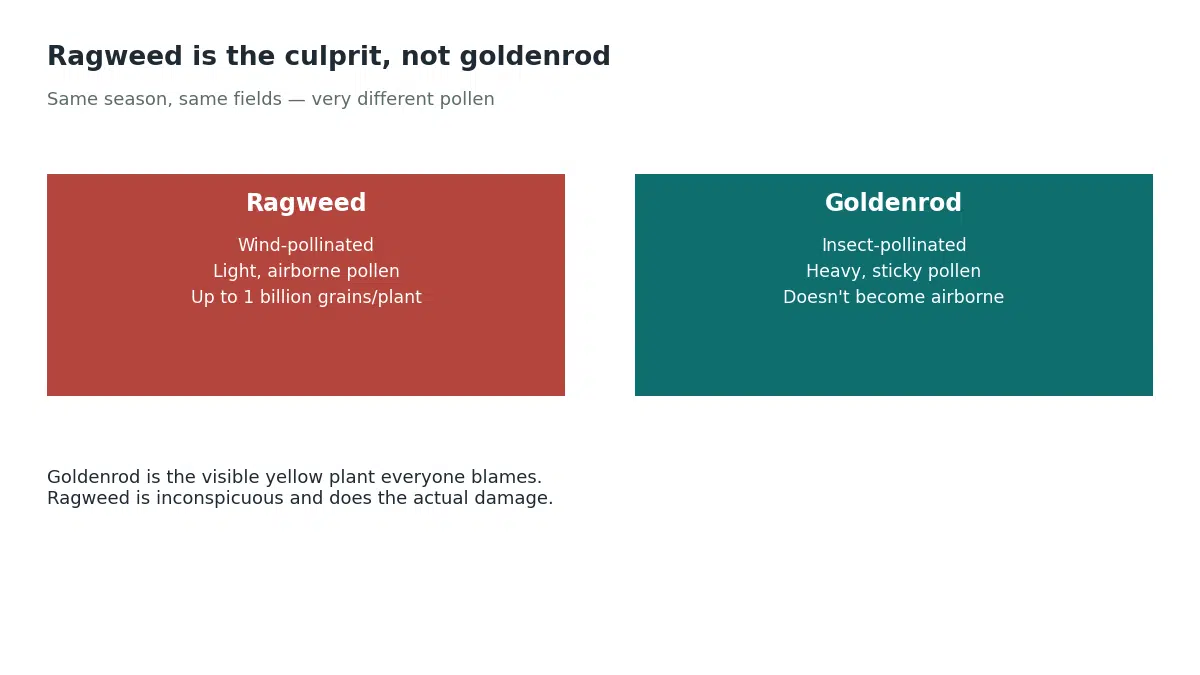
Goldenrod flowers at the same time as ragweed, is far more visible with its bright yellow plumes, and gets blamed constantly. It’s almost never the cause.
Goldenrod pollen is heavy and sticky because it’s spread by insects. It doesn’t float. Ragweed is wind-pollinated, with pollen light enough to stay airborne for days. The plant you can see isn’t the one making you sneeze.
Seasons are getting longer
This isn’t nostalgia. It’s measurable. Later first frosts and earlier thaws have extended the ragweed growing season by around 11 days since the 1970s in the US, with larger increases further north. Airborne pollen concentrations rose roughly 21% between 1990 and 2018.
Higher CO2 levels also stimulate ragweed growth and increase pollen production per plant. If August feels worse than it used to, that’s a reasonable read of the data.
The Other Late-Summer Triggers
Mold spores. August humidity suits them. Outdoors they colonize damp leaves, mulch, compost and anything decomposing. That’s why raking or turning compost can set off symptoms abruptly. Indoors they favor bathrooms, basements, window frames and neglected air conditioning.
Late grass pollen. Most grasses finish earlier, but Bermuda and a few others continue. Mowing throws settled pollen back into the air, which is why the person pushing the mower suffers most.
Dust mites. They thrive in warm, humid conditions, and you’re indoors more when it’s hot. If your symptoms are worst on waking, bedding is a likelier culprit than anything outside.
Allergy or Cold?
The distinction is usually straightforward once you know what separates them.
Itching points to allergy. Itchy eyes, nose, throat or the roof of the mouth is the most reliable single sign. Colds rarely itch. Eyes that are itchy and visibly red are usually allergic conjunctivitis rather than an infection.
Fever points to infection. Allergies don’t cause fever, and they don’t cause body aches.
Timing. Allergy symptoms start within minutes of exposure and continue as long as you’re exposed. Colds build over a few days and resolve within one to two weeks.
Mucus. Allergic discharge stays clear and watery. Thick, colored mucus suggests infection, though color alone isn’t proof of anything bacterial.
Pattern. If symptoms reliably worsen outdoors, on mowing day, or every morning, that’s allergy behavior.
The Food Connection Worth Knowing
If you have a ragweed allergy and your mouth itches when you eat melon, banana, cucumber or zucchini, that’s not coincidence. It’s oral allergy syndrome. Proteins in those foods are similar enough to ragweed pollen that your immune system confuses them.
Symptoms are usually confined to the mouth and throat: itching, tingling, mild swelling of the lips. Cooking generally breaks down the proteins, so cooked versions of the same foods are typically fine.
When to take it seriously: if reactions spread beyond the mouth — hives, vomiting, throat tightness, difficulty breathing — that’s no longer oral allergy syndrome and needs proper allergy assessment. A small minority of people progress to more significant reactions.
Reducing Your Exposure
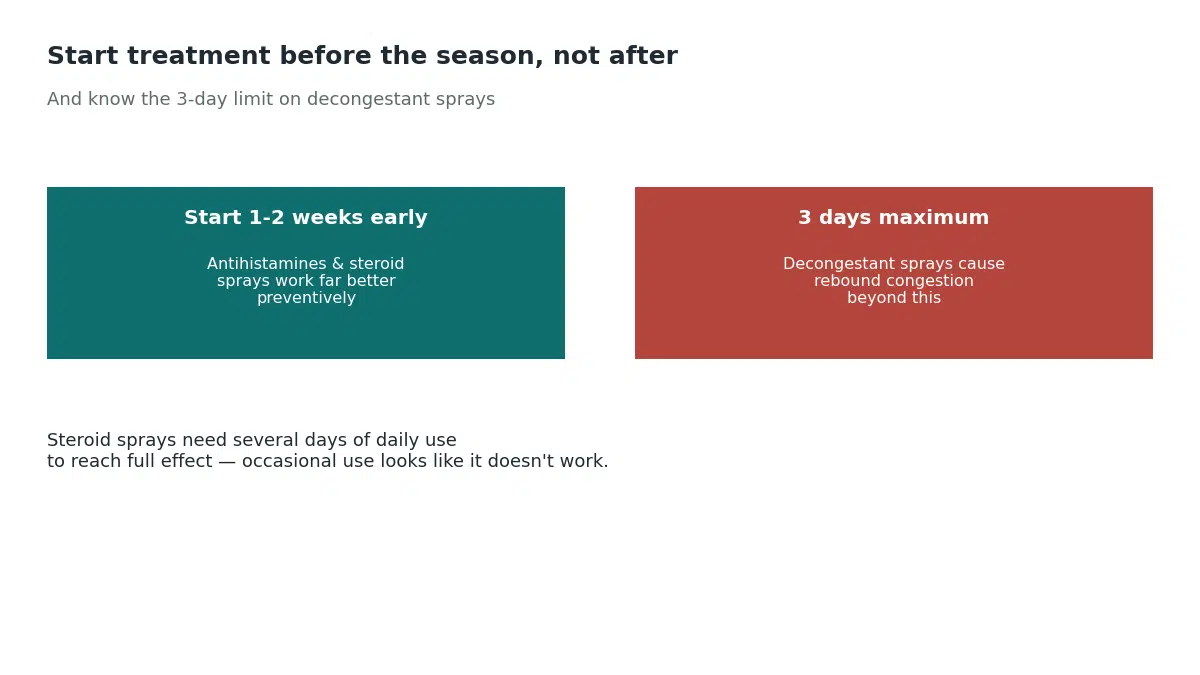
Start medication before the season, not after symptoms appear. This is the single most effective change and the one most people get wrong. Allergy specialists suggest beginning a week or two ahead of ragweed season — late July or very early August in northern states. Antihistamines and steroid nasal sprays work far better preventively than reactively.
Time your outdoor activity. Ragweed releases pollen in the morning, helped along by warmth and breeze after sunrise. Afternoon and evening are better, and the air is genuinely cleaner after rain.
Shower before bed and change out of clothes worn outside. Pollen on your hair transfers to the pillow, which is why symptoms often peak overnight.
Windows closed, air conditioning on recirculate — in the house and the car. Replace the cabin filter if you can’t remember when it was last done.
Don’t mow if you’re the allergic one. Delegate it, or wear a mask if you can’t.
A HEPA air purifier in the bedroom is the highest-value placement, since that’s where you spend the most continuous hours.
Wash bedding weekly in hot water and keep indoor humidity between about 30 and 50% to discourage mold and dust mites.
What Actually Treats Allergies in August
Non-drowsy antihistamines — cetirizine, loratadine, fexofenadine — are the first line. Older sedating ones like diphenhydramine are no longer preferred and are specifically discouraged in older adults.
Steroid nasal sprays are the most effective single treatment for congestion, and available without prescription. They need several days of consistent daily use to reach full effect, which is why people who use them only on bad days conclude they don’t work.
Antihistamine eye drops work quickly for itchy, watering eyes. One thing worth knowing if your eyes still feel rough once the itching settles: oral antihistamines reduce tear production, so a fortnight of them can leave you with dry, gritty eyes that need managing differently from the allergy itself.
Saline rinsing flushes pollen out of the nasal passages and is safe to use often. Use distilled, sterile, or boiled-and-cooled water — never straight from the tap. Our guide to nasal congestion explains why that matters.
Decongestant nasal sprays: three days maximum. Oxymetazoline works well initially, but beyond about three days the nose rebounds and congestion returns worse each time it wears off.
And be aware that oral phenylephrine — the active ingredient in many “sinus” tablets — has been found ineffective by an FDA advisory committee. Pseudoephedrine from behind the pharmacy counter does work, but raises blood pressure and needs care if you have hypertension or heart disease.
Immunotherapy is the only treatment that changes the underlying allergy rather than managing symptoms. Ragweed-specific options exist as both injections and sublingual tablets, typically over three to five years, and benefits often persist afterwards. Worth discussing with an allergist if medication isn’t holding you.
On local honey: it’s a pleasant idea without good evidence behind it. The pollen bees collect is flower pollen carried by insects, not the wind-borne ragweed pollen causing your symptoms. Harmless, but don’t rely on it — and never give honey to infants under 12 months.
When to Get Medical Help
Seek emergency care immediately for: difficulty breathing or swallowing, swelling of the lips, tongue or throat, or a rapidly spreading rash. These suggest anaphylaxis, which is rare from pollen but not impossible.
Urgent same-day care for sudden severe shortness of breath or wheezing, which can be a serious asthma attack.
Book an appointment if: symptoms persist despite two weeks of consistent treatment; you’re losing sleep; facial pain or pressure suggests sinus infection; symptoms are keeping you off work or school; or you have asthma that’s harder to control this month.
If you have asthma, August deserves extra attention. Ragweed is a common trigger, and worsening peak flow readings often precede noticeable symptoms. Review your action plan before the season rather than during it.
Allergy testing is worth considering if you don’t know what you react to. Knowing whether it’s ragweed, mold, dust mites or several things changes what you do about it.
In pregnancy, check before taking anything. Some antihistamines and nasal sprays have better-established safety records than others, and saline rinsing plus environmental control carries no risk at all.
Frequently Asked Questions
What causes allergies in August?
Mostly ragweed, which flowers mid-August and continues until the first hard frost. In some regions it accounts for 75 to 90% of airborne pollen from August through October.
Mold spores thriving in humidity, late-season grass pollen, and dust mites make up most of the rest.
Is goldenrod causing my hay fever?
Almost certainly not. Goldenrod is insect-pollinated, so its pollen is heavy and sticky and doesn’t travel through the air.
It just happens to flower at the same time as ragweed and is far more visible. Ragweed is wind-pollinated and largely inconspicuous.
When should I start taking allergy medication?
A week or two before the season starts — late July or very early August in northern states, later further south. Antihistamines and steroid nasal sprays work considerably better preventively.
Steroid sprays in particular need several days of daily use to reach full effect, so occasional use gives a misleadingly poor impression.
Why does melon make my mouth itch?
Oral allergy syndrome. Proteins in melon, banana, cucumber and zucchini resemble ragweed pollen closely enough that your immune system reacts. Cooking usually destroys them.
If reactions go beyond mouth itching — hives, vomiting, throat tightness, breathing difficulty — get proper allergy assessment.
Is it allergies or a cold?
Itching — eyes, nose, throat, roof of the mouth — points strongly to allergy. Fever and body aches point to infection, since allergies cause neither.
Allergy symptoms start within minutes of exposure and persist; colds build over days and resolve in one to two weeks.
Can allergy medication dry my eyes out?
Yes. Antihistamines reduce tear production, so they can settle the itching while leaving the surface of the eye dry, rough and gritty.
If that happens, preservative-free artificial tears alongside the antihistamine usually solve it — our guide to dry eye remedies covers what else helps.
Are August allergies getting worse over time?
Measurably, yes. The US ragweed season has lengthened by around 11 days since the 1970s, with bigger increases in northern areas, and airborne pollen concentrations rose about 21% between 1990 and 2018.
Higher CO2 also increases pollen production per plant.
Does local honey help?
There’s no good evidence it does. Bees collect flower pollen spread by insects, not the wind-borne ragweed pollen causing your symptoms, so the mechanism doesn’t hold up.
It’s harmless for adults, but never give honey to infants under 12 months.
Can I develop allergies as an adult?
Yes, adult-onset seasonal allergy is common. Repeated exposure can eventually trigger sensitization, and moving to a new region exposes you to plants your immune system hasn’t met.
Allergies also don’t reliably fade on their own — immunotherapy is the treatment that changes the underlying response.
SOURCESOur Editorial Standards
HealthMagHub is built on primary sources: peer-reviewed research, clinical practice guidelines, and health agencies such as the NIH, CDC, and FDA. Read our editorial standards to see how we research, cite, and update our articles.
- Asthma and Allergy Foundation of America. Ragweed Pollen Allergy. aafa.org
- Allergy & Asthma Network. Ragweed Allergies. allergyasthmanetwork.org
- NOAA Climate.gov. Climate & allergies. climate.gov
- Mayo Clinic. Allergy shots. mayoclinic.org
Disclaimer: This article is general information, not medical advice. Speak to a pharmacist or doctor before starting allergy medication, particularly if you are pregnant or breastfeeding, have high blood pressure or heart disease, or are treating a child. Seek emergency care for difficulty breathing or swallowing, swelling of the lips, tongue or throat, or a rapidly spreading rash. Seek same-day care for sudden severe wheezing or shortness of breath. If you have asthma, discuss a seasonal plan with your doctor before ragweed season rather than during it.