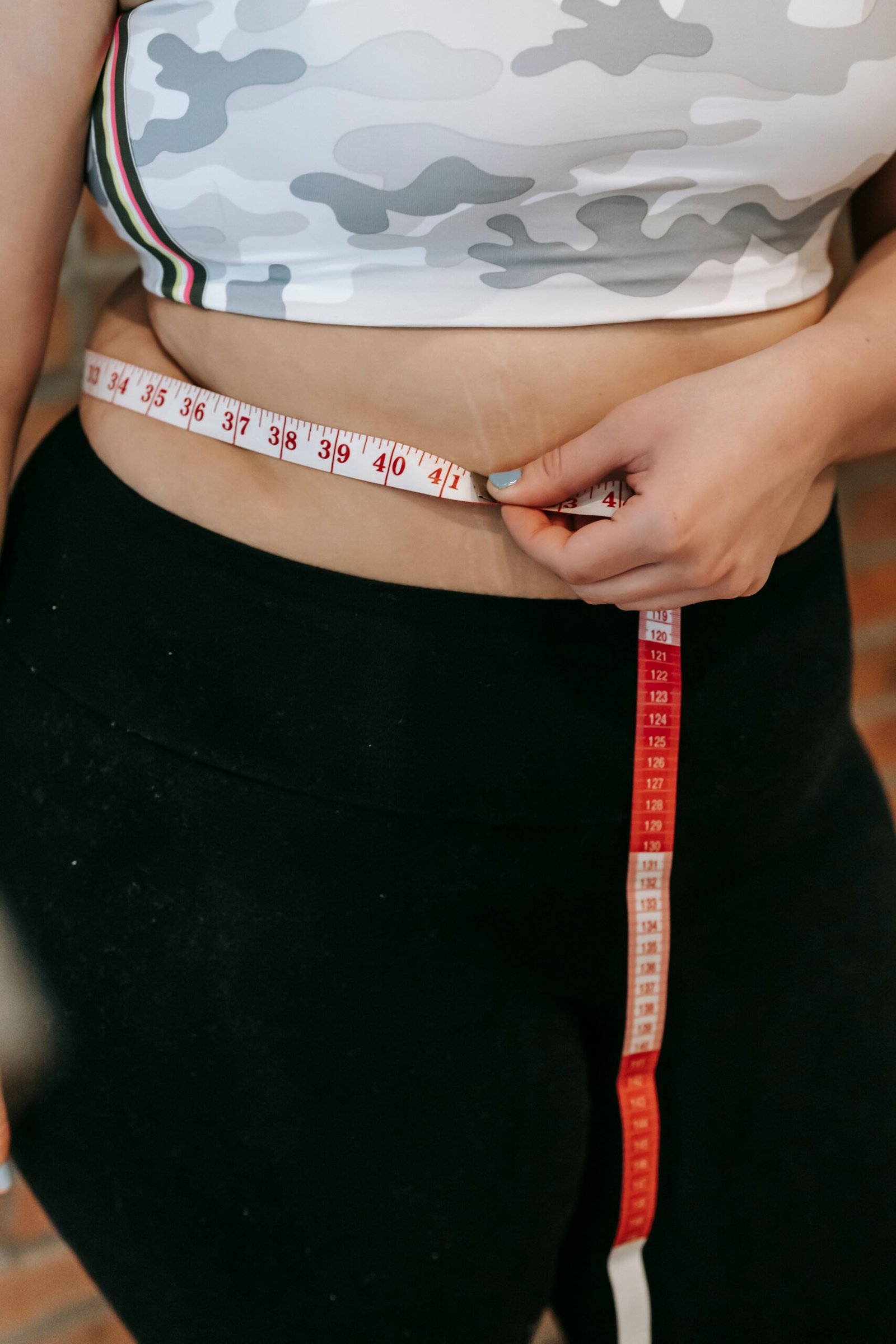


If you’re searching for the best appetite suppressant supplements for menopause belly fat, start with something the supplement labels won’t tell you: the change you’re seeing in the mirror is real, but it isn’t mainly a hunger problem, and the scale is a poor instrument for measuring it.
Here’s what the research actually shows about what shifts during the menopause transition, what the appetite suppressant ingredients do and don’t do, one safety warning that rarely makes it into these articles, and the symptoms worth taking to a doctor rather than a supplement shelf.
- Menopause changes body composition more than body weight: fat rises while lean mass falls, and the scale hides both.
- Glucomannan is the main appetite suppressant ingredient, and a meta-analysis found no significant weight loss versus placebo.
- Glucomannan can cause throat or gut obstruction if taken with too little water. Tablets are the riskiest form.
- Resistance training targets the actual problem, which is lean mass loss, better than any suppressant.
What Actually Changes in Your Body at Menopause
The Study of Women’s Health Across the Nation followed women for 18 years across the transition, measuring body composition directly rather than relying on the scale. The pattern it found is specific and useful.
Roughly two years before the final period, the rate of fat gain doubled and lean mass began to decline. Both continued for about two years afterwards, then leveled off.[1] So this is a window, not a permanent new normal.
Now the part that explains a lot of frustration. Because fat is going up while muscle is going down, the two partly cancel out on the scale.
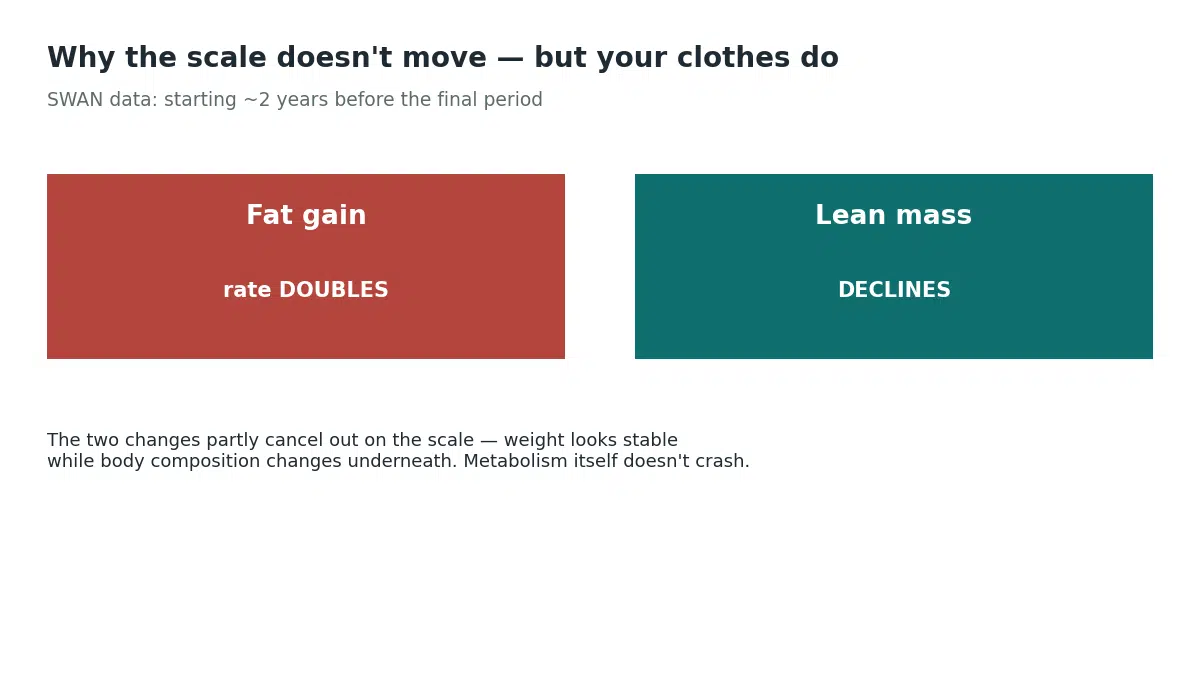
Your weight can look stable while your body composition changes underneath. That’s why the jeans stop fitting when the number hasn’t moved, and it’s why weighing yourself is close to useless as a way of tracking this.
One more correction worth making, because it’s repeated everywhere: your metabolism does not crash at menopause. The largest study of human energy expenditure found total daily expenditure stays broadly stable from about age 20 to 60, with meaningful decline starting after that. The midlife metabolic collapse is largely a myth. What’s genuinely happening is a shift in where fat is stored and a loss of the muscle that uses energy, which is a different problem with a different solution. Our guide to natural ways to boost metabolism after age 50 covers the habits side.
Best Appetite Suppressant Supplements For Menopause Belly Fat: Do They Work?
Strip the branding off the products marketed for this and you find the same short ingredient list underneath. The suppressant doing most of the work is almost always glucomannan, a soluble fiber from konjac root that absorbs water and forms a gel in the stomach.
The mechanism is real. The results are not what the marketing implies. European regulators approved a weight-loss claim for glucomannan at 3 g a day alongside a reduced-calorie diet, but a later systematic review and meta-analysis of nine randomized controlled trials covering 391 people found no statistically significant weight loss compared with placebo.
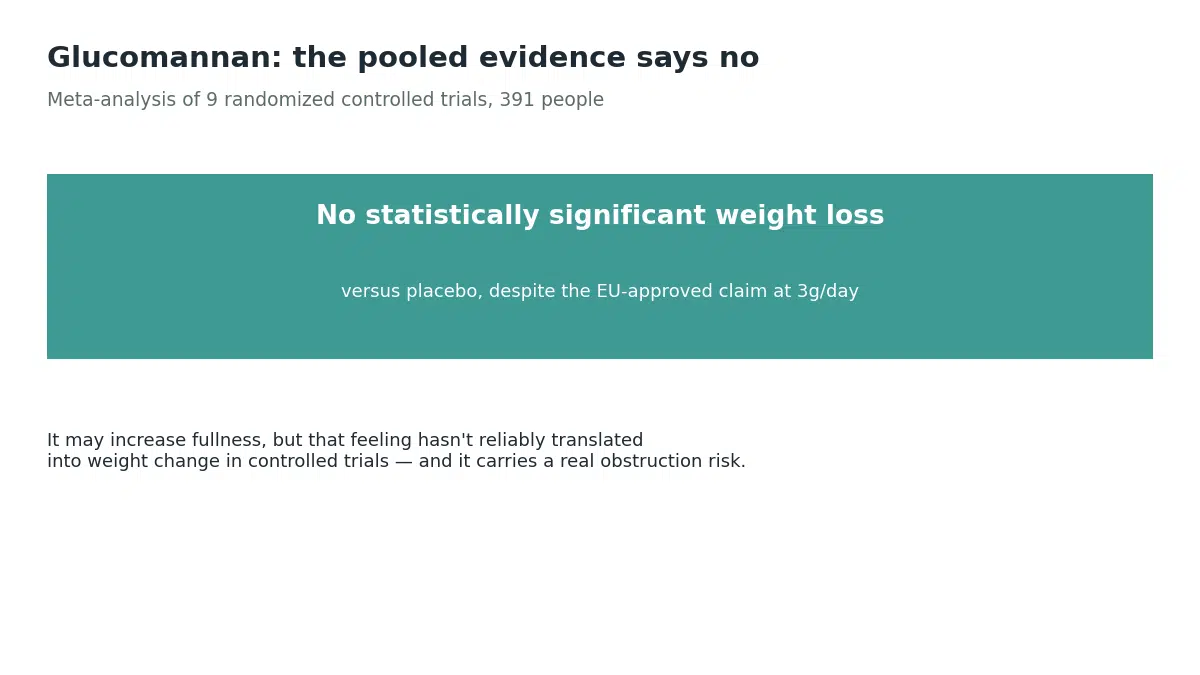
That’s the honest summary: it may help you feel fuller, and that feeling hasn’t reliably translated into weight change in controlled trials. Anything sold as a menopause-specific breakthrough is generally this ingredient in a pink box at a premium price.
Chromium and B vitamins turn up in most of these formulas too. Neither has good evidence for reducing appetite or abdominal fat in women at midlife.
The Glucomannan Safety Warning Most Articles Skip
A fiber that expands dramatically in water is safe in your stomach and dangerous in your throat. There are documented cases of severe esophageal and gastrointestinal obstruction from glucomannan, including one case of esophageal perforation. Glucomannan tablets have been banned in Australia since 1985 for this reason; capsules and powders remained available.[2]
Practical rules if you use it:
- Take it with a full glass of water. Health Canada’s advisory specifies at least 8 ounces of fluid.
- Never take it immediately before lying down or going to bed.
- Avoid it entirely if you have any difficulty swallowing, a narrowing or structural abnormality anywhere in your digestive tract, or a history of esophageal problems.
- Space it from your other medications. The usual guidance is other tablets an hour before or four hours after, because glucomannan can reduce how much of them you absorb.
- If you take insulin or an oral diabetes medication, talk to your prescriber first. Glucomannan can lower blood glucose.
Chest pain, a stuck sensation, or trouble swallowing after taking it is an emergency, not something to wait out.
A Word on Stimulant “Metabolism Boosters”
The other half of this market is caffeine with extras. Caffeine does produce a small, temporary rise in energy expenditure, and it is not going to reshape your midsection.
It’s also a poor fit for this particular life stage. If you’re already dealing with disrupted sleep, night sweats or palpitations, adding a stimulant tends to cost you more than it returns, and poor sleep makes appetite regulation harder, so the supplement works against the thing it’s sold for. Detox and slimming teas fall into the same category; our look at whether slimming tea is safe to drink every day covers why the laxative-based ones are worse than useless.
If you’re weighing one of these stimulant formulas, the ingredients to look at closely are the same every time: a caffeine source, a thermogenic like synephrine or bitter orange, and often chromium for the appetite claim. Check each one against the evidence individually rather than trusting the combined marketing pitch. The chromium in particular tends to be carrying a much weaker case than the formula implies.
What Actually Works for Menopause Belly Fat
Resistance training. This is the one that targets the actual finding. If the transition is costing you lean mass, the intervention that directly opposes that is loading your muscles. Two or three sessions a week is enough to matter, and it does more for body composition than any suppressant on the market.
Protein at every meal. It supports muscle retention and it’s genuinely filling, which is the appetite effect the supplements are trying to sell you, available from food. Our high protein weight loss diet guide covers how to structure it.
Sleep and stress. Both affect appetite regulation directly. If hot flashes are wrecking your sleep, that’s a treatable problem worth raising with a clinician rather than working around.
Ask about medical options. Hormone therapy is not a weight-loss treatment, and trials show minimal change on the scale, but it does appear to influence the fat redistribution pattern specifically, alongside treating other symptoms. There are also prescription weight-management medications now that work on appetite through a genuinely different mechanism than anything in a supplement bottle. Whether either fits you is a conversation with a doctor, and it’s a more useful conversation than comparing capsule brands.
When Abdominal Changes Need a Doctor
This section matters more on this page than on most, because two of the symptoms below are exactly what a woman at this age is most likely to dismiss as menopause, or worse, to interpret as an appetite suppressant working.
See a doctor promptly if you have:
- Persistent abdominal bloating or swelling, meaning the kind that’s there most days rather than coming and going with meals or the time of day
- Feeling full very quickly when you eat, or a real drop in appetite that isn’t explained by something you’re taking
- Persistent pelvic or abdominal pain or pressure
- New urinary urgency or frequency that doesn’t settle
- Any bleeding after menopause, which always needs assessment
- Unexplained weight loss
These are recognized symptoms of ovarian cancer, and research has found that persistent abdominal distension, early satiety and postmenopausal bleeding are meaningfully associated with it, while bloating that fluctuates is not.[3] The pattern is the signal: new, frequent, persistent, and not improving with the usual fixes. A common threshold clinicians use is symptoms occurring roughly twelve or more times a month, or lasting beyond about three weeks.
Most of the time it will turn out to be something ordinary. Getting it checked costs you one appointment.
How to Measure Progress Without the Scale
Since fat gain and muscle loss offset each other on the scale during this window, weight is the wrong number to watch. Better signals: how your clothes fit, waist measurement, whether you’re getting stronger at whatever you lift, and your energy across the day.
One last thing, said plainly. Appetite suppressants exist to make you eat less, and midlife body changes are a common trigger for eating patterns that stop being healthy. If you find yourself using these products to eat as little as possible, feeling anxious about stopping, or fixating on the number on the scale, that’s worth talking to your primary care doctor about. The National Alliance for Eating Disorders runs a clinician-staffed helpline. This is common at this life stage and it’s treatable.
The Bottom Line
The belly change is real and it isn’t a willpower failure. It also isn’t primarily a hunger problem, which is why appetite suppressants underperform against it. The main ingredient in them didn’t beat placebo in pooled trials, and it carries an obstruction risk worth respecting.
Lift something heavy a couple of times a week, eat enough protein, protect your sleep, and ask a clinician about hormone therapy or prescription options if symptoms are affecting your life. Menopause changes plenty else too, and our guide to menopause and your skin covers another part of the picture.
Frequently Asked Questions
Do appetite suppressant supplements work for menopause belly fat?
The evidence is weak. The main ingredient in most of these products is glucomannan, and a systematic review and meta-analysis of nine randomized trials covering 391 people found no statistically significant weight loss versus placebo. It may increase feelings of fullness, but that hasn’t reliably produced weight change in controlled trials, and none of it addresses the muscle loss that drives midlife body composition change.
Is glucomannan safe to take?
It carries a specific risk worth knowing. Because it expands in water, it has caused documented cases of esophageal and gastrointestinal obstruction. Always take it with a full glass of water, never right before lying down, and avoid it if you have any swallowing difficulty or a structural abnormality of the digestive tract. Tablets are the riskiest form. Space it from other medications, since it can reduce their absorption.
Does your metabolism slow down at menopause?
Not in the way it’s usually described. The largest study of human energy expenditure found total daily expenditure stays broadly stable from around age 20 to 60, with real decline beginning after that. What changes at menopause is body composition, since fat gain accelerates and lean mass falls, and losing muscle does reduce the energy your body uses. That’s a different problem, and resistance training addresses it directly.
Why hasn’t my weight changed if my body has?
Because during the transition fat mass rises while lean mass falls, and the two partly cancel out on the scale. SWAN data showed the rate of fat gain doubling about two years before the final period while lean mass declined over the same window. Your clothes and waist measurement will tell you more than the number will.
When should abdominal bloating in menopause be checked by a doctor?
When it’s persistent rather than fluctuating, meaning present most days instead of coming and going with meals. Persistent abdominal distension, feeling full very quickly, ongoing pelvic pain, new urinary urgency and any bleeding after menopause are recognized ovarian cancer symptoms and should be assessed. A common threshold is symptoms occurring around twelve or more times a month, or persisting beyond about three weeks.
SOURCESOur Editorial Standards
HealthMagHub is built on primary sources: peer-reviewed research, clinical practice guidelines, and health agencies such as the NIH, CDC, and FDA. Read our editorial standards to see how we research, cite, and update our articles.