Knowing which one you have changes the treatment completely, so that’s where to start.
- Most foot itching is dry skin, athlete’s foot, or trapped sweat, and all are treatable at home if matched to the right cause.
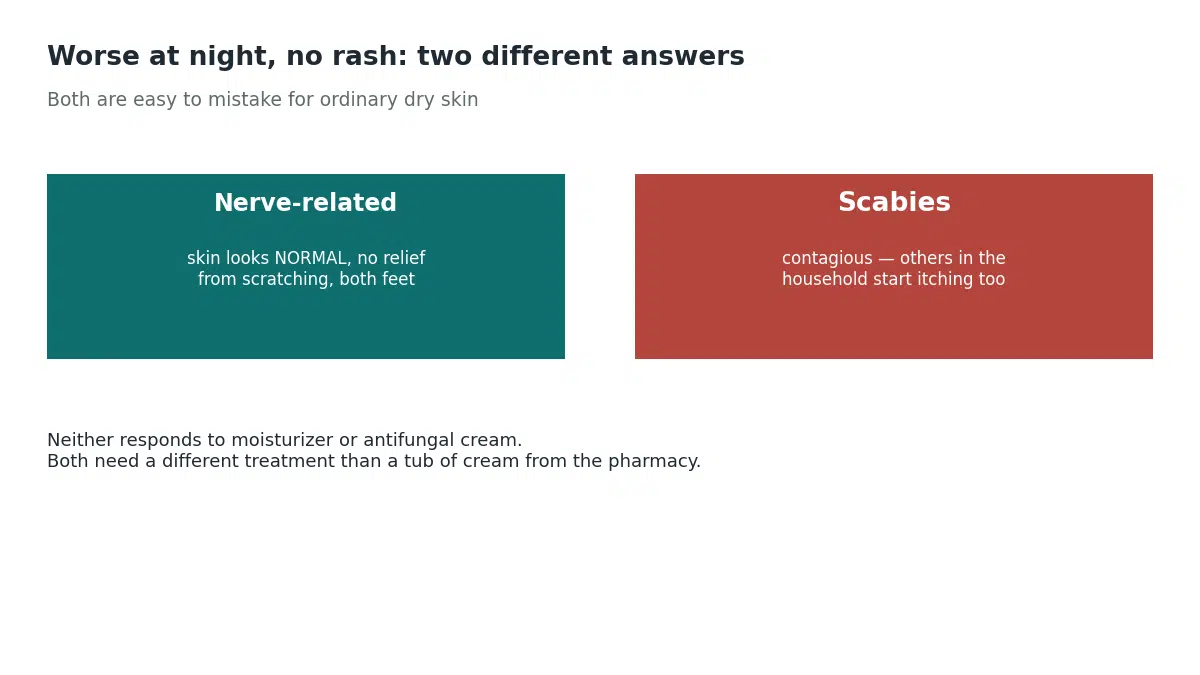
- Nerve-related itching shows normal-looking skin and affects both feet equally; scabies is intensely itchy at night and spreads to household members.
- Diabetes is the leading cause of nerve-related itching, so any new foot symptom in someone with diabetes warrants a prompt look.
- Intense itching on the palms and soles during pregnancy can signal cholestasis, which needs monitoring.
See a Doctor Promptly If
You have diabetes. Any new foot symptom, itching included, warrants a look rather than waiting, because reduced sensation can hide a developing problem. Itching persists beyond two weeks despite proper home care. Signs of spreading infection: increasing redness, warmth, swelling, pus, red streaking, or fever. Itching that’s intense at night, and other household members are also itching. That’s possible scabies, which needs specific treatment and won’t respond to moisturizer or antifungal cream. You’re pregnant with intense itching on the soles or palms. That needs assessment for cholestasis of pregnancy. And itching with no visible rash, alongside unusual thirst, fatigue, or unexplained weight change.
The Everyday Causes
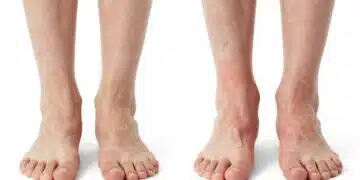
Foot discomfort shows up differently for different people, and some deal with swelling in the feet and ankles rather than an itch, where the underlying causes sometimes overlap.
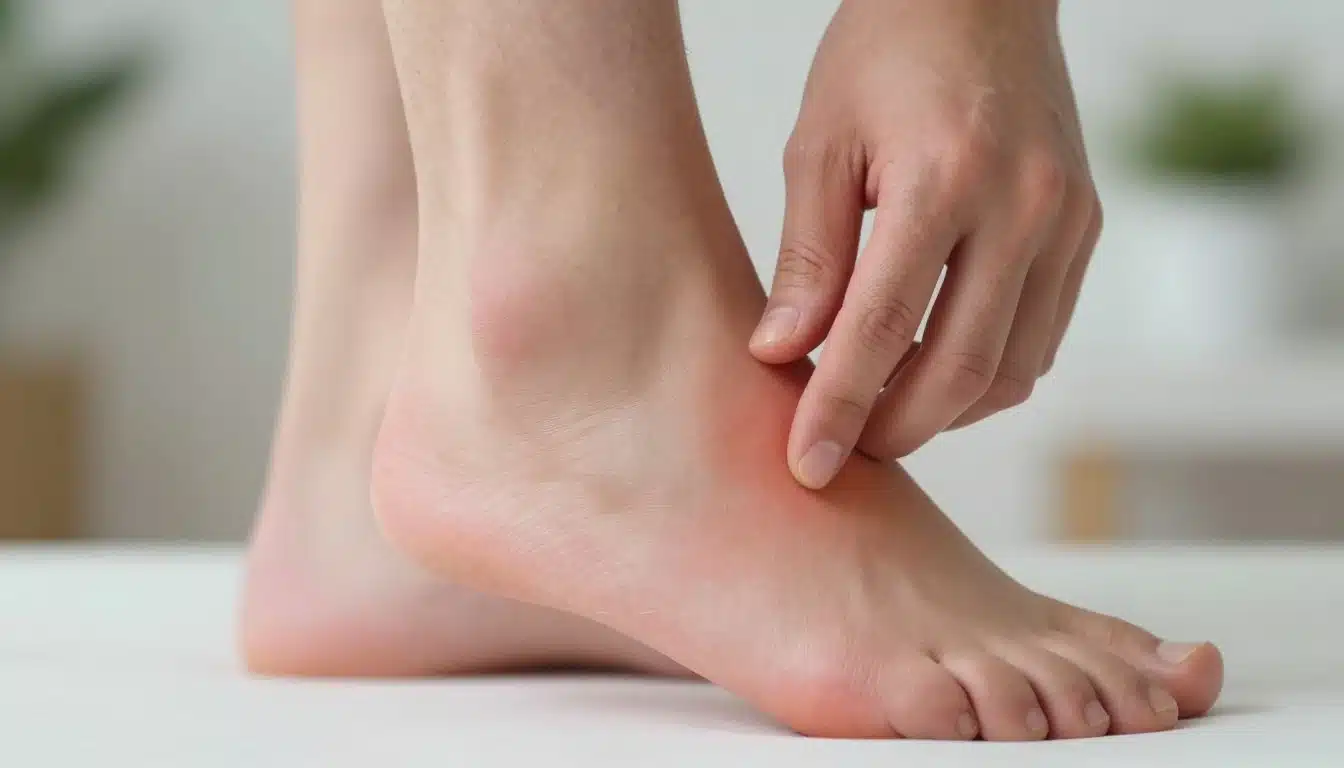
Dry skin. The commonest cause by far. Cold weather, hot showers and harsh soap strip natural oils, leaving rough, flaky skin, usually worst on the heels and balls of the feet, where skin is thickest and works hardest.
Contact dermatitis. An allergic or irritant reaction to something touching your skin: new shoes, a shoe dye, a laundry detergent change, a lotion ingredient. Burning and redness in the exact shape of contact, usually resolving within days of removing the trigger.
Heat and trapped sweat. Damp skin softens and becomes more vulnerable to irritation and infection. Worse in summer, in shoes that don’t breathe, and for anyone on their feet all day.
Athlete’s Foot
The single most common cause of persistent, treatment-resistant itching. Despite the name, no athletic activity is required, since it thrives in warm, moist environments and spreads through public showers, pools and locker rooms, or shared towels and shoes.
Typically starts between the toes before spreading to the sole. Intense itching, worse after removing shoes; red, scaly skin, sometimes small fluid-filled blisters; cracking or peeling, particularly between the toes.
Treatment: over-the-counter antifungal cream, applied once or twice daily, continued for at least two weeks, including a week after symptoms clear, since stopping early is the main reason it comes back. The same category of product used for toenail fungus often works here too, and if it’s spread to the nails as well, home remedies for toenail fungus can support the main treatment.
Wash and dry feet daily, paying particular attention to between the toes, and use antifungal powder in shoes to prevent reinfection.
The cause that’s easy to miss: scabies
A tiny mite that burrows into skin and causes intense itching, characteristically worse at night and often affecting the webbing between fingers and toes, wrists, and soles.
The tell is contagion. It spreads through close skin contact, so other household members or a partner developing the same itch around the same time is the giveaway. It won’t respond to moisturizer or antifungal cream, because neither treats a mite.
It needs a specific prescription treatment (typically permethrin cream applied to the whole body), and household contacts usually need treating at the same time even without symptoms, since the incubation period can run several weeks.
Chronic Skin Conditions
Eczema. Dry, inflamed patches with a deep itch that’s often worse at night. Scratching provides brief relief but damages skin and raises infection risk, and skin can thicken over time from repeated scratching. Regular moisturizing and identifying triggers are the mainstay.
Psoriasis. Thick, scaly, silvery-white patches that itch fiercely and crack painfully on a weight-bearing sole. Flares and remits, often triggered by stress, infection or certain medications. Needs prescription treatment, whether topical or, for more extensive disease, light therapy or something systemic.
Dyshidrotic eczema. Small, intensely itchy blisters clustering on soles and palms, painful enough to affect walking when on weight-bearing skin. Cause isn’t fully understood; stress and certain metal exposures are recognized triggers. Keeping feet cool and dry helps prevent new blisters.
Nerve-Related Itching
Sometimes the itch comes from damaged nerves rather than the skin itself, which is peripheral neuropathy.
Diabetes is the leading cause. Sustained high blood sugar damages the small vessels feeding nerves, typically affecting both feet and starting in the toes. The skin often looks completely normal despite real discomfort, which is the key distinguishing feature from an infection or rash. It’s frequently described as tingling or burning rather than a straightforward itch, and it doesn’t ease with scratching, and sometimes it worsens.
Managing blood sugar is the main lever for slowing progression. Some people find supplements for neuropathy pain ease discomfort alongside medical treatment, though they don’t reverse nerve damage.
Other causes: B vitamin deficiency, heavy alcohol use, certain chemotherapy drugs, and autoimmune conditions that attack nerve tissue directly.
The pattern that suggests nerve involvement rather than skin: normal-looking skin, no relief from scratching, worse at night, affecting both feet fairly symmetrically, and sometimes a sensation that feels like it’s coming from inside the foot rather than the surface.
When It’s a Sign of Something Elsewhere
Liver and kidney disease. When these organs stop filtering waste efficiently, accumulated substances in the bloodstream can cause widespread itching, often without any visible rash, and often worse at night. Liver disease sometimes comes with yellowing of the eyes alongside it. Blood tests catch this well before it becomes a bigger problem.
Pregnancy. Mild itching, especially in the third trimester, is common and usually harmless. But intense itching concentrated on the palms and soles can signal cholestasis of pregnancy, a liver-related condition that needs monitoring, so it’s worth mentioning to your midwife or obstetric team rather than assuming it’s ordinary pregnancy itch.
Thyroid disorders. Both an underactive and overactive thyroid can dry out skin generally, feet included, usually alongside other signs like fatigue, weight change or temperature sensitivity. Treating the thyroid resolves the skin symptom.
Foot Itching on the Bottom: What Helps at Home
Moisturize right after washing, while skin is still slightly damp, because that’s what traps the moisture. A thick foot cream or petroleum jelly on heels and balls of the feet, with socks over the top to help it absorb.
Wash daily with mild soap and lukewarm water, and dry thoroughly between the toes, where moisture lingers longest.
Breathable shoes, rotated rather than worn two days running, and moisture-wicking socks changed through the day if your feet sweat heavily.
On natural remedies: a cool oatmeal soak genuinely soothes irritated skin. Tea tree oil has real antifungal activity for mild athlete’s foot, diluted before use. Apple cider vinegar soaks are popular but the evidence for them is thin. Harmless to try, but not a substitute for antifungal treatment if that’s what you actually have.
Don’t scratch. It breaks the skin barrier, lets in bacteria and fungi, and can leave thickened, scarred skin over time. Use a cool compress or anti-itch cream instead, and if the urge to scratch feels overwhelming, that’s usually the sign to get the underlying cause treated rather than managing the itch alone.
When You Need More Than Home Care
Prescription antifungals, either oral or a stronger topical, for infections that don’t respond to over-the-counter treatment.
Topical corticosteroids for eczema and psoriasis flares, at a strength your doctor prescribes for the situation.
For nerve-related itching, treatment looks different from a skin cream: certain antidepressants and anti-seizure medications are used off-label because they calm overactive nerve signaling, and topical capsaicin or lidocaine can help locally. Managing the underlying cause, usually diabetes, matters more than any of these for the long run.
Light therapy helps some people with psoriasis under medical supervision. Laser treatment is sometimes used for stubborn fungal nail infections, though results vary and it isn’t always covered by insurance.
Common Questions About Foot Itching on the Bottom
Why do my feet itch more at night?
Nerve-related causes and scabies both characteristically worsen at night.
Is itchy feet a sign of diabetes?
Unexplained itching alongside excess thirst, frequent urination or unexplained weight change is worth a blood sugar check.
How do I know if it’s scabies rather than athlete’s foot?
Athlete’s foot stays confined to the feet and doesn’t typically spread to housemates the same way.
How long does athlete’s foot take to clear?
Continue treatment about a week after symptoms disappear, or it tends to come back.
Should I scratch itchy feet?
Try a cool compress or anti-itch cream, and treat the underlying cause instead.
What cream should I use?
Using the wrong one can make some conditions worse, so if you’re unsure what’s causing it, that’s worth a diagnosis before self-treating.
The Bottom Line
Most foot itching is dry skin, athlete’s foot, or trapped sweat, all genuinely treatable at home with consistency.
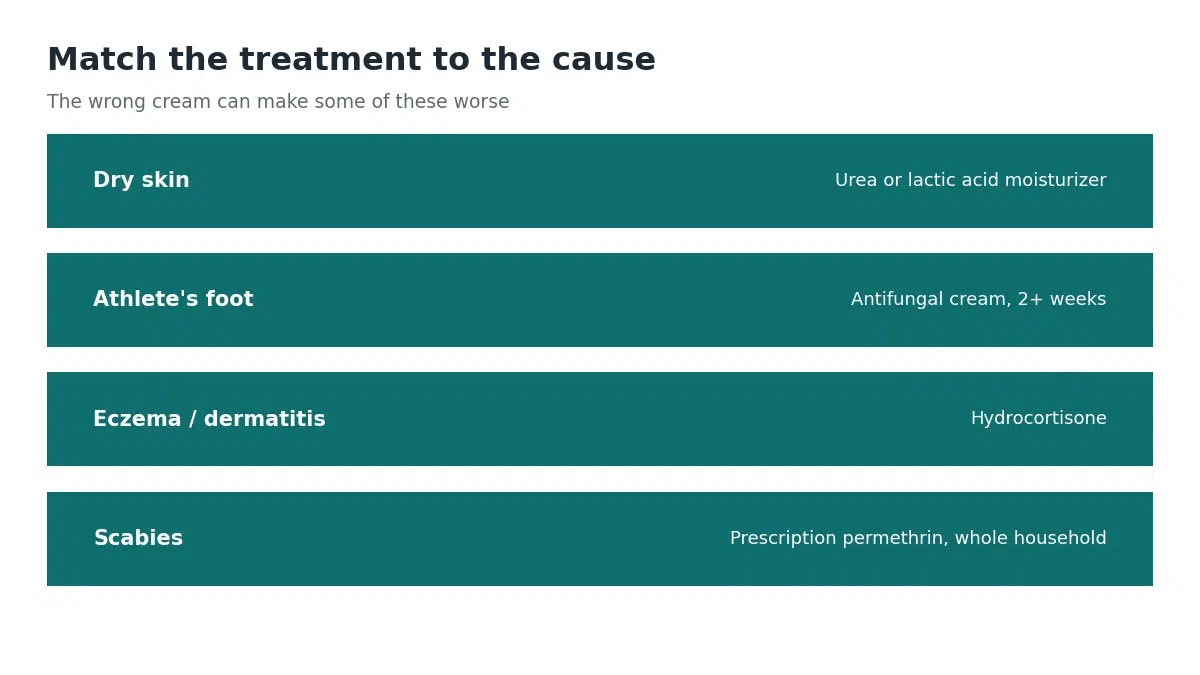
Match the treatment to the cause: antifungal for infection, moisturizer for dryness, hydrocortisone for eczema. The wrong one can make things worse.
And if it’s worse at night with no visible rash, or spreading to people you live with, that’s a different problem, either nerve involvement or scabies, and it needs a different answer than another tub of cream.
SOURCESOur Editorial Standards
HealthMagHub is built on primary sources: peer-reviewed research, clinical practice guidelines, and health agencies such as the NIH, CDC, and FDA. Read our editorial standards to see how we research, cite, and update our articles.
- Cleveland Clinic. Athlete’s Foot: Symptoms & Treatment. my.clevelandclinic.org
- Centers for Disease Control and Prevention. Scabies. cdc.gov
- American Academy of Dermatology. Eczema Types: Dyshidrotic Eczema Overview. aad.org
- American Podiatric Medical Association. Diabetic Foot Care. apma.org
Disclaimer: This article is general information, not medical advice. See a doctor promptly if you have diabetes and any new foot symptom, if itching persists beyond two weeks, or for suspected scabies. Do not self-treat with corticosteroid cream if you aren't sure of the cause.