The issue was often less about how much you ate and more about what. A high protein weight loss diet keeps you fuller on the same calories, preserves muscle while you lose fat, and burns slightly more just digesting the food itself.
- Target roughly 0.55 to 1 gram of protein per pound of body weight daily, spread across meals.
- Protein raises fullness, protects muscle during a calorie deficit, and has the highest thermic effect of any macronutrient.
- Choose efficient sources — a chicken breast gives the same protein as four servings of almonds for a third of the calories.
- Check with a doctor first if you have kidney disease, diabetes, gout, or a history of kidney stones.
Check With a Doctor First If
You have kidney disease or reduced kidney function — damaged kidneys can struggle to process protein waste, and a higher intake needs medical guidance, not a general target. Also check first if you have diabetes, gout, or a history of kidney stones; if you’re pregnant or breastfeeding; or if you have a history of disordered eating — rigid gram targets and food tracking can be genuinely unhelpful for some people, and a dietitian can help build an approach that doesn’t reintroduce old patterns.
For everyone else, moderately high protein intake is well supported as safe.
What “High Protein” Actually Means
Typically 25–35% of daily calories from protein, against a US average closer to 15–16%.
In practical terms: research broadly supports roughly 0.55 to 1 gram of protein per pound of body weight daily, with more active people toward the higher end.[1] At 180 pounds, that’s 126–180 grams — achievable across three meals and a snack, not a single heroic meal.
Higher protein intake tends to naturally displace some carbs and fat, simply because there’s less room left. That’s a large part of why it works without deliberate restriction of anything else.
Why It Helps With Weight Loss Specifically
Fullness. Protein shifts hunger hormones in your favor — raising satiety signals, lowering ghrelin. People eat less without being told to diet, simply because they’re less hungry.
Muscle preservation. Cutting calories without enough protein means your body breaks down muscle alongside fat. One controlled study found a low-protein group lost roughly five times more muscle than a high-protein group losing the same total weight.[2] Muscle burns more at rest than fat does, so keeping it protects your metabolism.
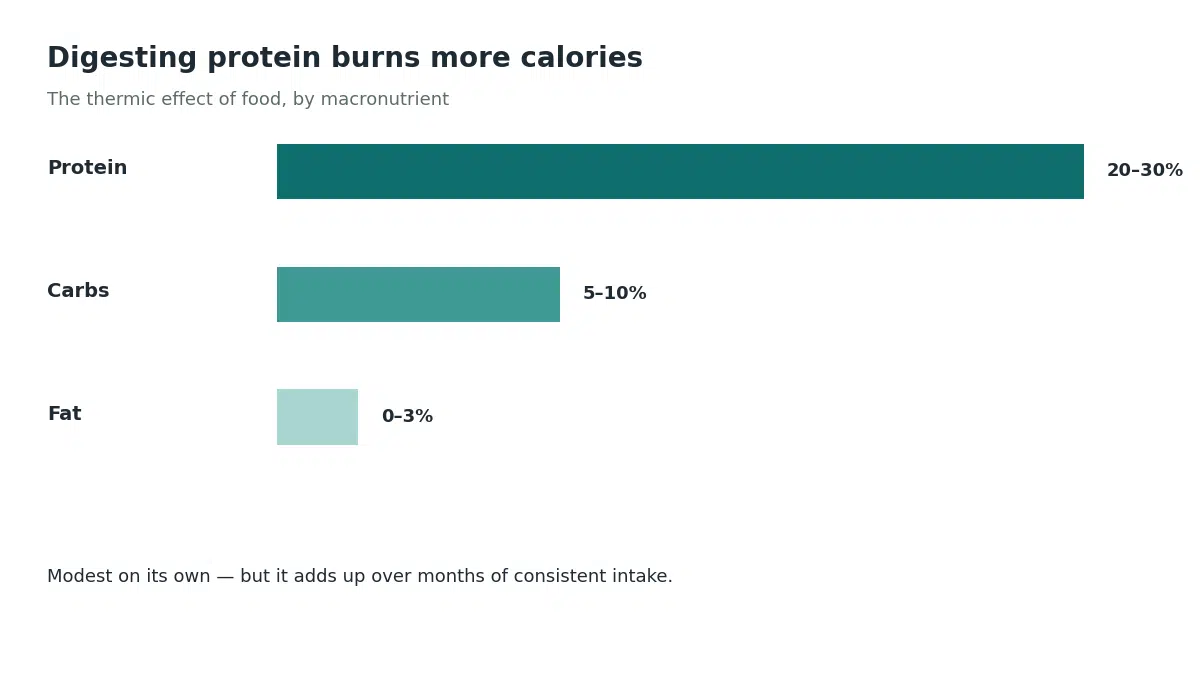
The thermic effect. Digesting protein burns roughly 20–30% of its own calories, against 5–10% for carbs and 0–3% for fat.[3] Modest on its own, but it adds up over months.
Steadier blood sugar, which means fewer energy crashes and less reflexive snacking.
High Protein Weight Loss Diet: Where to Get It
Efficient lean sources: chicken breast (~35g per 4oz, 185 calories), turkey breast, tuna in water (~25g per 3oz), cod and tilapia, egg whites (~26g per cup), nonfat Greek yogurt (~20–25g per cup), cottage cheese (~24g per cup).
Good protein, more calories to budget for: whole eggs, salmon, lean ground beef, tofu, tempeh, lentils, quinoa, nuts in modest portions.
Plant-based works fine with more deliberate planning — tofu, tempeh, seitan (not for gluten sensitivity), lentils, chickpeas and edamame all contribute meaningfully. “Incomplete” individual sources aren’t a real problem: eating a variety across the day covers the full amino acid profile without needing to pair specific foods at each meal.
Protein powder is a convenience, not a requirement — useful when time is short, unnecessary if whole foods already get you there. If a shake leaves you constipated, that’s almost always the fiber it displaced rather than the protein itself — our guide to whether protein powder causes constipation covers the fix.
Building a Day Around It
Work out your target, divide by three or four meals, and build each one around roughly 25–40 grams of protein first, then add vegetables and a modest amount of carbs or fat.
A rough example at 130g protein and around 1,750 calories: three eggs with vegetables at breakfast (~21g), Greek yogurt with berries mid-morning (~20g), a chicken salad with chickpeas at lunch (~42g), turkey slices or a shake in the afternoon (~18g), salmon with vegetables and quinoa at dinner (~38g).
Spread it across the day rather than loading one meal — 25–40g per meal supports muscle preservation better than a token breakfast and a huge dinner.
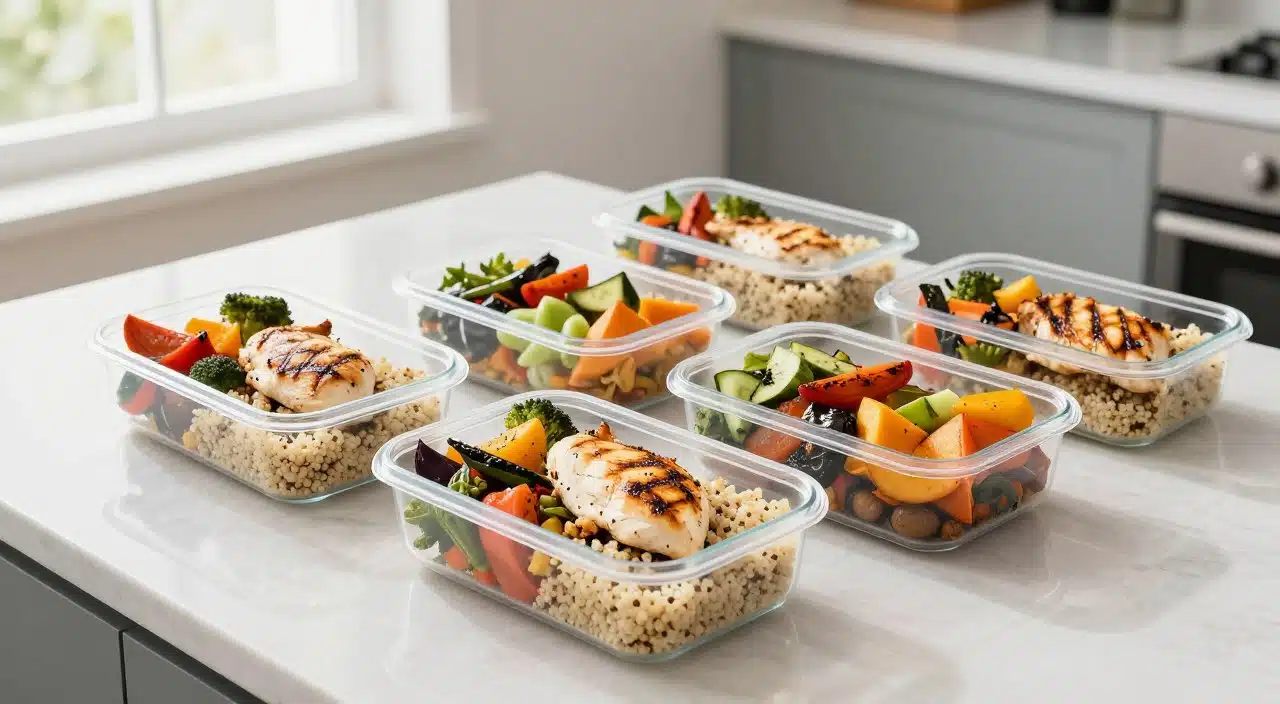
Batch cooking saves the week. Grill several pounds of chicken, hard-boil a dozen eggs, cook a big pot of lentils, pre-chop vegetables — one afternoon buys ready meals for days.
Quick options that still hit the target: a rotisserie chicken with a bagged salad, frozen shrimp sautéed with frozen vegetables, mason jar salads assembled Sunday for the week, canned tuna or salmon with crackers and vegetables.
Snacks Worth Having
Greek yogurt (~15–20g, ~100 calories), hard-boiled eggs (~6g, ~70 calories each), string cheese (~7g, ~80 calories), turkey slices rolled with cucumber (~18g, ~90 calories), edamame (~17g, ~190 calories), a small tuna pouch with crackers.
Not everyone needs snacks — if three meals cover your target comfortably, skip them. A protein-forward snack helps most with a long gap between meals, or before a late workout.
What Slows Progress
Skipping vegetables. Fiber supports fullness and gut health, and its absence is the common cause of constipation on high-protein plans. At least a cup of non-starchy vegetables at lunch and dinner — the same fiber-forward approach that helps with blood pressure serves weight loss just as well.
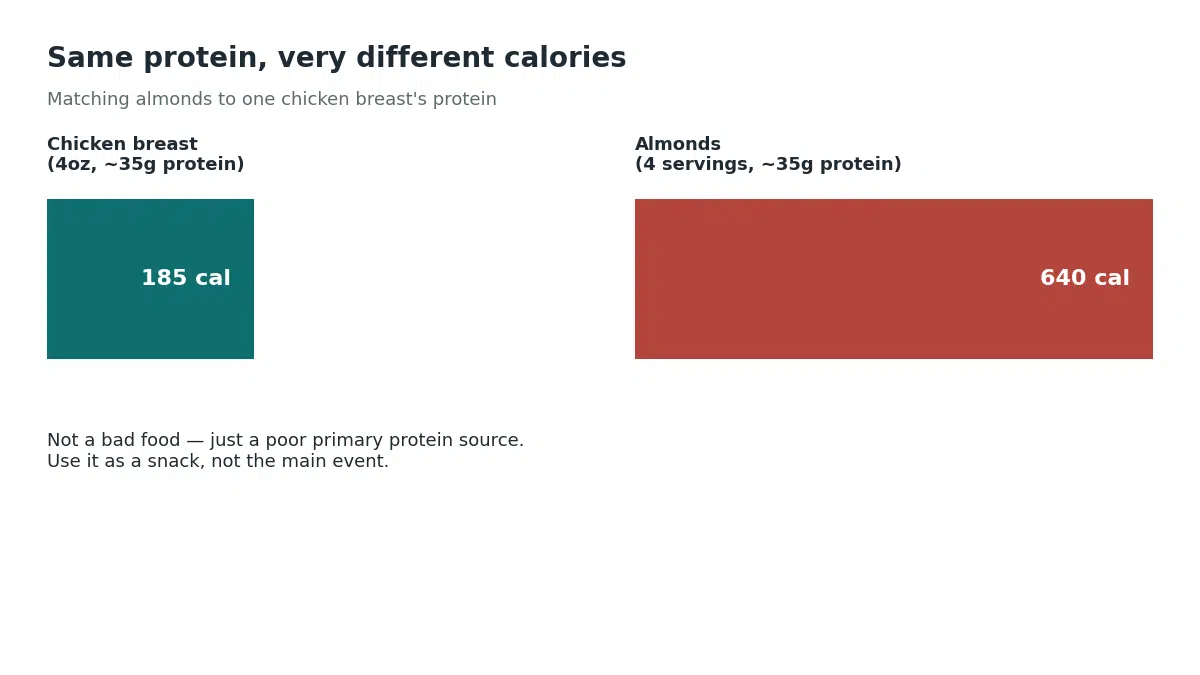
Choosing high-calorie protein sources by default. A serving of almonds gives 6g of protein for 160 calories — four servings to match one chicken breast’s protein costs 640 calories against 185. Not bad foods, just poor primary sources.
Protein-labeled traps worth checking: protein bars with more sugar than protein, calorically closer to a candy bar; flavored yogurts carrying 20g+ of added sugar; processed meats high in saturated fat and sodium; smoothies with juice and nut butter stacked on top of protein powder, quietly hitting 500+ calories.
Ignoring total calories. Protein makes a deficit easier to sustain, but it doesn’t override energy balance — adding protein on top of an already sufficient meal just adds calories. Most people need roughly 300–500 fewer calories than maintenance to lose about 0.5–1 pound weekly.
Pairing It With Exercise
Strength training, two to three sessions weekly across major muscle groups, is what actually preserves muscle during a deficit — protein alone provides the raw material, but the training is the signal to keep it.
The old idea of a narrow post-workout “anabolic window” has softened considerably — what matters more is adequate protein across the whole day, with a reasonable amount within a few hours of training.
Walking is worth calling out specifically: it burns calories without the muscle-depleting effect of excessive cardio, and most people can do it daily without hampering recovery.
Making It Last
Aim for your target most days rather than every day — a weekly average matters more than any single day.
Choose foods you actually like. Chicken and broccoli aren’t mandatory; fish, black beans, different seasonings and cuisines all count. Food you enjoy is food you keep eating.
Plan for the predictable obstacles: restaurants nearly always have a grilled protein and vegetable option; travel goes easier with protein bars and a hotel mini-fridge stocked with yogurt and eggs; and you don’t owe anyone an explanation for eating differently.
Track more than the scale. Measurements, photos, energy, sleep and how your clothes fit all move independently of the number some weeks. Plateaus on the scale don’t necessarily mean nothing is happening.
Common Questions About High Protein Weight Loss
How much protein do I actually need?
This supports muscle preservation, fullness and the thermic effect without needing to go higher.
Is high protein safe for the kidneys?
With existing kidney disease, diabetes or a history of kidney stones, talk to your doctor before increasing protein — damaged kidneys process protein waste differently.
Will eating more protein make me bulky?
In a calorie deficit, higher protein mainly helps you keep the muscle you have while losing fat, which reads as leaner rather than bigger.
Can vegetarians or vegans do this?
Eating a variety across the day covers amino acid needs without needing to pair specific foods at every meal.
Do I need protein powder?
Useful when time or appetite is limited, unnecessary otherwise.
The Bottom Line
Roughly 0.7–1 gram of protein per pound of body weight, spread across meals rather than loaded into one, alongside vegetables and a genuine calorie deficit — that combination does most of the work.
It works because it’s less miserable than plain calorie cutting: fuller on the same energy, steadier through the day, and more of what you lose comes from fat rather than muscle.
Give it a few weeks before judging, and check with a doctor first if you have kidney disease or another condition affecting protein handling.
SOURCESOur Editorial Standards
HealthMagHub is built on primary sources: peer-reviewed research, clinical practice guidelines, and health agencies such as the NIH, CDC, and FDA. Read our editorial standards to see how we research, cite, and update our articles.
- National Academy of Sports Medicine. How Much Protein Should You Eat Per Day for Weight Loss? blog.nasm.org
- Longland TM, et al. Higher Compared With Lower Dietary Protein During an Energy Deficit Combined With Intense Exercise Promotes Greater Lean Mass Gain and Fat Mass Loss. American Journal of Clinical Nutrition. academic.oup.com
- Examine.com. Thermic Effect of Food. examine.com
Disclaimer: This article is general information, not medical or nutritional advice, and doesn't replace guidance from a doctor or registered dietitian. Check with a doctor before increasing protein intake if you have kidney disease, diabetes, gout, a history of kidney stones, or are pregnant or breastfeeding. If tracking food or gram targets feels unhelpful or distressing rather than useful, a registered dietitian can help build a different approach.