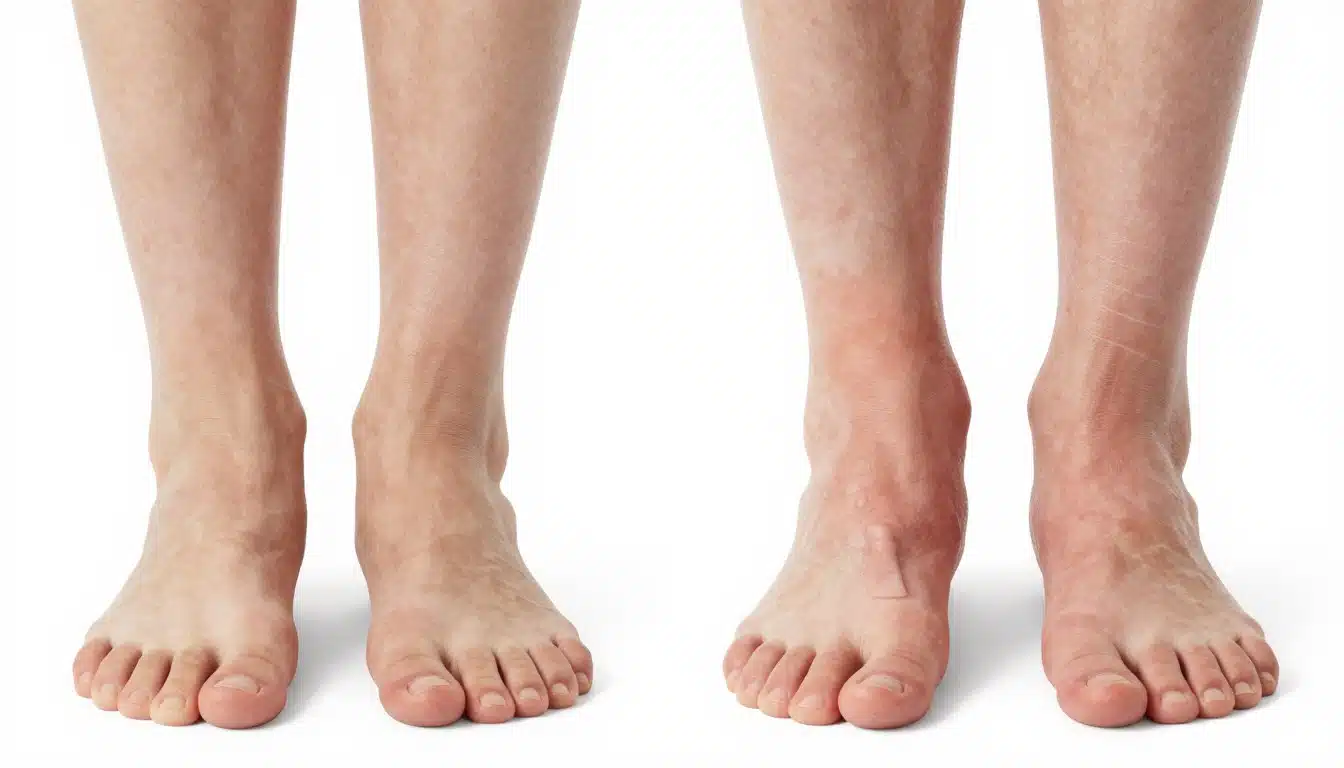
The single most useful question is whether it’s one leg or both.
- One leg swollen suggests something local, such as a clot, infection or injury, and needs same-day assessment; both legs usually points to something systemic.
- Calcium channel blockers like amlodipine are a commonly missed cause of ankle swelling, worth raising with your prescriber rather than stopping on your own.
- People with heart, kidney or liver disease are often advised to limit fluid, so general advice to drink more can work against their treatment.
- Compression stockings can worsen peripheral arterial disease, so get assessed before wearing them if you have diabetes, leg pain on walking, or cold or discolored feet.
Get Emergency Care Now If
One leg is swollen, painful, warm or red, particularly with calf pain like a cramp. This can be a deep vein thrombosis, and a clot that breaks loose travels to the lungs.[2] Sudden breathlessness, chest pain, coughing blood, or a racing heart, with or without leg swelling, is a possible pulmonary embolism and it’s a 911 call.
The same urgency applies to swelling with breathlessness when lying flat, or waking at night short of breath; a red, hot, spreading area with fever, which can mean cellulitis and is urgent if you have diabetes; sudden swelling of the face or hands in pregnancy alongside a bad headache or vision changes, which can signal preeclampsia; and a swollen leg that feels tight and painful with a pale or bluish foot.
Feet and Ankles Swelling: One Leg or Both?
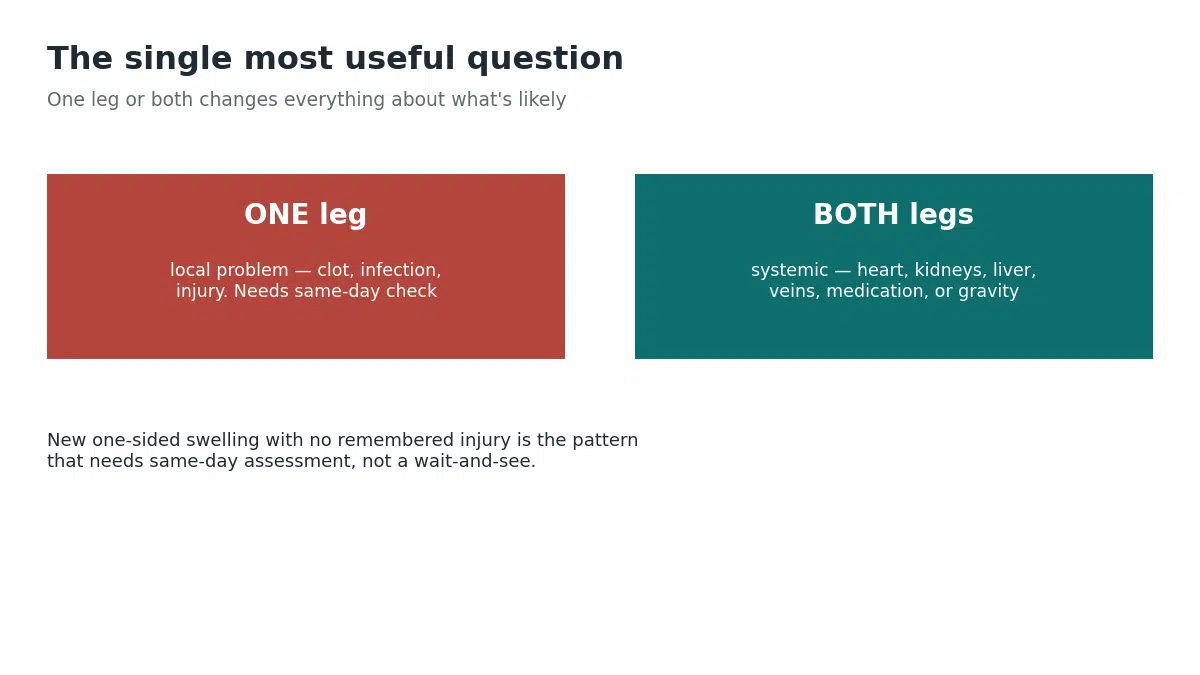
One leg points to something local in that leg: a clot, an infection, an injury, or a blockage of lymph drainage. New one-sided swelling without an obvious injury is the presentation that needs same-day assessment.
Both legs usually points to something systemic: heart, kidneys, liver, veins, medication, or simply gravity after a long day.
That doesn’t make both-leg swelling harmless. Heart and kidney failure both swell both legs. It just changes what’s likely, and what gets investigated.
You can also check for pitting: press a thumb into the swelling for about five seconds. A dent that stays is pitting edema, and how deep and how long it persists tells your doctor something about severity.
What Causes Feet and Ankles Swelling
Standing or sitting too long
Gravity wins, fluid pools, and it resolves with elevation. Both legs, no pain. The mechanism is that your calf muscles work as a pump pushing blood back up the leg, and when you stay still that pump stops, so pressure builds in the veins and fluid seeps into the surrounding tissue.
That’s why it affects people who stand all day at work and people who sit all day at a desk about equally, and why the answer in both cases is movement rather than rest. The most useful thing to notice is the timing: this kind of swelling is worst in the evening and largely gone by morning, so swelling that’s still there when you wake up is telling you something different.
Salt
Your body holds water to balance sodium, and one salty meal can show by morning. The ratio is close to fixed, so taking in more sodium means retaining the water needed to keep the concentration steady, which is how a restaurant dinner or a takeout adds a pound or two of fluid overnight. It’s temporary, and it clears over a day or two once you’re back to normal eating.
What makes it worth knowing is that it’s the commonest innocent explanation for swelling that appears out of nowhere, so it’s worth reviewing what you ate before assuming something is wrong. It matters considerably more if you already have heart, kidney or liver disease, where the same sodium load is harder to clear.
Heat
Blood vessels dilate in hot weather, which is why swelling is worse in summer and on vacation. Widened vessels leak more fluid into the tissues, and it tends to be worst in the first days of a heat wave or after arriving somewhere hot, easing as your body acclimatizes over a week or so.
Vacation swelling is usually several causes stacked on each other: a long flight with no movement, then heat, saltier food and more alcohol than usual. It’s more pronounced in older adults and in anyone already taking a medication that causes fluid retention. Heat swelling that doesn’t settle within a few days of getting home, or that affects only one leg, isn’t heat.
Medication
This is the cause most often missed. Calcium channel blockers such as amlodipine, prescribed extremely widely for blood pressure, are the classic example, and the effect is dose-dependent, so it often appears or worsens after a dose increase rather than when the drug is first started. Also steroids, some diabetes drugs including pioglitazone, hormone treatments including the pill and HRT, certain antidepressants, gabapentin and pregabalin, and regular NSAID use.
The timing is the clue: drug-related swelling usually shows up within weeks of starting something new or changing a dose, affects both legs, and doesn’t hurt. One detail worth knowing before you ask for a water tablet is that diuretics tend to work poorly for calcium channel blocker swelling, because the problem is fluid redistribution within the leg rather than too much fluid overall, so the useful conversation is about the drug itself rather than adding another one.
If swelling started within weeks of a new prescription, that’s worth raising with the prescriber, rather than by stopping the drug.
Extra weight
Extra weight raises pressure in the leg veins and wears the valves over time. Those valves are one-way gates that stop blood falling back down the leg between heartbeats, and once they have been stretched and damaged they don’t repair, which is why this cause is partly cumulative. Abdominal weight adds a second mechanism, pressing on the pelvic veins that blood from the legs has to drain through.
Losing weight reduces the pressure and usually improves the swelling, though valve damage already done stays done, which is an argument for addressing it earlier rather than later. At higher weights the lymphatic drainage can be overwhelmed as well, producing a firmer swelling that doesn’t pit and needs a different approach.
Injury
Sudden, one-sided, and with a memory of how it happened. Swelling after a sprain or fracture can take several hours to reach its peak, so an ankle that looked fine at the time and is puffed up by evening is still consistent with injury.
Two exceptions blur the picture: a stress fracture from a sudden step-up in running can swell with no single moment to point at, and in older or thinner bone a fracture can follow a knock that seemed trivial.
A torn calf muscle also produces one-sided swelling and pain that looks a great deal like a clot, which is part of why that combination gets scanned rather than assumed. One-sided swelling with no remembered injury is the version that needs checking.
The Causes That Need Treating
Heart failure. The heart isn’t pumping efficiently, so fluid backs up. Both legs, worse through the day, with tighter shoes by evening.
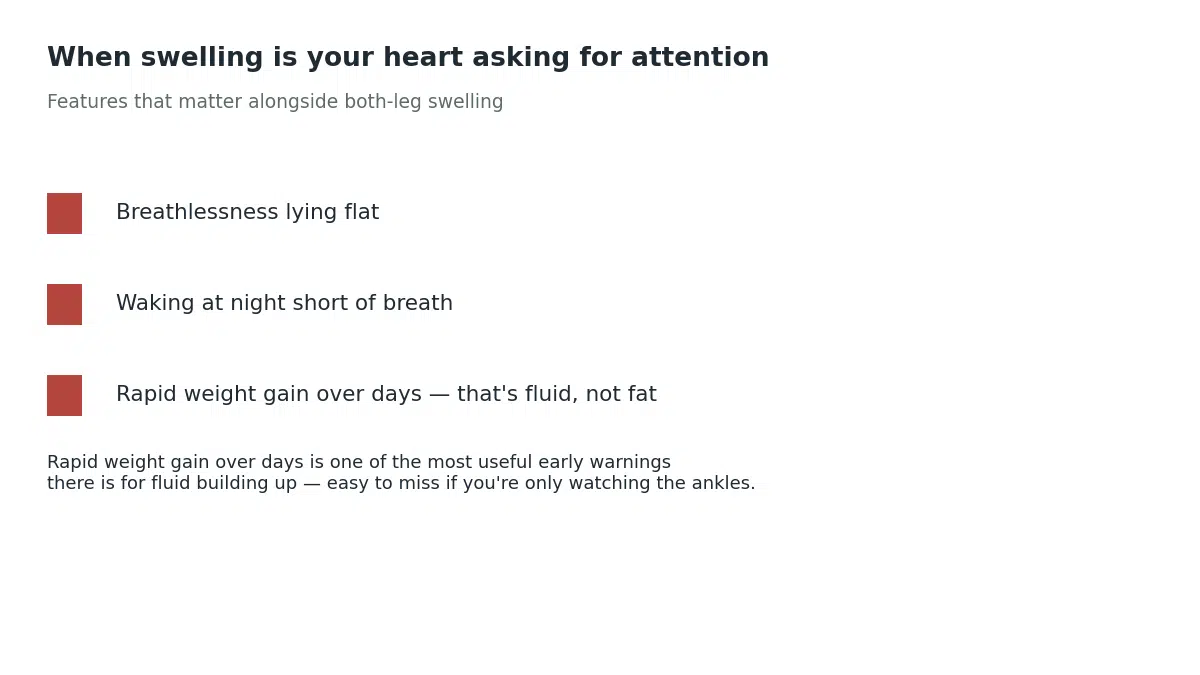
The features that matter alongside it: breathlessness lying flat, waking at night short of breath, and rapid weight gain over days. That last one is fluid, not fat, and it’s the most useful early warning there is. Our guide to why you might be gaining weight so fast covers the exact thresholds cardiology teams ask patients to call about.
Kidney disease. Failing filtration plus protein lost into the urine, which lets fluid leak out of the vessels. Often puffiness around the eyes in the morning as well, with foamy urine or changed urine output.
Liver disease. A damaged liver makes less albumin, the protein that holds fluid inside blood vessels. Abdominal swelling out of proportion to the legs, sometimes with yellowing of the eyes, itching or easy bruising.
Venous insufficiency. Worn valves let blood pool. Chronic, better with elevation, worse standing, often with visible varicose veins and brown discoloration above the ankle. Untreated it leads to ulcers that heal badly.
Deep vein thrombosis. One leg, swollen, often with calf pain, warmth and redness. Risk rises after surgery, long immobility, with the pill, in pregnancy, with cancer and with clotting disorders. This is the emergency at the top of the page.
Infection. Cellulitis: red, hot, tender, spreading, often with fever, frequently from a small crack in the skin. Higher risk and higher stakes with diabetes.
What Helps Mild Feet and Ankles Swelling
Elevation, done properly. Feet above the level of your heart, lying down, for 15 to 20 minutes several times a day. Feet on a footstool while sitting helps less, because they’re not above the heart.
Movement. Calf muscles are the pump that returns blood upward. Walking, ankle circles, flexing your feet at a desk. Breaking up long sitting or standing matters more than any single exercise session.
Less salt. The American Heart Association advises keeping sodium under 2,300 mg daily, with lower better for most adults.[1] Most of it is hidden in bread, deli meat, canned soup and takeout rather than the salt shaker. Our guide to potassium-rich foods covers the other side of that balance, and who needs to be careful with it.
Comfortable shoes. Tight footwear restricts both circulation and the ankle movement that drives the pump.
Two cautions this advice usually skips. Don’t assume more fluid is the answer. Drinking adequately is sensible for ordinary swelling. But people with heart failure, kidney disease or liver disease are often advised to limit fluid, sometimes strictly, and general advice to drink more can work directly against their treatment. If you have any of those conditions, follow your own team’s instruction rather than a number from an article.
And compression stockings aren’t for everyone. They’re genuinely effective for venous insufficiency and travel swelling. But in peripheral arterial disease, meaning poor arterial blood supply to the legs, compression can reduce flow further and cause harm. If you have diabetes, known arterial disease, leg pain when walking that eases with rest, cold or discolored feet, or any leg ulcer, get assessed before wearing compression rather than buying it off a shelf.
Cool water soaks give temporary relief. Avoid hot baths, which dilate vessels and make swelling worse.
When to Book an Appointment
Beyond the emergencies above, see a doctor within days for:
- Swelling that hasn’t improved after several days of elevation and rest
- Swelling that’s progressively worsening
- Unexplained weight gain alongside it
- Skin that looks shiny, stretched, or has changed color
- Swelling that began after starting a new medication
- Any foot or ankle swelling if you have diabetes
- Any open area, blister or ulcer on a swollen leg
Expect an examination comparing both legs, checks for pitting, heart and lung sounds, and blood pressure. Our guide to normal blood pressure ranges covers what those numbers mean.
From there: blood tests for kidney and liver function and albumin, sometimes BNP if heart failure is suspected; a urine test for protein; a leg ultrasound, which is the test that finds or excludes a clot; and an echocardiogram if the heart is in question.
Particular Situations
Pregnancy. Mild swelling is very common in the second and third trimesters: more blood volume, pressure from the uterus on the pelvic veins, and hormonal relaxation of vein walls.[3]
Normal: gradual, both legs, better with rest and elevation. Not normal: sudden swelling of face or hands, with headache, vision changes or pain under the right ribs. That’s the preeclampsia pattern and it needs contacting your maternity team the same day.
Also, pregnancy raises clot risk, so one-sided calf swelling in pregnancy is assessed rather than assumed to be ordinary.
Diabetes. Reduced sensation means injuries go unnoticed, and impaired healing turns small breaks into serious infections. Check your feet daily, never walk barefoot, and report swelling rather than watching it.
Older adults. Less efficient pumping, worn vein valves, more medications that cause fluid retention. The medication review is often the highest-yield thing to do.
Long flights and drives. Move hourly, ankle circles when you can’t, stay hydrated, avoid crossing your legs for long stretches. Compression socks help here, subject to the caution above.
Common Questions About Feet and Ankles Swelling
Is swelling in one leg different from both?
Both legs suggests something systemic, which still needs investigating but differently.
Could my blood pressure medication be causing it?
Raise it with your prescriber rather than stopping, since there are usually alternatives. Worth knowing that a diuretic is not the usual fix for this particular swelling.
Should I drink more water to reduce feet and ankles swelling?
But if you have heart, kidney or liver disease you may be on a fluid restriction, so follow your own medical team rather than general advice.
Are compression stockings safe for anyone?
Get assessed first if you have diabetes, leg pain on walking, cold or discolored feet, or any ulcer.
When is pregnancy swelling a problem?
That combination needs contacting your maternity team the same day.
How long should swelling take to settle?
Swelling that hasn’t improved in several days, or that’s still there when you wake up, needs a cause rather than more elevation.
The Bottom Line on Feet and Ankles Swelling
Look at whether it’s one leg or two. One leg, newly swollen, warm or painful, gets seen today.
Both legs after a long day on your feet responds to elevation, movement and less salt.
Check your medication list before anything else, because amlodipine and its relatives cause a great deal of this and it’s easily fixed.
And swelling with breathlessness, or rapid weight gain over days, is your heart asking for attention rather than your ankles.
SOURCESOur Editorial Standards
HealthMagHub is built on primary sources: peer-reviewed research, clinical practice guidelines, and health agencies such as the NIH, CDC, and FDA. Read our editorial standards to see how we research, cite, and update our articles.
- American Heart Association. How Much Sodium Should I Eat Per Day? heart.org
- Centers for Disease Control and Prevention. About Venous Thromboembolism (Blood Clots). cdc.gov
- Pregnancy and Lower Limb Swelling. Springer Nature. link.springer.com
Disclaimer: This article is general information, not medical advice. Seek emergency care for swelling in one leg with pain, warmth or redness; sudden breathlessness or chest pain; a red, hot, spreading area with fever; or sudden swelling in pregnancy with headache or vision changes. Do not stop prescribed medication because it may be causing swelling. Speak to your prescriber. Fluid advice differs for people with heart, kidney or liver disease, and compression stockings are not suitable for everyone; follow your own clinician's guidance.