
The question people type is which vitamin they’re short of. The honest answer is that cold hands and feet are usually not a deficiency at all — one exception aside, the explanation is nearly always circulation or thyroid.
Which is mostly reassuring. Plenty of people have cold hands and feet for no reason at all and always have. But two patterns are worth knowing: one that can be the earliest sign of an autoimmune disease, and one that means calling 911 rather than putting on socks.
- Iron deficiency is the one nutrient genuinely linked to cold hands and feet — B12 deficiency causes numbness, not true coldness.
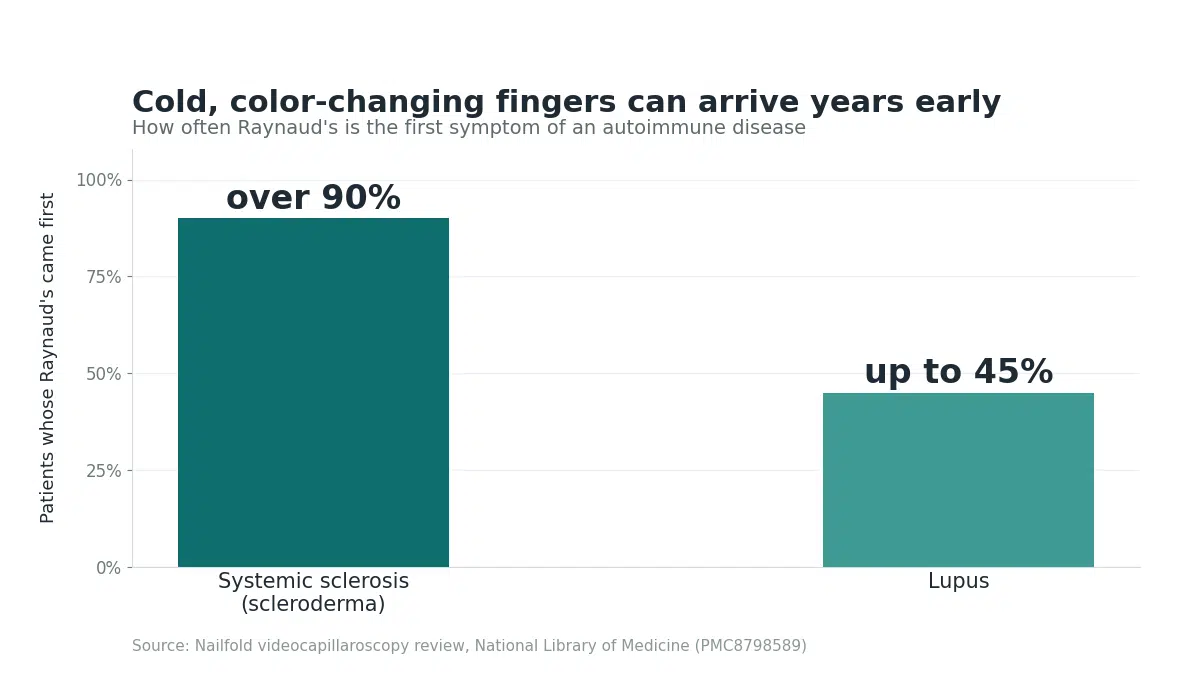
- Raynaud’s is the first symptom in over 90% of systemic sclerosis cases and up to 45% of lupus cases, sometimes years before anything else appears.
- Beta blockers, decongestants, ADHD medication and migraine triptans can all cause cold hands and feet by narrowing blood vessels.
- A single limb that turns suddenly cold, pale and painful is a medical emergency — call 911 rather than waiting to see if it warms up.
Which Deficiency Causes Cold Hands and Feet? Mostly, None
Iron is the real one. Run short and your blood carries less oxygen, your body prioritizes the core, and the extremities are first to be sacrificed. Cold hands and feet when nobody else in the room is cold — along with fatigue, breathlessness on stairs, and pale skin inside the lower eyelid — is a recognized pattern of iron deficiency, and a complete blood count with ferritin settles it in one draw.
B12 gets blamed and mostly shouldn’t be. Low B12 damages nerves, which produces numbness, pins and needles and a strange dead quality in the fingers — but not true coldness. If your hands feel numb rather than cold, that’s a different article: our guides to tingling hands and arms and what B12 actually does cover it.
Beyond iron, the deficiency story runs out quickly. No vitamin has been shown to reliably cause cold hands and feet by its absence, and the supplement aisle’s suggestions otherwise aren’t supported. If you have very little body fat or muscle, you’ll feel the cold more — but that’s physics rather than a nutrient gap.
What Usually Explains Cold Hands and Feet Instead
An underactive thyroid. Thyroid hormone sets your metabolic thermostat, and when it’s low everything slows: temperature, heart rate, gut, hair. Cold hands and feet are one of the most consistent complaints, and they arrive with fatigue, weight gain, dry skin and constipation rather than alone. One blood test, easily treated — and if the weight side is what brought you here, our guide to how much weight an underactive thyroid actually explains sets out what treatment realistically changes.
Blood vessels doing their job too enthusiastically. The small arteries in your fingers and toes are supposed to clamp down in the cold to protect core temperature. In some people that response is oversensitive and fires on mild cold or stress, producing cold hands and feet that go beyond ordinary. That’s Raynaud’s, and it’s the single commonest reason for hands that go genuinely white or blue rather than just chilly.
Smoking, diabetes and narrowed arteries. In older adults, and particularly in smokers, persistent cold hands and feet with cramping in the calves when walking points toward peripheral arterial disease. That’s plumbing, not temperature regulation, and it’s a cardiovascular risk marker rather than a nuisance.
The ordinary explanations still account for plenty: being female — women’s extremities do run cooler — being older, being anxious, being underweight, or simply being someone whose hands have always been cold.
Raynaud’s: The Harmless Version and the One That Isn’t
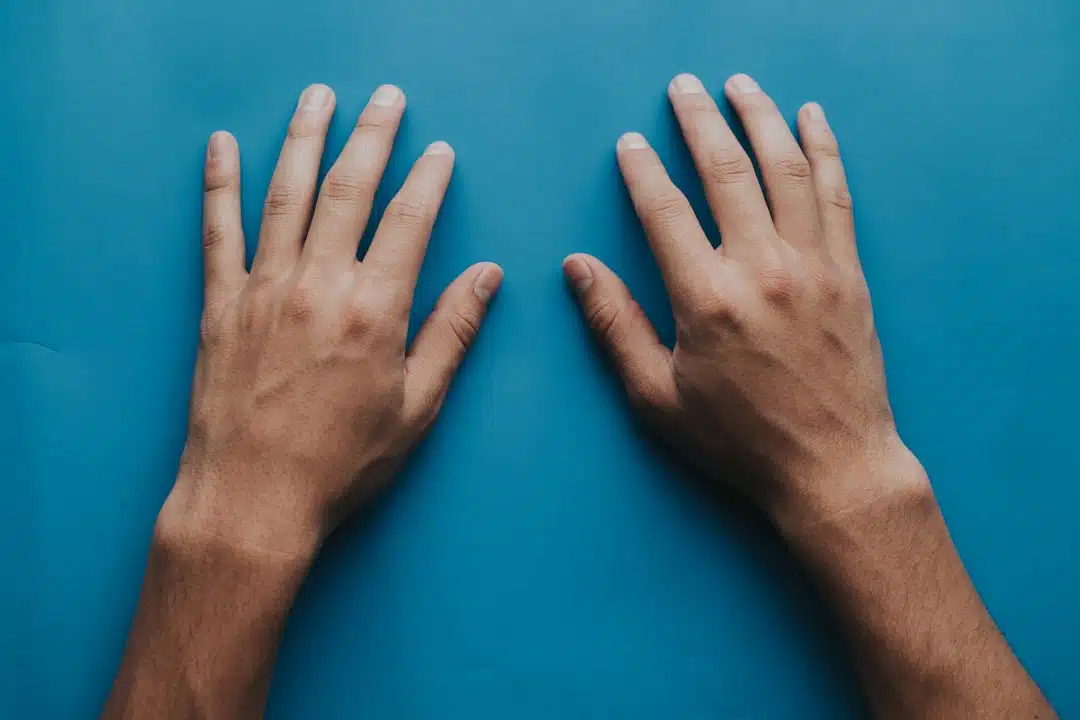
Raynaud’s has a distinctive signature. Fingers change color in sequence — white as the vessels shut, blue as oxygen drains, red and throbbing as blood floods back. Not everyone gets all three, but a clear color boundary is what separates it from ordinary cold hands and feet.
What matters clinically is which type you have, and the clues are unglamorous.
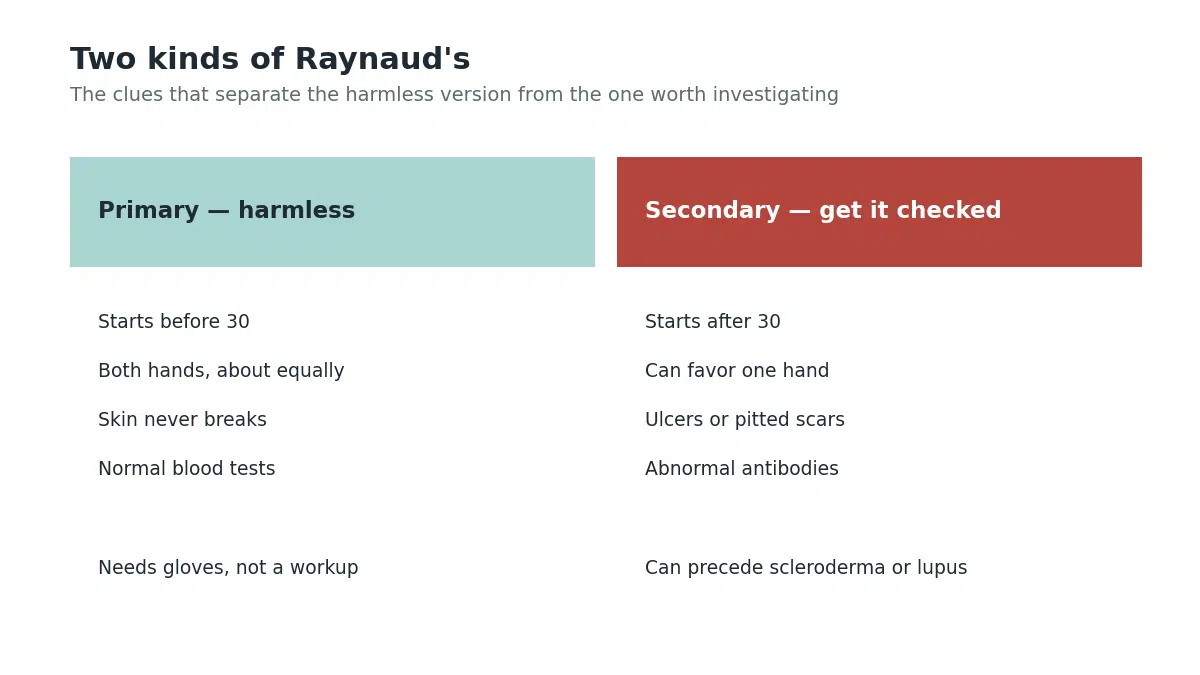
Primary Raynaud’s typically starts before 30, affects both hands about equally, and does no damage. It’s common, it’s essentially a quirk of the plumbing, and it needs nothing more than gloves and patience.
Secondary Raynaud’s starts later, can be lopsided, tends to be more severe, and can damage tissue — ulcers at the fingertips, small pitted scars, in bad cases worse. It sits alongside an underlying condition, most often an autoimmune one.
The reason this distinction earns its space: Raynaud’s is frequently the first thing to appear. In systemic sclerosis it’s the heralding symptom in over 90% of patients, and in lupus in up to 45% — sometimes years before anything else shows up. Cold fingers being the opening move of a serious disease sounds far-fetched until you see how consistent the pattern is.
Telling them apart isn’t guesswork. An antibody blood test and nailfold capillaroscopy — examining the tiny vessels at the base of the nail under magnification — are the standard tools, and distorted or missing capillary loops point strongly toward the secondary form.
Ask for that assessment if your color changes began after 30, hit one hand more than the other, have broken the skin, or arrive with joint pain, rashes, dry eyes and mouth, difficulty swallowing, or skin on the fingers that’s tightening.
The Medications That Cause It
Worth checking before you accept an explanation, because this one is common and rarely joined up.
Beta blockers — propranolol, atenolol, metoprolol and the rest — reduce blood flow to the extremities as a matter of routine mechanism. Cold hands and feet are a well-recognized effect of them, and people taking them for blood pressure, migraine or palpitations often assume the two are unrelated.
Also on the list: decongestants containing pseudoephedrine, stimulant medications for ADHD, migraine triptans, and some chemotherapy agents. All narrow small blood vessels; all can turn a mild tendency into a daily nuisance.
The move is not to stop anything. It’s to mention the timing — if the coldness arrived within weeks of a new prescription, that’s the detail your prescriber needs, and there are usually alternatives.
When This Is an Emergency
Almost everything above affects both hands or both feet, comes and goes, and develops over months. One presentation does none of that.
A single limb that turns suddenly cold, pale and painful is a medical emergency. Blood flow has been blocked — usually by a clot — and tissue starts dying within hours. Acute limb ischemia is the name for it, and the classic signs are pain, pallor, pulselessness, coldness, pins and needles, and eventually weakness in the affected limb.
Two details worth carrying: the pain is characteristically out of proportion to how the limb looks, and there’s often a distinct line where warm skin becomes cold. Risk is higher with atrial fibrillation, existing artery disease, or recent vascular procedures.
Call 911. Don’t warm it, don’t wait to see, don’t drive yourself.
Also book an appointment, less urgently, for cramping in your calves that starts when you walk and stops when you rest, a sore or ulcer on the foot or toes that isn’t healing, cold feet alongside numbness if you have diabetes (reduced sensation means injuries go unnoticed), or cold hands and feet with fatigue, weight change, hair thinning or heavy periods, which points at thyroid or iron.
What Actually Helps
Assuming nothing above applies, the practical measures against cold hands and feet are dull and effective.
- Warm your core, not just your extremities. Your body pulls blood inward when your trunk is cold, so a vest under your coat does more for your fingers than thicker gloves.
- Mittens beat gloves. Fingers keep each other warm; separating them wastes heat.
- Move. Even a brisk few minutes reopens circulation, and regular walking improves it over months.
- Stop smoking if you smoke. Nicotine constricts exactly the vessels in question, and it’s the single biggest modifiable factor here.
- Watch the caffeine if you get Raynaud’s attacks — it’s a vasoconstrictor, and some people notice a clear link.
- Get the bloodwork rather than guessing: a complete blood count, ferritin, and thyroid function. Three tests answer most of this article.
If the coldness comes with numbness or burning rather than existing on its own, the nerve side is worth reading about too — our look at supplements for nerve pain in the feet and hands covers what’s evidenced there. And cold feet that are also swollen are a different mechanism again, covered in swelling in the feet and ankles.
Frequently Asked Questions
What deficiency causes cold hands and feet?
Iron, realistically — and that’s the only one with a solid claim. Ask for a complete blood count and a ferritin level rather than starting a supplement on suspicion, since unnecessary iron causes its own problems.
Can low B12 cause cold hands and feet?
Not really. B12 deficiency damages nerves, which produces numbness and tingling rather than true coldness. It’s still worth testing if your hands feel dead or prickly, but it isn’t the answer to feeling cold.
Is Raynaud’s serious?
Usually not. The primary form starts young, affects both hands, and never damages anything. The version that needs assessment starts after 30, may be one-sided, or breaks the skin — that one can accompany an autoimmune condition.
Why are my hands always cold but my body is warm?
Cold hands and feet with a warm trunk is normal circulatory behavior taken to an extreme. Your body protects core temperature by restricting flow to the periphery, and in some people that response is simply more enthusiastic. It only needs investigating if it changed recently or comes with other symptoms.
Can anxiety cause cold hands and feet?
Yes. Adrenaline diverts blood away from the skin and toward the muscles, which is why cold hands and feet turn up clammy under stress. It’s harmless, and it settles when the stress does.
When should I worry about cold hands and feet?
When it’s one limb rather than both, came on suddenly, and hurts — that’s an emergency. Less urgently: when it arrives with fatigue or weight change, when walking brings on calf cramps, or when the skin breaks.
The Bottom Line
Cold hands and feet are rarely about vitamins. Iron is the exception worth testing for; after that the likely answers are an underactive thyroid, oversensitive blood vessels, or a medication you’re already taking.
Three blood tests cover most of it. What can’t wait is a single limb turning cold, pale and painful at once — and what deserves a proper look is color change that started after 30, favors one hand, or damages the skin.
SOURCESOur Editorial Standards
HealthMagHub is built on primary sources: peer-reviewed research, clinical practice guidelines, and health agencies such as the NIH, CDC, and FDA. Read our editorial standards to see how we research, cite, and update our articles.
- Cleveland Clinic. Acute Limb Ischemia: Symptoms, Causes and Treatment.
- Acute Limb Ischemia. MSD Manual, Professional Edition — cardiovascular disorders, peripheral artery disorders.
- Raynaud’s phenomenon in limited cutaneous systemic sclerosis. National Library of Medicine, PMC4716270.
- Nailfold Videocapillaroscopy in Connective Tissue Diseases with Raynaud’s Phenomenon. National Library of Medicine, PMC8798589.