The lower abdominal muscles form a critical component of your overall core stability. These muscles work together with the transverse abdominis and other core structures to support your spine, improve posture, and enhance athletic performance. Understanding how to properly engage these muscles during exercise makes the difference between effective training and wasted effort.
This comprehensive guide explores proven lower abdominals workouts that target the often-neglected lower portion of your rectus abdominis. We’ll examine proper exercise form, muscle anatomy, training progressions, and common mistakes that prevent results. Whether you’re a beginner starting your fitness journey or an experienced athlete seeking to enhance your core workout routine, these strategies will help you develop genuine lower ab strength.
Understanding Lower Abdominal Muscle Anatomy
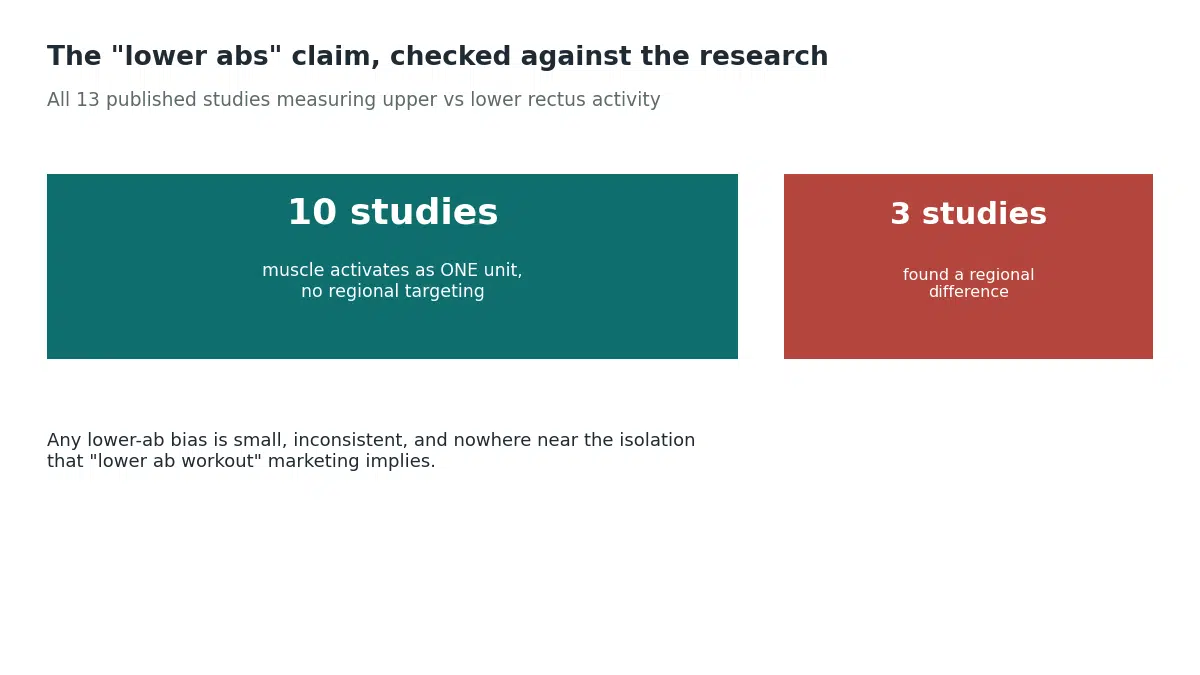
The abdominal muscles function as an integrated system rather than separate upper and lower sections. The rectus abdominis is actually a single continuous muscle running from your ribcage to your pubic bone. However, different exercises emphasize activation in different regions of this muscle, which is why targeted lower abs exercises prove effective.
Beyond the rectus abdominis, several deeper core muscles contribute to lower abdominal strength and definition. The transverse abdominis wraps around your midsection like a natural weight belt, providing stability and compression. This deep muscle plays a crucial role in protecting your spine during movement and creating the foundation for visible ab definition.
Key Muscles Involved in Lower Ab Training
Understanding which muscles you’re targeting helps you maintain proper form and maximize workout effectiveness. The abdominal muscle complex includes several layers that work together during core strengthening exercises. Each layer contributes differently to movement, stability, and appearance.
Primary Muscles
- Rectus abdominis (lower portion)
- Transverse abdominis (deep core stabilizer)
- Internal obliques (lateral support)
- Hip flexor muscles (iliopsoas group)
Supporting Muscles
- External obliques (rotational control)
- Quadratus lumborum (spinal stability)
- Pelvic floor muscles (internal support)
- Lower back muscles (posterior chain)
How Lower Ab Exercises Target Specific Regions
While the rectus abdominis contracts as a whole, certain movements create greater activation in the lower region. Exercises that bring your pelvis toward your ribcage or involve leg movements with a posterior pelvic tilt emphasize the lower fibers. This selective activation explains why specific lower abdominals workouts feel different from standard crunches.
Muscle Activation Insight: Research shows that exercises involving leg raises and reverse crunching movements produce significantly higher activation in the lower abdominal region compared to traditional upper ab exercises. The key is maintaining proper pelvic position throughout the movement.
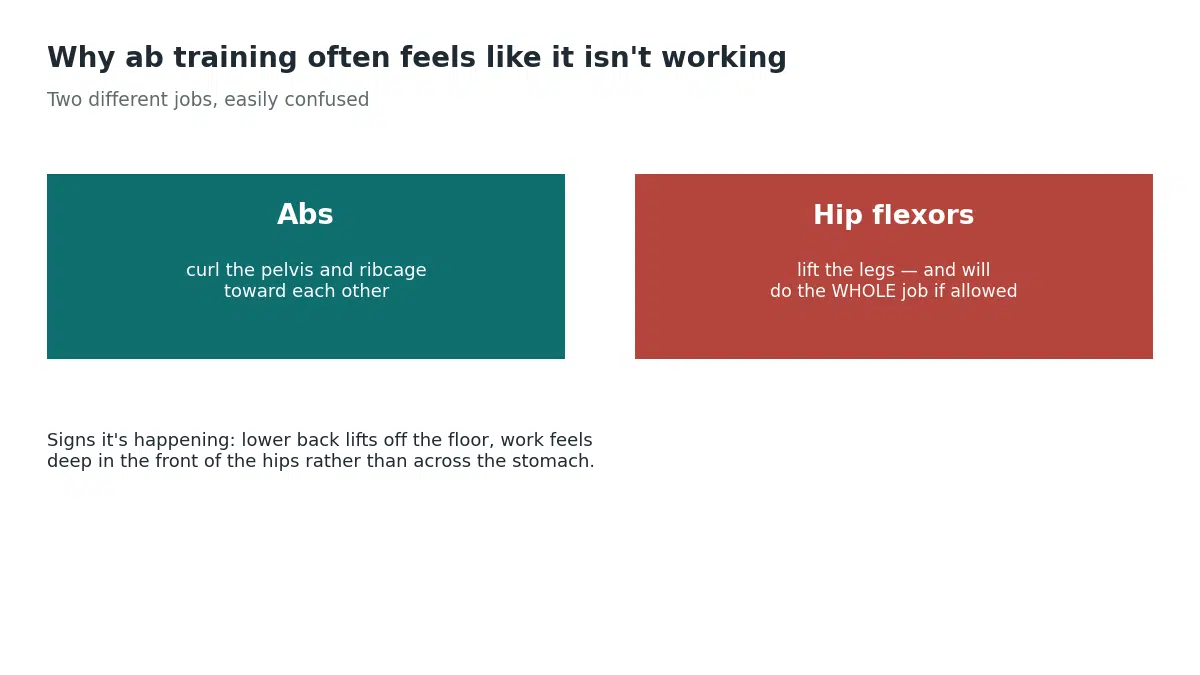
The hip flexor muscles often dominate during lower ab exercises if you don’t maintain proper form. Learning to engage core muscles independently from hip flexors is essential for targeting the lower abs effectively. This mind-muscle connection develops with practice and conscious attention to movement quality.
Best Lower Abdominals Workouts for Results

Selecting effective exercises forms the foundation of successful lower abs training. The most productive movements challenge your core muscles through their full range of motion while maintaining constant tension. These exercises require minimal equipment and can be performed at home or in the gym.
Progression is critical when developing lower abdominal strength. Starting with foundational movements and gradually advancing to more challenging variations prevents injury while building genuine strength. The exercises below are organized by difficulty level to support your progression.
Fundamental Lower Ab Exercises
These beginner-friendly movements establish proper form and core activation patterns. Master these exercises before progressing to more advanced variations. Focus on quality over quantity, ensuring you feel the lower abs working throughout each repetition.
- Reverse Crunch: Lie on your back with hands beside your body. Bring knees toward chest, then use your lower abdominals to lift hips slightly off the floor. Focus on tilting your pelvis upward rather than swinging your legs. Return to starting position with control. This foundational exercise isolates the lower ab region effectively.
- Dead Bug: Lie flat with arms extended toward the ceiling and knees bent at 90 degrees. Slowly lower your right knee and left arm toward the floor while keeping your back pressed down. Return to starting position and alternate sides. This movement teaches core stability while challenging the transverse abdominis.
- Heel Slides: Lie on your back with knees bent and feet flat. Slowly slide one heel along the floor until your leg is straight, keeping your lower back pressed down. Return and repeat with the other leg. This gentle exercise builds foundational control before progressing to leg raises.
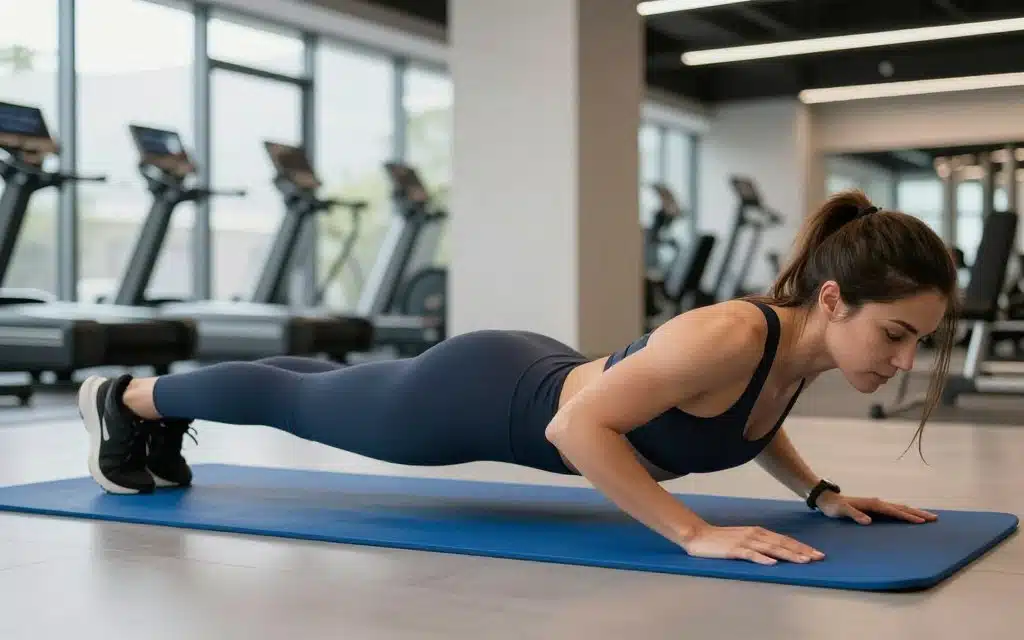
- Knee Tucks: Start in a plank position with hands under shoulders. Bring both knees toward your chest while maintaining a neutral spine. Return legs to starting position. This dynamic movement combines plank stability with lower ab activation.
Intermediate Lower Abdominal Exercises
Once you’ve mastered the fundamental movements, these intermediate exercises provide greater challenge. They require more strength, stability, and coordination. Continue focusing on form quality rather than rushing through repetitions.
| Exercise | Primary Target | Equipment Needed | Difficulty Level |
| Hanging Knee Raises | Lower abs, hip flexors | Pull-up bar | Intermediate |
| Mountain Climbers | Entire core, cardiovascular | None | Intermediate |
| Bicycle Crunches | Rectus abdominis, obliques | None | Intermediate |
| Stability Ball Pike | Lower abs, shoulders | Stability ball | Intermediate |
| Flutter Kicks | Lower abdominals, hip flexors | None | Intermediate |
Advanced Lower Ab Movements
Advanced exercises demand significant core strength and control. Attempt these only after developing solid proficiency with fundamental and intermediate movements. Poor form on advanced exercises can lead to injury and reduced effectiveness.
- Hanging leg raises with legs straight – lift legs to horizontal while maintaining control
- Dragon flags – advanced body lever requiring exceptional core strength
- Ab wheel rollouts – challenges entire core while emphasizing lower region
- L-sit holds – isometric exercise building tremendous core stability
- Toes-to-bar – brings feet all the way to the bar from hanging position
- Windshield wipers – rotational movement combining strength with control
Mastering Proper Form for Lower Abs Exercises
Correct technique is more important than the number of repetitions you complete. Poor form not only reduces exercise effectiveness but also increases injury risk, particularly to your lower back. Every exercise in your lower abdominals workouts should be performed with deliberate control and attention to alignment.
The most common mistake involves using momentum or allowing hip flexors to dominate the movement. When performing leg-based abs exercises, focus on initiating movement from your core rather than simply swinging your legs. This conscious control ensures the target muscles perform the work.
Key Form Principles
Several universal principles apply across all lower abs exercises. Maintaining these standards throughout your workout maximizes results while protecting your spine. Pay particular attention to pelvic position and breathing patterns during execution.
Spinal Alignment
Maintain a neutral or slightly posterior pelvic tilt throughout lower ab exercises. Press your lower back gently toward the floor when lying down, eliminating the arch. This position ensures your abdominal muscles rather than hip flexors perform the work. Allowing excessive arching shifts tension away from the target area.
When performing standing or hanging exercises, imagine lengthening your spine while drawing your ribcage down. This alignment creates a straight line through your torso, preventing compensation patterns that reduce effectiveness.
Form Checklist
- Keep lower back pressed to floor during lying exercises
- Engage core before initiating movement
- Move slowly with controlled tempo
- Breathe consistently throughout sets
- Avoid pulling on neck or head
- Maintain shoulder blades down and back
Breathing Techniques for Core Work
Proper breathing supports core engagement and prevents excessive intra-abdominal pressure. Exhale during the exertion phase of each movement, when you’re lifting legs or contracting your abs. Inhale during the return to starting position. This breathing pattern maintains core tension while providing adequate oxygen.
Common Form Mistakes to Avoid: Never hold your breath during core exercises, as this creates dangerous pressure. Don’t use momentum to swing through repetitions. Avoid letting your lower back arch excessively. Don’t pull on your neck with your hands. Stop immediately if you feel pain in your back rather than muscle fatigue in your abs.
Progressive Overload for Core Training
Building lower abdominal strength requires progressive challenge over time. Simply repeating the same workout indefinitely produces diminishing returns. Apply progressive overload through several methods while maintaining perfect form.
Increase Repetitions
Gradually add more reps to each set as exercises become easier. Progress from 8-10 reps to 15-20 before advancing to harder variations.
Slow Down Tempo
Perform movements more slowly, increasing time under tension. Try 3-second lowering phases to intensify difficulty.
Advanced Variations
Progress to more challenging exercise versions that require greater strength and control once you master basic forms.
Complete Lower Abdominals Workout Routines

Effective core workout routine design balances exercise selection, volume, and recovery. Your lower abs respond best to 2-3 dedicated training sessions per week, allowing adequate recovery between workouts. These sample routines provide structure for different fitness levels.
Each workout should begin with a brief warmup to increase blood flow and prepare your core muscles for work. Five minutes of light cardio followed by gentle torso rotations and cat-cow stretches prepares your body effectively. Never skip this preparation phase.
Beginner Lower Ab Workout
This foundational workout builds basic core strength and teaches proper activation patterns. Perform this routine 2-3 times weekly with at least one rest day between sessions. Focus entirely on form quality rather than speed or rep count.
- Reverse Crunches: 3 sets of 10-12 repetitions. Rest 45 seconds between sets. Keep movement controlled and deliberate.
- Dead Bugs: 3 sets of 8-10 reps per side. Maintain steady breathing and keep your back pressed to the floor.
- Heel Slides: 2 sets of 12-15 reps per leg. Focus on preventing lower back arch as legs extend.
- Plank Hold: 3 sets of 20-30 seconds. Maintain straight line from head to heels in plank position.
- Knee Tucks: 2 sets of 8-10 repetitions. Keep core engaged throughout the entire range of motion.
Intermediate Lower Abdominal Routine
After mastering beginner exercises, this intermediate workout increases challenge and volume. Continue prioritizing form over ego, ensuring every repetition targets the intended muscles. This program builds significant core strength over 6-8 weeks.
| Exercise | Sets | Repetitions | Rest Period |
| Hanging Knee Raises | 4 | 10-12 | 60 seconds |
| Bicycle Crunches | 3 | 15-20 per side | 45 seconds |
| Mountain Climbers | 3 | 20-30 total | 45 seconds |
| Reverse Crunches | 3 | 15-18 | 45 seconds |
| Stability Ball Pike | 3 | 8-12 | 60 seconds |
Advanced Lower Ab Training Program
This challenging workout demands significant core strength and control. Attempt this routine only after demonstrating mastery of intermediate exercises. The advanced program emphasizes exercise difficulty over high repetition counts.
- Hanging leg raises with straight legs – 4 sets of 8-10 reps, 90-second rest
- Dragon flags (negatives if needed) – 3 sets of 4-6 reps, 2-minute rest
- Ab wheel rollouts – 4 sets of 10-12 reps, 75-second rest
- L-sit holds – 4 sets of 15-30 seconds, 60-second rest
- Windshield wipers – 3 sets of 6-8 per side, 90-second rest
- Toes-to-bar – 3 sets of 8-10 reps, 90-second rest
Equipment Options for Lower Ab Training
While many effective lower abs exercises require no equipment, certain tools can enhance your training. Understanding equipment options helps you decide what might benefit your home workout setup. However, remember that equipment is never mandatory for building core strength.
Bodyweight exercises form the foundation of exceptional lower abdominals workouts. Your own body provides all the resistance needed to develop impressive core strength. Equipment simply offers additional variety and progression options as you advance.
Minimal Equipment Recommendations
Exercise Mat
A cushioned mat protects your spine during floor-based exercises. This affordable investment improves comfort significantly during lying movements.
Pull-Up Bar
Doorway-mounted bars enable hanging leg raises and other advanced progressions. They expand exercise options considerably.
Stability Ball
Exercise ball adds instability to planks and pike movements, increasing core activation and providing variation.
Resistance Bands
Bands add variable resistance to certain core movements and assist with stretching between sets.
Ab Wheel
This simple device creates tremendous core challenge through rollout movements targeting the entire abdominal region.
Slider Discs
Sliders enable body saw planks and mountain climber variations that increase difficulty on smooth surfaces.
Equipment-Free Effectiveness
Never let lack of equipment prevent you from training your lower abs effectively. Some of the most challenging core exercises require nothing but your body and a small space. Hollow body holds, reverse crunches, and various plank progressions build exceptional strength without any tools.
Budget-Friendly Training: You can develop outstanding lower abdominal strength with zero equipment investment. Focus on mastering bodyweight progressions before considering equipment purchases. Many elite athletes maintain impressive cores using only fundamental exercises performed with perfect form.
Common Mistakes in Lower Abdominals Workouts
Understanding what doesn’t work is as important as knowing effective strategies. Many people unknowingly sabotage their lower abs training through common errors. Identifying and correcting these mistakes accelerates your progress significantly.
The gap between effort and results often stems from technique problems rather than insufficient training volume. Small adjustments to form and approach can transform ineffective exercises into highly productive movements. Pay attention to these frequent pitfalls.
Form and Technique Errors
What Not to Do
- Using momentum to swing through repetitions
- Allowing lower back to arch excessively
- Pulling on neck with hands during crunches
- Holding breath throughout movements
- Moving too quickly without control
- Letting hip flexors dominate the work
Correct Approach
- Control every phase of each repetition
- Maintain neutral or posterior pelvic tilt
- Keep hands light or arms at sides
- Breathe consistently and deliberately
- Use slow, controlled tempo
- Engage core consciously before movement
Programming and Recovery Mistakes
Beyond technique errors, training program design significantly impacts results. Many people overtrain their abs while neglecting recovery, or they fail to progressively increase challenge over time. Smart programming balances stimulus with adaptation.
Overtraining Warning: Your abs are muscles that require recovery just like any other muscle group. Training them intensely every day prevents adequate repair and growth. Schedule 48 hours between dedicated lower ab workouts. Remember that your core also works during compound exercises like squats and deadlifts, contributing to total training volume.
- Training abs daily without rest days limits strength gains
- Never progressing to harder exercise variations stalls development
- Ignoring nutrition makes visible abs impossible regardless of training
- Neglecting other core regions creates muscular imbalances
- Expecting spot reduction of lower belly fat through exercise alone
- Performing excessive repetitions with poor form instead of quality reps
The Spot Reduction Myth
One of the most persistent misconceptions involves spot reduction—the idea that exercising a specific area burns fat from that location. Unfortunately, your body determines fat loss patterns genetically. Lower abdominals workouts build muscle strength and definition, but they don’t preferentially burn belly fat.
According to research from Mayo Clinic, overall body fat reduction through combined cardiovascular exercise, strength training, and proper nutrition reveals the abdominal muscles you develop through targeted training. The exercises build the muscle; the diet reveals it.
Nutrition Considerations for Visible Lower Abs

The phrase “abs are made in the kitchen” contains significant truth. While core strengthening exercises build muscle, nutrition determines whether those muscles become visible. No amount of training can overcome consistently poor dietary habits if your goal includes visible definition.
Lower body fat storage patterns vary among individuals based on genetics, hormones, and other factors. Many people find that lower abdominal fat is the last to reduce when losing weight. This doesn’t mean your training is ineffective—it simply reflects natural fat distribution patterns.
Nutritional Priorities for Ab Definition
Caloric Balance
Creating a modest caloric deficit through balanced nutrition allows fat loss while preserving muscle. Extreme deficits compromise training performance and muscle maintenance. Aim for 300-500 calories below maintenance.
Protein Intake
Adequate protein supports muscle maintenance during fat loss and provides satiety. Target 0.7-1.0 grams per pound of bodyweight daily, emphasizing lean sources.
| Nutritional Factor | Importance for Abs | Practical Application |
| Overall Caloric Intake | Determines fat loss or gain | Create modest deficit for fat loss; track consistently |
| Protein Consumption | Preserves muscle during deficit | Prioritize lean proteins at each meal |
| Fiber Intake | Supports satiety and digestion | Include vegetables and whole grains daily |
| Hydration Status | Affects appearance and performance | Drink adequate water throughout day |
| Sleep Quality | Influences hormones and recovery | Prioritize 7-9 hours nightly |
Sustainable Approach to Diet
Crash diets and extreme restrictions rarely produce lasting results. A sustainable approach emphasizes whole foods, appropriate portions, and consistency over perfection. Small daily improvements compound into significant changes over months.
- Focus on whole, minimally processed foods most of the time
- Include plenty of vegetables for volume and nutrients
- Choose lean protein sources at most meals
- Don’t eliminate entire food groups unnecessarily
- Allow flexibility for social occasions and enjoyment
- Prioritize consistency over short-term perfection
Tracking Progress in Lower Ab Training
Monitoring your advancement helps maintain motivation and identify what’s working. However, the scale alone provides incomplete information about core development. Multiple metrics paint a fuller picture of your progress with lower abdominals workouts.
Strength improvements often precede visible changes. You might notice you can perform more repetitions, hold positions longer, or execute more advanced exercise variations before seeing definition changes. These performance gains indicate genuine progress even when appearance changes slowly.
Meaningful Progress Indicators
Strength Gains
Track repetitions completed, hold times achieved, or progression to harder exercise variations. These objective measures demonstrate real improvement.
Performance Quality
Notice improvements in form quality, control, and ability to feel target muscles working. Better mind-muscle connection indicates development.
Body Composition
Monitor changes through progress photos, measurements, or how clothes fit. These provide better feedback than scale weight alone.
Functional Abilities
Observe improvements in daily activities, posture, or other athletic endeavors that benefit from stronger core stability.
Recovery Capacity
Notice if you recover faster between sets or sessions, indicating improved conditioning and adaptation to training stimulus.
Consistency Metrics
Track workout adherence and frequency. Consistent training over time produces results regardless of short-term fluctuations.
Realistic Timeline Expectations
Developing visible lower abs requires patience and consistent effort over months, not weeks. Beginners may notice strength improvements within 2-4 weeks, but significant visible changes typically require 8-12 weeks of dedicated training combined with appropriate nutrition.
Progress Timeline: Most people can expect to see noticeable strength improvements in 4-6 weeks, some visible muscle development in 8-12 weeks, and significant definition in 16-24 weeks. These timelines vary based on starting body composition, training consistency, nutritional adherence, genetics, and overall lifestyle factors.
Safety Guidelines for Lower Abdominal Training
Training your core safely protects your spine and ensures long-term progress. The lower back is particularly vulnerable during poorly executed abs exercises. Understanding proper mechanics and respecting your body’s signals prevents injury while maximizing results.
Lower back pain during abdominal exercises indicates form problems or insufficient core strength for the chosen movement. Never push through back pain. Instead, regress to easier variations and focus on perfect technique before progressing.
Protecting Your Spine
Your spine requires stability during core training. The goal is strengthening the muscles that protect your spine, not stressing the spine itself. Maintain neutral alignment or slight posterior pelvic tilt during exercises to minimize spinal stress.
When to Stop Exercising: Discontinue immediately if you experience sharp pain, shooting sensations down your legs, numbness, or tingling. Muscle fatigue and burning in your abs is normal; pain in your back or joints is not. Consult a healthcare provider for persistent discomfort or concerns about existing injuries.
- Always warm up before intense core training
- Progress gradually to more difficult variations
- Maintain proper alignment throughout movements
- Stop immediately if experiencing back pain
- Allow adequate recovery between training sessions
- Seek professional guidance for existing back issues
Special Populations and Modifications
Certain individuals require modified approaches to lower abs training. Pregnant women, postpartum individuals, those with diastasis recti, and people with existing back conditions need specialized guidance. Consulting qualified professionals ensures safe, appropriate training.
Pregnancy and Postpartum
During pregnancy, avoid exercises requiring lying flat on your back after the first trimester. Postpartum recovery requires gradual progression under professional guidance, especially if diastasis recti is present. Focus on gentle core reconnection before advancing to standard exercises.
Existing Back Conditions
- Consult healthcare provider before starting
- Emphasize isometric holds over dynamic movements
- Avoid exercises causing discomfort
- Work with qualified fitness professional
Integrating Lower Ab Work Into Complete Training
While this guide focuses specifically on lower abdominals workouts, your training program should address your entire body. The core doesn’t function in isolation—it supports and stabilizes during virtually all movement. A balanced program develops the core within the context of overall fitness.
Your abs receive indirect training during compound movements like squats, deadlifts, and overhead presses. These exercises require significant core stability to maintain proper form. Dedicated abs exercises complement but don’t replace these fundamental movement patterns.
Sample Weekly Training Structure
| Day | Primary Focus | Core Training | Duration |
| Monday | Lower body strength | Indirect core work from squats/lunges | 45-60 minutes |
| Tuesday | Upper body strength | 10 minutes dedicated lower abs | 50-65 minutes |
| Wednesday | Cardiovascular training | No additional core work | 30-40 minutes |
| Thursday | Full body strength | 15 minutes comprehensive core | 60 minutes |
| Friday | Active recovery or rest | Light stretching only | 20-30 minutes |
| Saturday | Sport/activity/conditioning | 10 minutes focused lower abs | 45-60 minutes |
| Sunday | Rest or light activity | No structured training | As desired |
Balancing Core Training Volume
More isn’t always better with core training. Your abdominal muscles work during many exercises beyond dedicated abs work. Excessive volume can lead to overtraining and potentially compromise recovery from other training. Two to three focused sessions weekly, combined with the indirect work from compound movements, provides sufficient stimulus.
Frequently Asked Questions About Lower Abdominals Workouts
How often should I train my lower abs each week?
Training your lower abs 2-3 times weekly provides optimal stimulus for strength development and muscle growth. This frequency allows adequate recovery between sessions while providing sufficient training volume. Remember that your core also works during compound exercises like squats and deadlifts, contributing to total weekly volume.
Avoid training abs intensely every day, as this prevents proper recovery and can lead to overtraining. Schedule at least 48 hours between dedicated lower abdominals workouts to allow muscle repair and adaptation. Quality and proper form matter far more than excessive frequency.
Can I get visible lower abs without changing my diet?
Visible lower abs require reducing body fat to levels where the muscle definition shows through. Exercise alone typically cannot create the caloric deficit needed for this fat loss without dietary modifications. Lower abdominals workouts build the muscle, but nutrition reveals it by reducing the fat layer covering those muscles.
Most people need to achieve body fat percentages of approximately 10-15% for men and 18-22% for women before lower ab definition becomes clearly visible. This typically requires combining consistent training with appropriate nutritional habits that support gradual, sustainable fat loss while maintaining muscle mass.
Why do my hip flexors hurt during lower ab exercises?
Hip flexor dominance during lower abs exercises typically indicates that these muscles are performing work that should be done by your abdominal muscles. This commonly occurs when your core isn’t strong enough for the chosen exercise variation, causing your body to compensate by recruiting hip flexors excessively.
To address this issue, focus on maintaining a posterior pelvic tilt by pressing your lower back toward the floor during lying exercises. Consciously engage core muscles before initiating leg movements. Consider regressing to easier exercise variations until you build sufficient abdominal strength to properly control the movement without hip flexor compensation.
Are lower abs different from upper abs anatomically?
The rectus abdominis is actually a single continuous muscle running from your ribcage to your pelvis, not separate upper and lower muscles. However, research using EMG (electromyography) shows that different exercises produce varying activation levels in different regions of this muscle, which is why targeted training can emphasize the lower portion.
Exercises that bring your pelvis toward your ribcage or involve controlled leg movements with proper pelvic positioning tend to create greater activation in the lower fibers of the rectus abdominis. This selective emphasis explains why lower abdominals workouts feel different from traditional crunches that target the upper region more directly.
How long until I see results from lower ab training?
Strength improvements typically become noticeable within 4-6 weeks of consistent training with proper form and progressive overload. However, visible muscle definition depends heavily on your starting body fat percentage. If you need to reduce body fat to reveal your abs, this process takes longer—usually 12-24 weeks of combined training and appropriate nutrition.
Be patient with the process and focus on performance improvements like increased repetitions, longer hold times, or ability to execute more advanced exercise variations. These objective measures demonstrate progress even before visible changes appear. Consistency over months produces far better results than sporadic intense efforts.
Should I do ab exercises before or after my main workout?
Performing dedicated abs exercises after your main strength or cardiovascular training generally works best for most people. Your core provides stability during compound movements like squats, deadlifts, and overhead presses. Fatiguing these stabilizing muscles before main exercises can compromise form and reduce performance.
However, if core strengthening is your primary training goal, you might prioritize lower abdominals workouts when you’re fresh. Alternatively, you can train abs during separate, dedicated sessions. Experiment to find what works best for your schedule, goals, and how your body responds to different sequencing.
Do I need equipment for effective lower ab workouts?
Absolutely not. Bodyweight exercises provide more than enough challenge to build exceptional lower abdominal strength. Movements like reverse crunches, dead bugs, hollow body holds, and various plank progressions require nothing but your body and can develop impressive core strength and definition.
Equipment like pull-up bars, stability balls, or ab wheels simply offers additional variety and progression options as you advance. If you enjoy using equipment and it enhances your training experience, it can be valuable. However, never let lack of equipment prevent you from starting or maintaining an effective lower abdominals workouts routine.
Why does my lower back hurt during ab exercises?
Lower back pain during abdominal exercises typically indicates form problems or insufficient core strength for the chosen movement. Common causes include excessive arching of the lower back, using momentum instead of controlled movement, or attempting exercises that are too advanced for your current strength level.
To protect your back, focus on pressing your lower spine gently toward the floor during lying exercises, maintaining a neutral or slightly posterior pelvic tilt. Regress to easier exercise variations until you can perform them without back discomfort. If pain persists despite proper form, consult a healthcare provider to rule out underlying issues before continuing training.
Can I target lower belly fat specifically with these exercises?
No, spot reduction of fat from specific body areas through targeted exercise is not physiologically possible. Your body determines fat loss patterns based on genetics, hormones, and other factors beyond your control. Lower abdominals workouts strengthen and build muscle in that region but don’t preferentially burn fat from your lower belly.
To reduce lower belly fat, you need to create an overall caloric deficit through combined cardiovascular activity, strength training throughout your body, and appropriate nutrition. As total body fat decreases, you’ll eventually lose fat from the lower abdominal area, revealing the muscles you’ve developed through dedicated training. Patience and consistency with this comprehensive approach produces results.
How many sets and reps should I do for lower abs?
For most people, 3-4 sets of 10-20 repetitions per exercise provides effective stimulus for lower abdominal development. Beginners might start with 2-3 sets of 8-12 reps, while advanced practitioners might perform 4-5 sets of various rep ranges depending on the exercise difficulty and training goals.
Focus on form quality over hitting specific rep targets. If you can’t maintain proper technique throughout the set, reduce repetitions or regress to an easier variation. For isometric holds like planks or L-sits, target 20-60 seconds per set depending on your strength level. Progressive overload through increased reps, longer holds, or harder variations drives continued adaptation.
Are hanging leg raises the best lower ab exercise?
Hanging leg raises with straight legs produce very high lower abdominal activation according to EMG studies, making them among the most effective exercises when performed correctly. However, they’re also quite challenging and require significant grip strength, shoulder stability, and core control. Many people aren’t ready for this advanced movement.
The “best” exercise is the one you can perform with proper form that appropriately challenges your current strength level. Reverse crunches, dead bugs, or hollow body holds might be more suitable for beginners, while advanced practitioners benefit from hanging variations. Build progressively toward hanging leg raises rather than attempting them prematurely with poor form.
Should I feel my abs burning during every exercise?
Muscle burning or fatigue in your abs during exercise indicates they’re working, which is generally positive. However, the absence of burning doesn’t necessarily mean ineffective training. Strength-focused training with lower repetitions might not produce the same burning sensation as high-rep endurance work, yet still builds strength effectively.
More important than burning is developing a mind-muscle connection where you can consciously feel your abdominal muscles contracting and controlling the movement. If you consistently feel the work in your hip flexors or back instead of your abs, adjust your form or regress to easier variations until you can properly target the intended muscles.
Can I train abs if I have diastasis recti?
Diastasis recti—abdominal separation often occurring during pregnancy—requires specialized training approaches. Traditional abs exercises like crunches or planks may worsen the condition if performed incorrectly. However, appropriate exercises focusing on transverse abdominis activation can help improve this condition under proper guidance.
Work with a qualified physical therapist or specialized fitness professional who understands diastasis recti rehabilitation. They can assess your specific situation and prescribe appropriate progressions. Generally, exercises emphasizing gentle core activation without excessive intra-abdominal pressure work best initially, gradually progressing as the separation improves.
Do I need cardio in addition to ab exercises?
Cardiovascular exercise supports visible ab development primarily by contributing to the caloric deficit needed for fat loss. While lower abdominals workouts build muscle strength and definition, cardio helps reduce the fat layer covering those muscles. The combination of strength training and cardiovascular activity produces better body composition changes than either alone.
According to Harvard Health, a comprehensive fitness program balancing strength training, cardiovascular exercise, and proper nutrition provides optimal results for both health and appearance. You don’t need excessive cardio—moderate amounts combined with strength training and appropriate nutrition support sustainable fat loss while maintaining muscle mass.
Why are my lower abs the last to show definition?
The lower abdominal region tends to be where many people store stubborn fat due to genetic factors, hormone distribution, and evolutionary biology. Your body loses fat in patterns largely determined by genetics—you cannot control where fat loss occurs first or last. For many individuals, lower ab fat is indeed the final area to lean out during fat loss.
This doesn’t indicate ineffective training or poor exercise selection. Continue with consistent lower abdominals workouts to develop the underlying muscle while maintaining the caloric deficit and patience needed for continued fat loss. Eventually, with sufficient overall leanness, the lower ab definition you’ve built through training will become visible.
Can genetics prevent me from getting defined lower abs?
Genetics influence your natural muscle structure, fat distribution patterns, and the body fat percentage required to see ab definition. Some people naturally carry less abdominal fat and see definition at higher body fat percentages, while others must reach lower fat levels. However, virtually everyone can develop stronger core muscles and reduce body fat to reveal some degree of definition.
The specific appearance of your abs—their shape, symmetry, and how defined they become—is partly genetic. Focus on goals within your control: building strength, improving performance, and achieving a healthy body composition. Comparing your appearance to others with different genetics creates unrealistic expectations. Celebrate your individual progress and capabilities.
Should women train abs differently than men?
The fundamental principles of effective lower abdominals workouts apply equally to all individuals regardless of gender. The abdominal muscles respond to proper progressive training similarly across populations. Both women and men benefit from the same exercises, form principles, and training progressions outlined in comprehensive core programs.
Women naturally carry higher essential body fat percentages than men (approximately 10-13% versus 2-5%), which means ab definition typically appears at higher absolute body fat percentages for women (18-22%) than for men (10-15%). Additionally, women’s hormonal cycles may affect training performance and recovery. Otherwise, training approaches remain fundamentally similar across genders.
What’s the difference between core training and ab training?
Core training encompasses all the muscles of your midsection, including abs, obliques, lower back muscles, hip muscles, and deep stabilizers like the transverse abdominis. It emphasizes functional strength, stability, and movement control in multiple planes. Ab training typically refers more specifically to exercises targeting the rectus abdominis and obliques.
Comprehensive fitness programs include both targeted abs exercises like lower abdominals workouts and broader core stability exercises like planks, anti-rotation movements, and compound lifts that challenge core stability. This balanced approach develops both the visible musculature and the deeper stabilizing system that supports all movement and protects your spine.
Building Strong Lower Abs: Your Path Forward
Developing strong lower abdominals requires understanding the underlying anatomy, selecting effective exercises, maintaining proper form, and training consistently over time. The lower abs exercises outlined in this guide provide a solid foundation for building genuine core strength when performed correctly and progressed appropriately.
Remember that visible ab definition depends equally on building muscle through training and reducing body fat through appropriate nutrition. Neither element alone produces results. The combination of smart lower abdominals workouts with sustainable dietary habits creates the changes you seek. Patience with this process is essential, as meaningful transformation occurs over months rather than weeks.
Focus on metrics within your control: consistent training, progressive improvement in performance, proper form execution, and sustainable lifestyle habits. Strength gains, improved exercise proficiency, and better core stability in daily activities indicate genuine progress even before visible changes appear. These functional improvements enhance your quality of life regardless of aesthetic outcomes.
Start with exercises appropriate for your current fitness level, master proper form, and progress gradually to more challenging variations. This systematic approach builds a strong foundation while minimizing injury risk. Whether your goal involves athletic performance, functional fitness, or aesthetic development, the principles of effective core strengthening remain consistent across objectives.
Your journey toward stronger lower abs begins with a single workout. Implement the strategies from this guide, remain consistent with your efforts, and trust the process of gradual improvement. The combination of knowledge, effort, and patience produces the results you’re seeking.
Medical Disclaimer
Important Health Information
The content provided in this article serves educational and informational purposes only. It should never replace professional medical advice, diagnosis, or treatment from qualified healthcare providers or certified fitness professionals. Always consult with licensed medical professionals or certified trainers regarding questions about exercise programs, physical conditioning, or health-related concerns.
Individual results from lower abdominals workouts vary significantly based on factors including genetics, current fitness level, body composition, medical history, training consistency, nutritional habits, sleep quality, stress levels, and other lifestyle factors. The general information presented here may not apply to your specific circumstances or health status.
Before beginning any new exercise program, including the lower abs exercises described in this article, obtain clearance from your healthcare provider, especially if you have any existing medical conditions, injuries, or concerns. Individuals with back problems, hernias, diastasis recti, cardiovascular conditions, or other health issues require specialized guidance from qualified professionals.
If you experience pain (beyond normal muscle fatigue), dizziness, shortness of breath, or any unusual symptoms during exercise, stop immediately and consult a healthcare provider. Proper form and appropriate exercise selection are critical for safety. Consider working with a certified personal trainer to learn correct technique, especially if you’re new to fitness training.
Pregnant or postpartum women should seek guidance from healthcare providers and specialized fitness professionals before performing abdominal exercises. Certain core training movements are contraindicated during pregnancy or require modifications. Postpartum recovery timelines vary, and rushing into intense training can cause complications.
HealthMagHub does not endorse specific products, services, training programs, or commercial interests. Information presented aims to educate readers about exercise principles and fitness concepts. Reliance on any information provided remains solely at your own discretion and risk.
This article does not establish a trainer-client or healthcare provider-patient relationship. For personalized fitness programming, form correction, or health management, consult with certified fitness professionals or licensed healthcare providers who can assess your individual needs, examine your movement patterns, and recommend appropriate training based on comprehensive evaluation.
The strategies, timelines, and specific details mentioned represent general guidelines and may differ significantly based on individual circumstances. Always verify training recommendations and medical information directly with qualified professionals before implementing new exercise programs or making significant lifestyle changes.