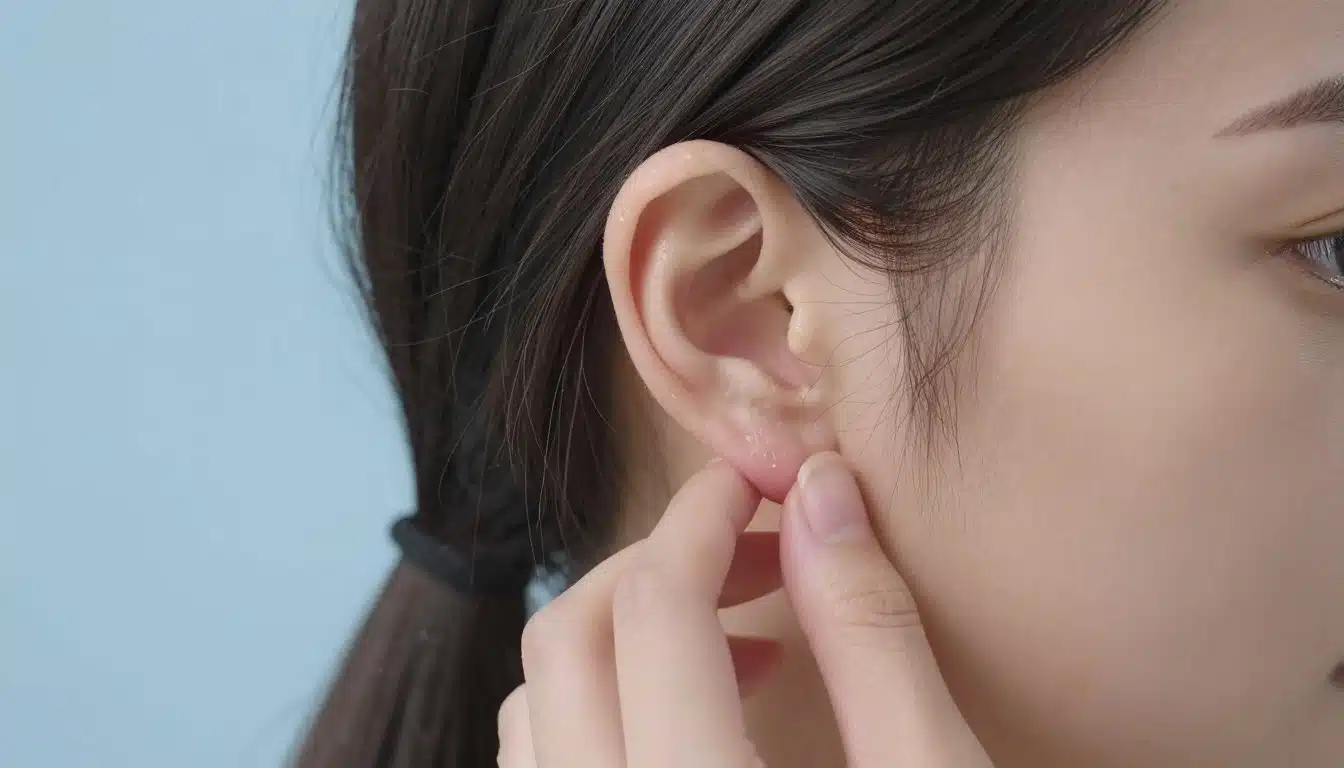
Water sits in the ear canal because the canal isn’t a straight tube. It bends, and a bend holds liquid the way a trap under a sink does. Add earwax behind it and the water has nowhere to go.
Getting water from your ear out is usually simple, and nearly all of it drains on its own within a few hours. What follows is what actually helps it along, the two things that reliably make it worse, and the point at which trapped water has stopped being trapped water and become an infection.
- Most trapped water drains within hours. Lying with the ear down and pulling the earlobe to straighten the canal is the most reliable fix.
- Never use drops, swabs, or pressurized water if you have or have had a perforated eardrum, ear tubes, or ear surgery.
- The moment it hurts, especially when tugging the earlobe, it’s likely swimmer’s ear rather than trapped water and needs prescription drops.
- People with diabetes or a weakened immune system should seek urgent care for severe, disproportionate ear pain, which can signal a rare bone infection.
How to Get Out Water From Your Ear, in Order of What Works
Gravity first, and give it longer than feels reasonable. This is how most water from your ear leaves on its own. Lie on your side with the blocked ear down on a towel and stay there. Not thirty seconds. Several minutes. Most people give up before physics has finished.
Open the canal while you do it. Tug the earlobe down and back. That straightens the bend, and the bend is the whole problem. Tilting without doing this is why head-shaking so often fails.
Move your jaw. Chewing and yawning change the shape of the canal slightly, which is sometimes enough to release the seal. Do it with your head still tilted.
Warmth, to evaporate what won’t drain. A warm washcloth against the ear for thirty seconds, off for a minute, four or five times. A hairdryer works on its lowest setting held a foot away and kept moving. The target is warm air, not heat on skin.
Drying drops, if the rest hasn’t worked. Equal parts white vinegar and rubbing alcohol, three or four drops, head tilted up for thirty seconds, then tilted down to drain. The alcohol carries the water out as it evaporates and the vinegar restores the canal’s slight acidity, which is part of how it resists bacteria.
Drops are the one step with a hard exclusion. Nothing goes in, whether vinegar, alcohol, oil, peroxide or water, if you have or have ever had a perforated eardrum, ear tubes, or ear surgery, or if you have an infection now. Alcohol reaching the middle ear through a hole is severely painful and can do damage.
If you don’t know whether your eardrum is intact, that uncertainty is the answer. Get looked at instead.
The Two Things That Make It Worse
Cotton swabs. They don’t remove water; they push it deeper and pack wax against the eardrum ahead of it. You end up with a blockage that needs a professional to clear, on top of the water you started with. Swabs also account for a large share of the ear injuries doctors treat.
Pressurized water. Bulb syringes and shower attachments aimed into the canal can drive water further in or, at enough force, perforate the eardrum. Irrigation is something to have done, not something to do.
Fingers belong in the same category for a quieter reason: a fingernail scratch inside the canal is an opening for bacteria, and bacteria in a wet canal is the exact recipe for the infection this article is trying to help you avoid.
When Water From Your Ear Needs a Doctor
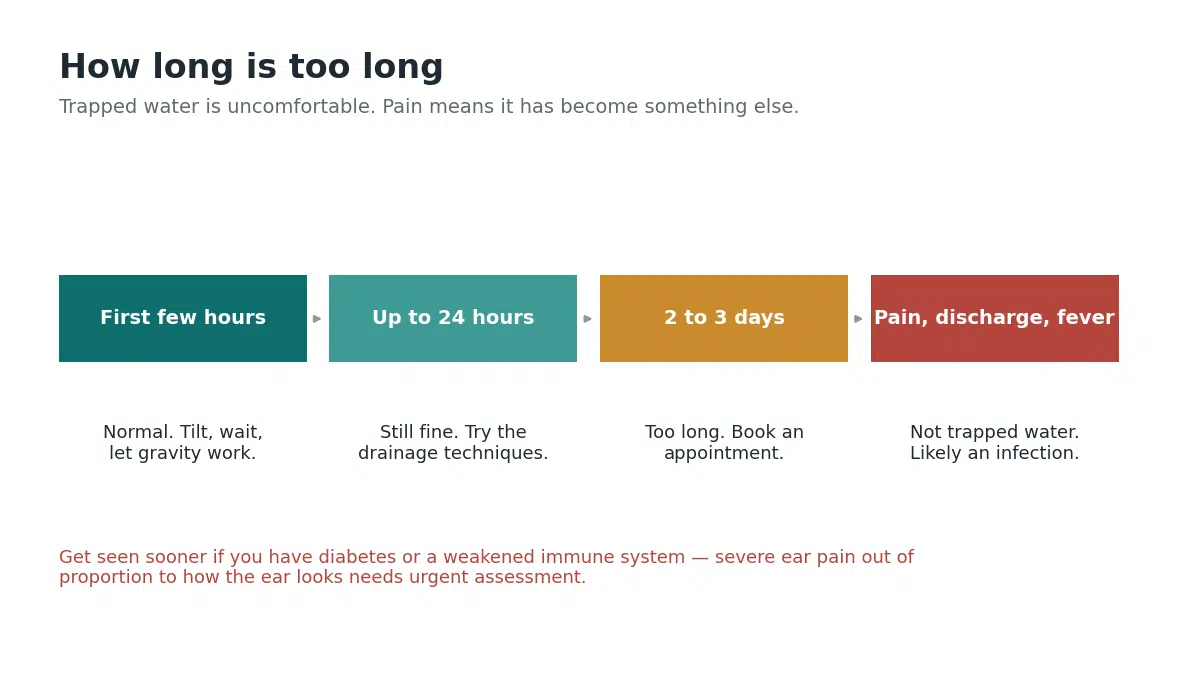
Most trapped water is gone within hours. Anything beyond that has a timetable:
- Still blocked after two or three days. Book an appointment rather than escalating the home remedies
- Pain that’s building rather than easing, particularly if tugging the earlobe hurts
- Discharge or pus, or a fever above 100.4°F (38°C)
- Hearing that hasn’t returned after a day
- Redness or swelling spreading from the ear onto the face or neck
- Dizziness, facial weakness, or severe pain at night
If the blocked feeling arrived with a cold or a flight rather than with water, it’s probably not in the canal at all. That’s the eustachian tube, and our guide to unclogging stuffy ears deals with it. And muffled hearing that dropped suddenly rather than gradually is neither: sudden hearing loss is a same-day problem with a treatment window measured in days.
One group should not wait. In people with diabetes or a weakened immune system, an outer ear infection can occasionally spread into the surrounding bone, a condition called necrotizing otitis externa. The warning sign is severe, persistent ear pain that seems out of proportion to how the ear looks, often worse at night.[3]
That combination needs urgent assessment, not drops.
When Trapped Water Has Become Swimmer’s Ear
The distinction is pain. Water from your ear that hasn’t drained yet is irritating, muffled, sometimes sloshing. It doesn’t hurt. Once it hurts, something has changed.
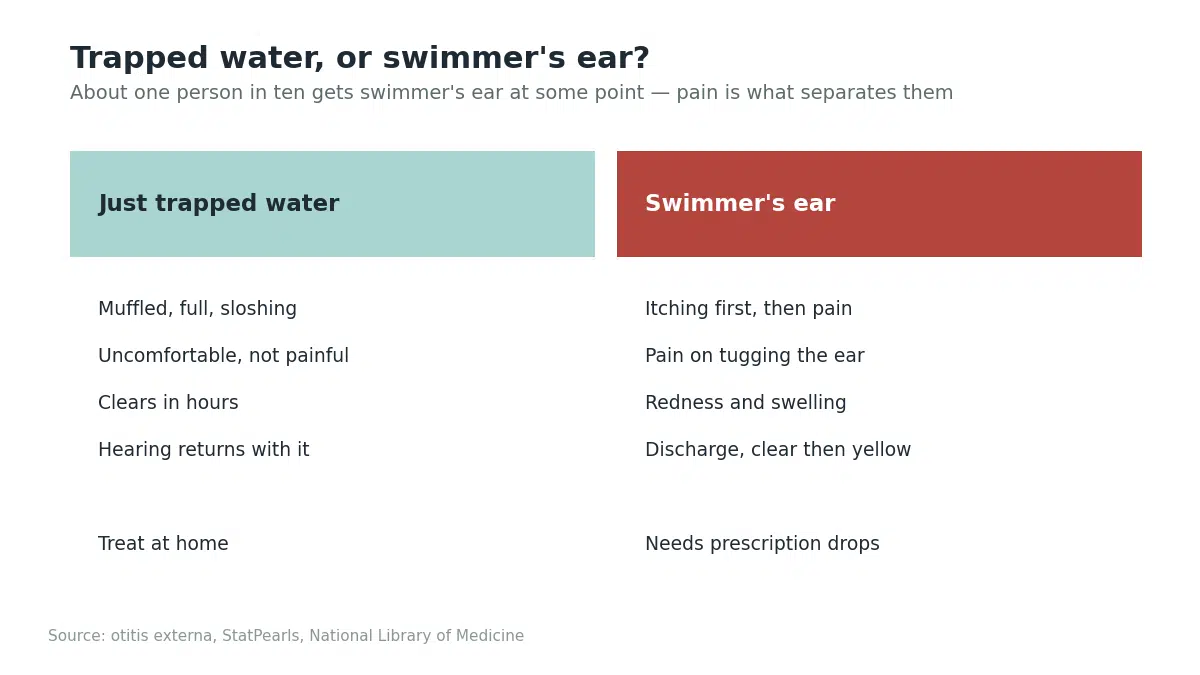
Swimmer’s ear is an infection of the outer canal, and about one person in ten gets it at some point.[1] It starts when water stays long enough to wash away the protective wax and soften the skin, at which point bacteria that were always present get a foothold.
The sequence is usually itching, then tenderness, then pain. There’s also a distinctive sign worth knowing: tugging your earlobe hurts. That’s the test that separates an outer ear infection from a middle ear one, because pulling on the ear moves the inflamed canal.[2]
It’s treated with prescription antibiotic drops, usually several times daily for about a week, and it clears reliably. What it needs is a diagnosis rather than another round of home remedies.
Why It Keeps Happening to You
Some people get water trapped repeatedly because their canals simply hold it more readily, being narrower, more sharply angled, or carrying more wax. Children’s are smaller, which is why they get it more.
Wax is the part worth understanding, because it works both ways. A normal amount protects the canal and helps water bead and run out. Too much creates a dam that traps water behind it, and our guide to what earwax color means covers when a build-up is worth having cleared.
If you swim regularly, drying drops used after every session, the same vinegar and alcohol mix with the same exclusions, prevent far more trouble than they treat. Fitted earplugs work better still, and custom-molded ones from an audiologist are worth the money if this is a recurring problem rather than an occasional one.
Frequently Asked Questions
How long should it take to get out water from your ear?
Usually a few hours to clear water from your ear, often less once you’ve tilted and tugged the earlobe properly. If it’s still there after a day, work through the warmth and drops. Past two or three days, have someone look.
Can I sleep with water in my ear?
For one night, yes. Lie with that ear down on a towel and gravity will often finish the job overnight. Several nights running is different, because time is what turns trapped water into an infection.
Does hydrogen peroxide work?
It dries the canal, but it irritates the skin more than the vinegar and alcohol mix does, and irritated skin is more vulnerable to infection. Same exclusions apply either way.
Can trapped water damage my hearing?
The muffling is temporary and reverses completely once the water goes. The risk isn’t the water. It’s an untreated infection that follows it.
Why does this happen to me and not to other people?
Canal shape and wax, mostly. Narrower or more angled canals drain poorly, and excess wax holds water behind it. If it’s frequent, ask about having the wax cleared and about custom earplugs.
Is it safe to use a hairdryer?
On the lowest heat and speed, held about a foot away and kept moving, yes. Held close or on high, you can burn the skin of the canal, which is thin and unforgiving.
The Bottom Line
To get water from your ear the reliable way: lie down with that ear facing the towel, pull the earlobe down and back, and wait longer than you think you need to. That alone clears most of it.
Nothing goes into the canal, not a swab, not a finger, not pressurized water, and no drops at all if your eardrum might be perforated.
And once it hurts, it isn’t trapped water anymore. That’s the point to stop treating and start being treated.
SOURCESOur Editorial Standards
HealthMagHub is built on primary sources: peer-reviewed research, clinical practice guidelines, and health agencies such as the NIH, CDC, and FDA. Read our editorial standards to see how we research, cite, and update our articles.
- Centers for Disease Control and Prevention. Estimated burden of acute otitis externa. MMWR. cdc.gov
- American Academy of Otolaryngology–Head and Neck Surgery. Swimmer’s ear (otitis externa). enthealth.org
- Medina-Blasini Y, Sharman T. Otitis externa. StatPearls, National Library of Medicine. ncbi.nlm.nih.gov
Disclaimer: This article is general education, not medical advice. Do not put drops of any kind into an ear with a perforated eardrum, ear tubes, or a history of ear surgery without speaking to a doctor first. Seek care for ear pain that worsens, discharge, fever, dizziness, facial weakness, hearing loss lasting more than a day, or swelling spreading beyond the ear. If you have diabetes or a weakened immune system and develop severe ear pain, get assessed promptly rather than treating it at home.