Unlike over-the-counter whitening strips or at-home treatments, laser teeth whitening combines professional-grade bleaching gel with specialized light technology. This combination activates the whitening agents more effectively, breaking down stain molecules embedded deep within tooth enamel. Many patients see their teeth lighten by several shades in just one session. If you’d rather start with a gentler, at-home approach, our guide to natural ways to whiten teeth covers safe options to try first.
This comprehensive guide examines everything you need to know about laser whitening procedures. We’ll explore how the treatment works, what results you can expect, potential side effects, and how it compares to other whitening options. Understanding these factors helps you make informed decisions about enhancing your smile.
What Is Dental Laser Whitening?
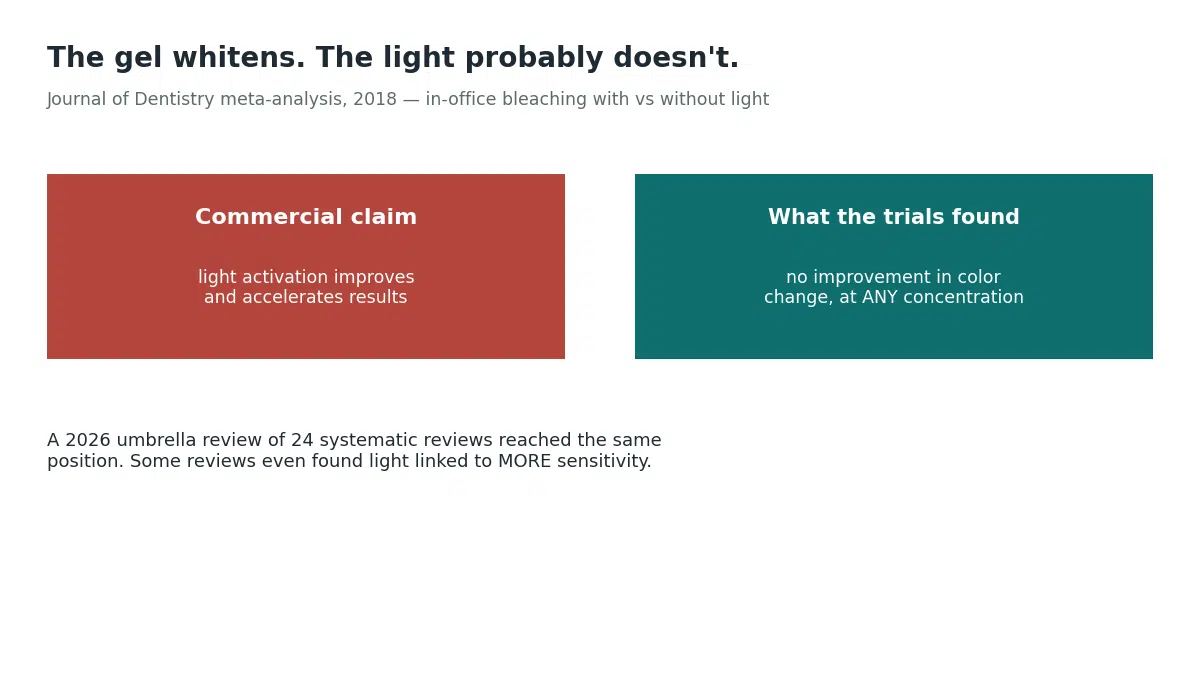
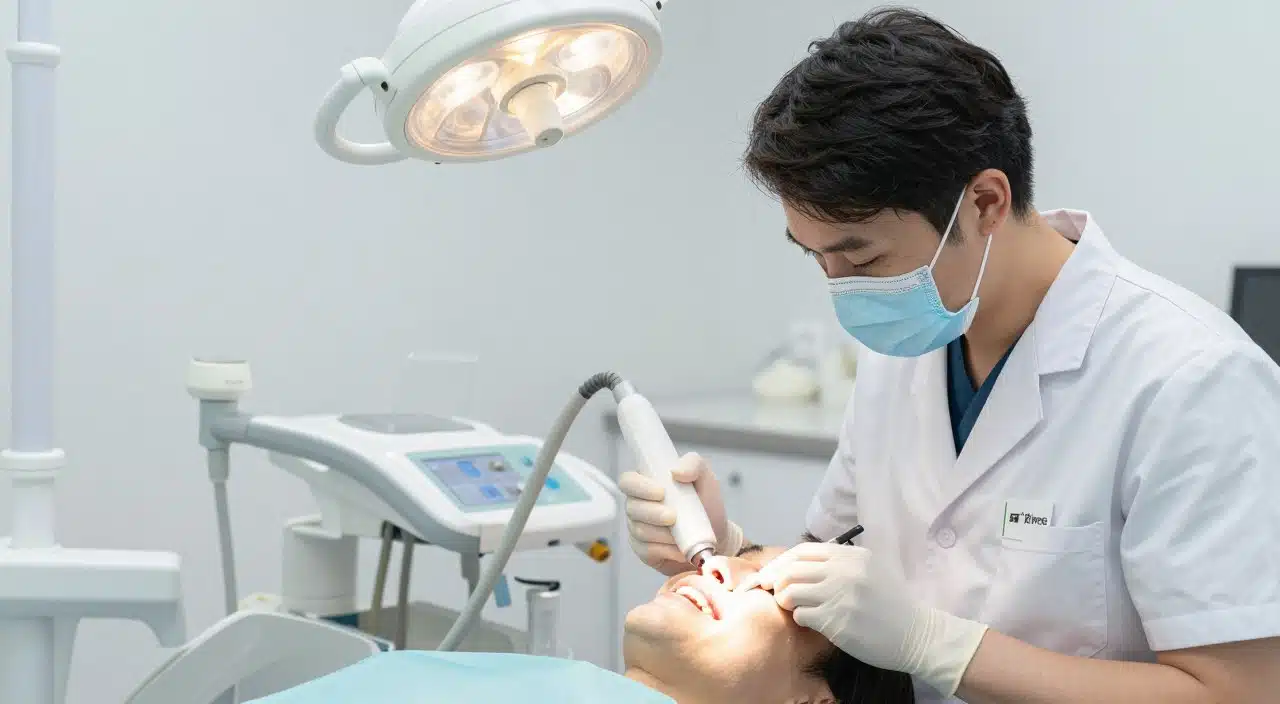
Dental laser whitening represents an in-office cosmetic dental treatment that uses concentrated light energy to accelerate the whitening process. Your dentist applies a hydrogen peroxide-based bleaching gel to your teeth, then directs a specialized laser or LED light onto the treated surfaces. The light activates the gel’s whitening properties, allowing it to penetrate enamel more deeply.
The procedure typically takes between 60 and 90 minutes to complete. During this time, the gel may be applied and activated in multiple cycles to achieve optimal brightening. This professional approach differs significantly from drugstore products because of the higher concentration of active ingredients and the activating light technology.
Professional laser teeth treatments target both surface stains and deeper discoloration within the tooth structure. The combination of professional-strength gel and light activation makes this one of the most effective whitening options available today.
How the Laser Activation Process Works
The science behind laser whitening involves photo-activation of peroxide molecules. When the light energy contacts the bleaching gel, it accelerates the breakdown of hydrogen peroxide into oxygen radicals. These oxygen molecules then penetrate tooth enamel and break apart the chemical bonds holding stain molecules together.
Professional Advantage: In-office laser treatments use bleaching concentrations of 25-40% hydrogen peroxide, compared to 3-10% in over-the-counter products. This higher concentration, combined with light activation, produces more dramatic results in less time.
- Bleaching gel is applied directly to tooth surfaces
- Laser or LED light activates peroxide compounds
- Oxygen molecules penetrate enamel structure
- Stain molecules break down and lighten
- Process may be repeated in 15-20 minute cycles
- Gums and soft tissues are protected throughout
Key Components of the Procedure
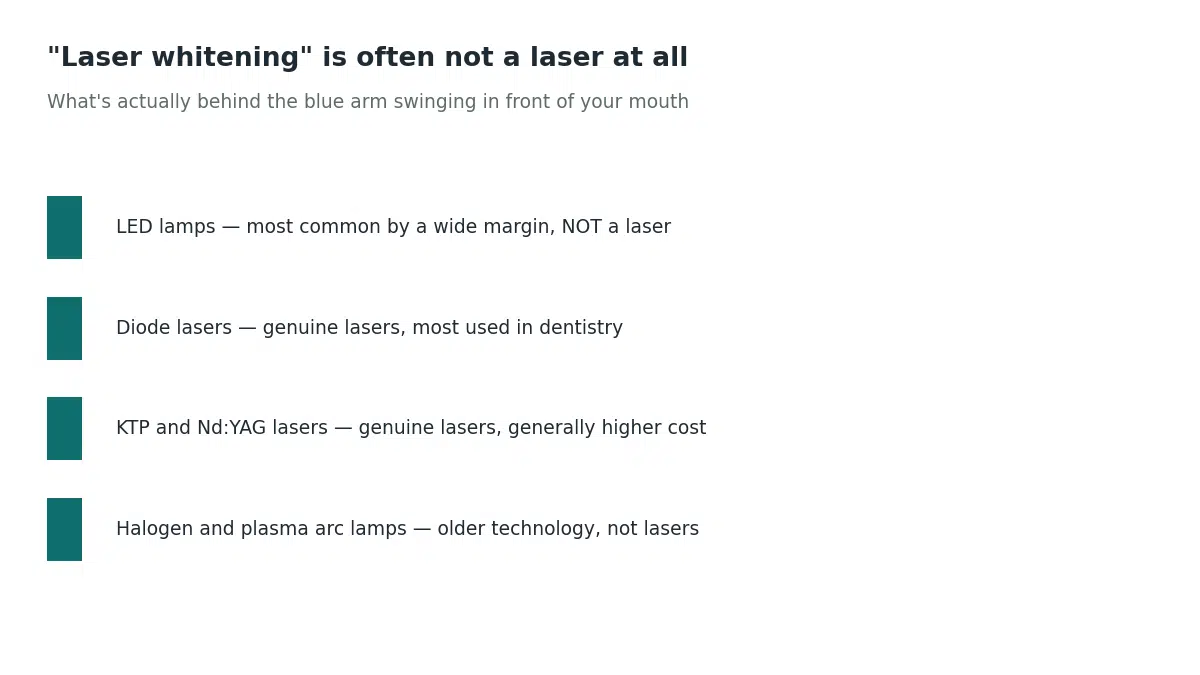
Several elements work together to create effective laser teeth whitening results. The bleaching gel formulation contains carefully calibrated peroxide concentrations designed for safety and effectiveness. The light source—whether true laser or LED technology—provides the wavelength necessary to activate whitening agents.
Protective measures form an essential part of the process. Your dentist applies barriers to shield your gums, lips, and other soft tissues from the bleaching gel. This protection prevents irritation and ensures the treatment affects only your teeth.
Treatment Components
- High-concentration hydrogen peroxide gel
- Specialized laser or LED light system
- Protective barriers for gum tissue
- Shade guides to measure results
Safety Measures
- Gum protection to prevent irritation
- Eye protection from bright light
- Careful application technique
- Monitoring throughout procedure
The Laser Whitening Procedure: Step-by-Step
Understanding what happens during your appointment helps reduce anxiety and sets realistic expectations. The treatment follows a systematic approach designed to maximize results while minimizing discomfort. Most patients find the process straightforward and surprisingly comfortable.
Your cosmetic dental professional will guide you through each phase of the treatment. The structured approach ensures consistent application and optimal activation of the whitening agents across all visible tooth surfaces.
- Initial Consultation and Shade Assessment: Your dentist examines your teeth and oral health, takes photographs, and records your current tooth shade using a standardized shade guide. This baseline measurement helps track your results.
- Cleaning and Preparation: The dental team thoroughly cleans your teeth to remove any plaque or debris that might interfere with the whitening gel. Clean surfaces allow for better gel contact and more uniform results.
- Gum Protection Application: A protective barrier or rubber dam is carefully placed along your gum line. This shield prevents the bleaching gel from contacting soft tissues in your mouth, reducing the risk of gum irritation.
- Bleaching Gel Application: Professional-strength whitening gel is applied evenly to the front teeth visible when you smile. The dentist ensures complete coverage while avoiding areas protected by the barrier.
- Laser Activation: The specialized light is positioned to illuminate the treated teeth. This activation period typically lasts 15-20 minutes per cycle. You’ll wear protective eyewear during this step.
- Gel Removal and Reapplication: After the first cycle, the gel is carefully removed and fresh gel may be applied for additional activation cycles. Most treatments involve 2-3 cycles to achieve desired results.
- Final Rinse and Fluoride Treatment: Once the whitening is complete, all gel and protective materials are removed. Many dentists apply a fluoride treatment to help reduce tooth sensitivity and strengthen enamel.
- Results Assessment: Your dentist compares your new tooth shade to the baseline measurements, documenting the improvement. They’ll also provide aftercare instructions to help maintain your results.
What to Expect During Treatment
Most patients experience minimal discomfort during laser teeth whitening. You may feel slight warmth from the light or temporary tingling sensations as the gel works. These feelings are normal and typically mild. The protective measures ensure your comfort throughout the appointment.
Important Note: Some patients experience temporary tooth sensitivity during or immediately after the procedure. This usually resolves within 24-48 hours. Your dentist can provide desensitizing treatments if needed.
Results and How Long They Last

The dramatic transformation from laser teeth whitening becomes immediately visible. Most patients see their teeth lighten by 3-8 shades in a single session. The exact degree of whitening depends on your starting shade, the nature of your discoloration, and how your enamel responds to treatment.
How long your results last varies based on several factors. Your dietary habits, oral hygiene routine, and lifestyle choices all influence the longevity of your bright smile. With proper care, many patients maintain their results for 12-18 months or longer before considering touch-up treatments.
Factors Affecting Results Longevity
| Factor | Impact on Results | How to Maximize Longevity |
| Diet | Coffee, tea, red wine, and dark berries can gradually restain teeth | Rinse mouth after consuming staining beverages, use a straw for drinks |
| Tobacco Use | Smoking or chewing tobacco significantly accelerates discoloration | Quit tobacco use or significantly reduce consumption |
| Oral Hygiene | Poor brushing allows stains to accumulate more quickly | Brush twice daily with whitening toothpaste, floss regularly |
| Age | Natural aging causes gradual yellowing over time | Schedule periodic touch-up treatments as recommended |
| Genetics | Natural tooth color affects how long whiteness lasts | Follow all aftercare recommendations from your dentist |
Maintaining Your Whitened Smile
Protecting your investment in laser whitening requires some conscious effort. Avoiding or limiting staining foods and beverages helps preserve your results significantly. When you do consume items like coffee or tea, rinsing with water afterward reduces staining potential.
- Use whitening toothpaste to remove surface stains
- Brush within 30 minutes after eating staining foods
- Schedule regular professional cleanings every 6 months
- Consider touch-up treatments annually or as needed
- Drink staining beverages through a straw when possible
- Maintain excellent oral hygiene practices daily
Many dental practices offer take-home maintenance kits with custom trays and lower-concentration gel. These products help extend your professional results between treatments. Your dentist can recommend the appropriate option based on your specific needs and sensitivity levels.
Comparing Laser Whitening to Other Methods
Understanding how dental laser whitening compares to alternative approaches helps you choose the most appropriate treatment. Each whitening method offers distinct advantages and limitations. The right choice depends on your budget, time constraints, and desired outcome.
Professional in-office treatments deliver the most dramatic results in the shortest time. At-home options provide more gradual whitening at lower costs. The following comparison illustrates key differences between available teeth whitening methods.
| Method | Time Required | Results | Cost Range | Convenience |
| Laser Whitening | 1-2 hours (one session) | 3-8 shades lighter immediately | $400-$1,500 | Single appointment, immediate results |
| Professional Take-Home Trays | 1-2 weeks (nightly use) | 2-6 shades lighter gradually | $300-$600 | Daily commitment required |
| Over-Counter Whitening Strips | 2-4 weeks (daily use) | 1-3 shades lighter | $20-$60 | Easy to use, slower results |
| Whitening Toothpaste | Several months (daily use) | Removes surface stains only | $5-$15 | Part of regular routine |
| Whitening Mouthwash | Ongoing (daily use) | Minimal whitening effect | $5-$12 | Easily integrated into routine |
Advantages of Professional Laser Treatment
Laser teeth whitening offers several distinct benefits over alternative methods. The professional supervision ensures safe application and optimal results. The concentrated bleaching gel used in dental offices provides more powerful whitening than products available for home use.
Professional Treatment Benefits
- Immediate, dramatic results in single visit
- Professional supervision throughout procedure
- Higher-concentration bleaching agents
- Protective measures for gums and mouth
- Customized treatment for individual needs
- Even, consistent whitening across all teeth
At-Home Method Considerations
- More affordable initial cost
- Gradual results over several weeks
- Flexibility to treat on your schedule
- Lower concentration of whitening agents
- Risk of uneven application
- No professional monitoring
For special occasions like weddings or important presentations, laser whitening provides the fastest path to a dramatically brighter smile. The convenience of achieving significant results in a single appointment appeals to busy professionals and anyone seeking immediate transformation.
Safety Considerations and Potential Side Effects
Professional dental laser whitening is generally considered safe when performed by qualified dental professionals. The procedure has been refined over decades of use, with safety protocols established to protect patients. However, understanding potential side effects helps you make informed decisions and prepare appropriately.
The most common temporary effect involves increased tooth sensitivity. This occurs because the whitening agents temporarily increase enamel permeability. Most sensitivity resolves within 24-48 hours after treatment. Your dentist can recommend desensitizing products if you experience discomfort.
Common Temporary Side Effects
| Side Effect | Frequency | Duration | Management Strategy |
| Tooth Sensitivity | Common (50-70% of patients) | 1-3 days typically | Desensitizing toothpaste, avoid extreme temperatures |
| Gum Irritation | Occasional (10-20%) | 1-2 days | Usually mild, resolves without intervention |
| Uneven Whitening | Rare with professional treatment | May require additional treatment | Follow-up appointment for touch-up application |
| Soft Tissue Irritation | Rare (less than 5%) | 1-2 days | Proper protective barriers prevent most cases |
Who Should Avoid Laser Whitening
Certain individuals should postpone or avoid laser teeth whitening. Pregnant women are typically advised to wait, as the effects of bleaching agents on developing babies haven’t been fully studied. People with untreated cavities, gum disease, or extremely worn enamel need to address those issues before pursuing cosmetic whitening.
Important Considerations: Laser whitening only affects natural tooth structure. Dental restorations like crowns, veneers, and fillings won’t change color with bleaching treatments. This can create mismatched shades if you have visible restorations on front teeth. Discuss this with your dentist before proceeding.
- Pregnancy or nursing mothers should postpone treatment
- Active tooth decay must be treated first
- Severe gum disease requires resolution before whitening
- Extremely sensitive teeth may not tolerate treatment well
- Extensive dental restorations on front teeth create challenges
- Children under 16 typically shouldn’t undergo whitening
Protecting Your Oral Health
Choosing a qualified cosmetic dental professional ensures your safety during treatment. Licensed dentists understand oral health complexities and can identify any issues that might complicate whitening. They adjust treatment parameters based on your specific tooth structure and sensitivity levels.
Non-dental facilities offering whitening services may not provide the same level of safety and expertise. While potentially less expensive, these options carry higher risks of improper application, inadequate protection, or failure to identify underlying dental problems.
Cost Considerations and Insurance Coverage
The investment in dental laser whitening varies significantly depending on your location, the dental practice, and the specific technology used. Most treatments range from $400 to $1,500 per session. Urban practices and those using the latest laser technology typically charge at the higher end of this spectrum.
Unfortunately, most dental insurance plans classify whitening as a cosmetic procedure rather than a medical necessity. This means you’ll likely pay the full cost out of pocket. However, some dental offices offer payment plans or financing options to make treatment more accessible.
What Influences the Price
Several factors determine the final cost of your laser teeth whitening treatment. Geographic location plays a significant role, with practices in major metropolitan areas charging more than those in smaller communities. The dentist’s experience and reputation also influence pricing.
Cost-Increasing Factors
- Location in major urban area
- Latest laser technology used
- Highly experienced cosmetic dentist
- Premium dental practice setting
- Additional pre-treatment services
Potential Cost-Saving Options
- Dental school clinics (supervised students)
- Promotional offers or packages
- Membership plans at dental offices
- Combining with other treatments
- Flexible payment arrangements
Evaluating Value Versus Cost
When considering the expense, compare laser whitening to the cumulative cost of alternative methods. While the upfront investment is higher, the immediate and dramatic results may provide better value than months of purchasing drugstore products with limited effectiveness.
Cost Perspective: Professional laser whitening averaging $800 provides immediate results lasting 12-18 months. Purchasing whitening strips for 18 months at $40 every 4-6 weeks totals approximately $240-360, with gradual and less dramatic results. The convenience and effectiveness often justify the professional treatment cost.
Consider your priorities regarding time, convenience, and desired outcome. For individuals with important upcoming events or those who value immediate results, professional laser teeth treatment offers compelling advantages despite the higher initial cost.
Who Makes the Best Candidate for Laser Whitening?
Ideal candidates for dental laser whitening share several characteristics. They have good overall oral health with no untreated decay or gum disease. Their teeth have yellowed from aging, food, or beverage staining rather than from medication or trauma. They have realistic expectations about potential results.
The type of discoloration significantly affects whitening success. Yellowish stains typically respond better to bleaching treatments than grayish discoloration. Surface stains from coffee, tea, or tobacco generally lighten more effectively than intrinsic stains caused by medications or excessive fluoride exposure.
Types of Tooth Discoloration
| Discoloration Type | Causes | Whitening Response | Alternative Options |
| Extrinsic (Surface) | Coffee, tea, wine, tobacco, dark foods | Excellent – lightens significantly | Professional cleaning may suffice |
| Intrinsic (Internal) – Yellow | Aging, genetics, minor trauma | Good – noticeable improvement | May require multiple sessions |
| Intrinsic – Gray | Tetracycline antibiotics, fluorosis | Limited – may improve slightly | Veneers or bonding often better |
| Tooth-Specific | Root canal, trauma, internal bleeding | Poor for standard whitening | Internal bleaching or restoration |
Assessing Your Candidacy
Schedule a consultation with a qualified cosmetic dental professional to determine if laser whitening suits your situation. They’ll examine your tooth structure, assess your type of staining, and discuss realistic outcomes based on your starting shade. This evaluation helps ensure you invest in a treatment likely to meet your expectations.
- Good oral health with no active decay or gum disease
- Primarily yellowish discoloration responds best
- Realistic expectations about potential shade improvement
- No extensive front tooth restorations that won’t match
- Willingness to modify staining habits afterward
- Not pregnant or nursing
If your dentist determines you’re not an ideal candidate for laser whitening, they can suggest alternative approaches. Options might include veneers for severe discoloration, bonding for specific teeth, or internal bleaching for traumatized teeth. Multiple solutions exist for achieving the bright smile you desire.
Preparing for Treatment and Aftercare
Proper preparation enhances your laser teeth whitening experience and optimizes results. Your dentist will provide specific instructions before your appointment. Following these guidelines helps ensure the treatment proceeds smoothly and safely.
Before Your Appointment
Address any outstanding dental work before pursuing cosmetic whitening. Have cavities filled, gum disease treated, and teeth professionally cleaned. Clean teeth allow for better gel contact and more uniform whitening across all surfaces.
- Schedule a Dental Examination: Ensure your oral health is suitable for whitening treatment and address any underlying issues.
- Complete Necessary Dental Work: Fillings, crowns, or other restorations should be completed beforehand, though you may need to replace front tooth restorations after whitening to match your new shade.
- Professional Cleaning: Have your teeth cleaned within a week or two before whitening to remove plaque and tartar that could interfere with results.
- Discuss Sensitivity Concerns: Inform your dentist if you have sensitive teeth so they can take preventive measures or recommend desensitizing products beforehand.
- Avoid Staining Foods: Reduce consumption of highly pigmented foods and beverages for several days before treatment.
Post-Treatment Care
The first 24-48 hours after laser whitening are critical for maximizing and maintaining your results. Your enamel remains slightly more porous immediately following treatment, making teeth more susceptible to staining during this period. Following aftercare instructions carefully protects your investment.
The White Diet: For 24-48 hours after treatment, follow a “white diet” by avoiding all dark-colored foods and beverages. This includes coffee, tea, red wine, dark sodas, tomato sauce, soy sauce, berries, and chocolate. Stick to light-colored foods like chicken, fish, white rice, bananas, and clear liquids.
- Avoid all staining foods and drinks for 48 hours
- Use a straw for any colored beverages after initial period
- Don’t smoke or use tobacco products
- Brush gently with a soft-bristled toothbrush
- Use sensitivity toothpaste if experiencing discomfort
- Avoid extremely hot or cold foods if teeth feel sensitive
- Attend follow-up appointments as recommended
Long-Term Maintenance
Maintaining your newly whitened smile requires ongoing attention to your habits and oral hygiene. While you don’t need to avoid staining foods permanently, being mindful of their frequency and rinsing afterward helps preserve your results longer.
Your dentist may recommend periodic touch-up treatments to maintain optimal whiteness. Some practices offer take-home maintenance kits with custom trays and lower-concentration gel. These products extend professional results between in-office sessions.
When Laser Whitening Isn’t the Right Choice
While dental laser whitening offers impressive benefits for many patients, it’s not universally appropriate. Understanding its limitations helps you make realistic decisions about whether this treatment matches your needs and circumstances.
Limitations of Whitening Treatments
All teeth whitening methods share certain limitations. They only affect natural tooth structure, leaving dental restorations like crowns, veneers, and fillings unchanged. If you have visible restorations on front teeth, whitening your natural teeth creates a mismatch requiring restoration replacement to achieve uniformity.
Situations Where Whitening Works Well
- Natural teeth with yellowing from age or diet
- Mostly natural teeth visible when smiling
- Surface stains from coffee, tea, or tobacco
- Good overall oral health
- Realistic expectations about outcomes
Situations Requiring Alternative Approaches
- Severe gray discoloration from medications
- Multiple front tooth restorations
- Significant tooth structure problems
- Extreme sensitivity issues
- Desire for dramatic shape or alignment changes
Alternative Cosmetic Options
For individuals who aren’t good candidates for laser teeth whitening, several alternatives can still achieve a beautiful smile. Cosmetic dental procedures like veneers or bonding address not only color but also shape, alignment, and size concerns simultaneously.
| Alternative Treatment | Best For | Advantages | Considerations |
| Porcelain Veneers | Severe discoloration, shape issues, minor alignment problems | Dramatic transformation, addresses multiple concerns, long-lasting | Expensive ($800-2,500 per tooth), irreversible enamel alteration |
| Composite Bonding | Individual tooth discoloration, small chips, gaps | Less expensive than veneers, preserves tooth structure, reversible | Less durable than veneers, may stain over time |
| Internal Bleaching | Single darkened tooth after root canal or trauma | Targets specific tooth, effective for internal stains | Only works for non-vital teeth, may require multiple sessions |
| Professional Take-Home Trays | Budget-conscious patients, sensitive teeth, gradual approach | Less expensive, gentler on sensitive teeth, flexible scheduling | Slower results, requires daily commitment |
Discussing your goals, budget, and timeline with your dentist helps identify the most appropriate option for your situation. Sometimes combining approaches—such as whitening natural teeth and then replacing old restorations to match—provides the best overall outcome.
Frequently Asked Questions About Dental Laser Whitening
How does dental laser whitening work?
Dental laser whitening uses a combination of professional-strength bleaching gel and specialized light energy. Your dentist applies hydrogen peroxide gel to your teeth, then activates it with a laser or LED light. This light accelerates the breakdown of peroxide into oxygen molecules that penetrate enamel and break apart stain molecules.
The process typically involves multiple 15-20 minute activation cycles during a single appointment. The high concentration of bleaching agents combined with light activation produces more dramatic results than over-the-counter products.
Does laser teeth whitening hurt?
Most patients experience minimal to no pain during laser teeth whitening. You may feel slight warmth from the light or mild tingling sensations as the gel works. The procedure itself is generally comfortable with proper protective measures in place.
The most common discomfort occurs after treatment in the form of temporary tooth sensitivity. This typically resolves within 24-48 hours. Your dentist can provide desensitizing treatments or recommend special toothpaste if you experience significant sensitivity.
How long do laser whitening results last?
Results from laser whitening typically last 12-18 months or longer with proper maintenance. The longevity depends on your dietary habits, oral health practices, and lifestyle choices. Avoiding staining foods and beverages helps preserve your bright smile longer.
Tobacco use, frequent consumption of coffee or red wine, and poor oral hygiene can shorten results duration. Many patients schedule touch-up treatments annually to maintain optimal whiteness. Your dentist may provide take-home maintenance products to extend professional results.
How much does dental laser whitening cost?
Dental laser whitening typically costs between $400 and $1,500 per session. The price varies based on your geographic location, the dental practice, and the specific technology used. Urban practices and those using the latest laser systems generally charge more.
Most dental insurance plans don’t cover whitening since it’s considered cosmetic rather than medically necessary. However, many dental offices offer payment plans or financing options to make treatment more accessible. The investment often provides better value than months of purchasing less effective drugstore products.
Is laser whitening safe for tooth enamel?
When performed by qualified dental professionals, laser teeth whitening is considered safe for tooth enamel. The procedure doesn’t permanently damage or weaken tooth structure. Modern bleaching formulations are designed to minimize enamel effects while maximizing whitening.
However, the whitening agents temporarily increase enamel permeability, which can cause short-term sensitivity. This effect is reversible and typically resolves within a few days. Following proper aftercare instructions and using fluoride treatments helps protect enamel during the whitening process.
Can laser whitening damage gums?
Professional laser whitening includes protective measures specifically designed to prevent gum irritation. Your dentist applies barriers or rubber dams to shield your gums and soft tissues from the bleaching gel. When properly protected, your gums remain safe throughout treatment.
Minor gum irritation occurs occasionally if gel contacts soft tissues, but this is typically mild and resolves quickly. Serious gum damage is rare with professional application. This protective supervision represents a key advantage of in-office treatment over at-home methods.
How many shades whiter will my teeth become?
Most patients see their teeth lighten by 3-8 shades with dental laser whitening in one session. The exact improvement depends on your starting shade, the type of discoloration, and how your enamel responds to treatment. Yellowish stains typically respond better than grayish discoloration.
Your dentist will use a standardized shade guide to measure your starting color and track your progress. Individual results vary, but most people achieve noticeably brighter smiles. Realistic expectations discussed during consultation help ensure satisfaction with outcomes.
Can I whiten my teeth if I have fillings or crowns?
You can undergo laser whitening with existing fillings or crowns, but these restorations won’t change color. Whitening only affects natural tooth structure. If you have visible restorations on front teeth, whitening creates a shade mismatch between your brightened natural teeth and unchanged restorations.
Many patients replace front tooth restorations after whitening to match their new, brighter shade. Discuss this consideration with your cosmetic dental professional before treatment. They can help plan the sequence of procedures for optimal aesthetic outcomes.
What’s the difference between laser whitening and other professional treatments?
Laser teeth whitening provides immediate, dramatic results in a single appointment lasting 60-90 minutes. Professional take-home tray systems offer more gradual whitening over 1-2 weeks of nightly use. The in-office treatment uses higher concentration bleaching agents activated by specialized light.
Take-home systems are less expensive and gentler for people with sensitivity issues. However, they require daily commitment and patience for results. Laser whitening suits those wanting immediate transformation for special occasions or who prefer single-visit convenience despite higher cost.
Are there any long-term side effects of laser whitening?
Research hasn’t identified significant long-term negative effects from professional dental laser whitening when performed correctly. The temporary tooth sensitivity experienced by some patients resolves within days. The procedure doesn’t permanently weaken enamel or damage tooth structure.
Repeated whitening treatments over many years might potentially increase enamel wear, though this remains a theoretical concern rather than a documented problem. Following your dentist’s recommendations about frequency and proper oral health maintenance protects your teeth long-term.
Can pregnant or nursing women undergo laser whitening?
Most dentists recommend postponing laser teeth whitening until after pregnancy and nursing. While no definitive evidence proves harm to developing babies, the effects of bleaching agents haven’t been fully studied in pregnant or nursing mothers. Medical professionals generally advise caution with elective cosmetic procedures during this time.
Since teeth whitening is elective and can be performed anytime, waiting eliminates any theoretical risks. You can safely pursue treatment after completing nursing. Focus on excellent oral health during pregnancy, and plan cosmetic enhancements for afterward.
How soon can I eat and drink after laser whitening?
You can eat immediately after laser whitening, but stick to light-colored foods and beverages for the first 24-48 hours. Your teeth remain more porous and susceptible to staining during this initial period. Avoid coffee, tea, red wine, dark sodas, tomato sauce, berries, and other highly pigmented items.
This “white diet” protects your investment by preventing new stains from setting while your enamel’s porosity normalizes. After this critical period, you can gradually reintroduce normal foods, though being mindful of staining drinks and rinsing afterward helps maintain results longer.
Does laser whitening work on gray-toned teeth?
Gray-toned discoloration responds less predictably to laser whitening than yellow stains. Grayish colors often result from medications like tetracycline antibiotics or fluorosis. While some improvement may occur, the results are typically less dramatic than with yellowish staining.
For severe gray discoloration, your dentist might recommend alternative cosmetic dental solutions like veneers or bonding. These restorative approaches address color while also allowing adjustments to shape and alignment. A thorough consultation helps determine the most effective option for your specific situation.
Can teenagers get laser teeth whitening?
Dentists typically recommend waiting until at least age 16-18 before pursuing laser teeth whitening. Younger teens have larger pulp chambers and more porous enamel, which increases the risk of sensitivity and potential irritation. The developing tooth structure in younger patients requires caution with bleaching treatments.
Once the teeth have fully matured, teens can safely undergo professional whitening if their oral health is good. A consultation with a cosmetic dental professional helps determine appropriate timing. For younger teens concerned about tooth color, addressing stains through professional cleaning and good hygiene may suffice temporarily.
What should I avoid after laser whitening treatment?
For 24-48 hours after treatment, avoid all dark-colored foods and beverages that might stain your newly whitened teeth. This includes coffee, tea, red wine, cola, berries, tomato-based sauces, soy sauce, and chocolate. Also avoid tobacco products, which cause rapid discoloration.
Additionally, skip extremely hot or cold foods if you’re experiencing tooth sensitivity. Use a soft-bristled toothbrush and gentle technique. Following these precautions during the critical initial period protects your results and allows your enamel to stabilize after the whitening process.
Is in-office laser whitening better than whitening strips?
Laser whitening produces significantly more dramatic results than whitening strips. Professional treatments use higher concentration bleaching agents (25-40% hydrogen peroxide) compared to strips (3-10%). The light activation further enhances effectiveness. You’ll see 3-8 shades of improvement in one appointment versus 1-3 shades over weeks with strips.
However, strips cost much less ($20-60 versus $400-1,500) and work well for mild staining or maintenance. The choice depends on your budget, timeline, and desired outcome. For dramatic transformation or special occasions, professional laser teeth whitening provides superior results despite higher cost.
Can I get laser whitening if I have sensitive teeth?
People with sensitive teeth can often still receive laser whitening, though extra precautions may be necessary. Your dentist might recommend using desensitizing toothpaste for 1-2 weeks before treatment. They may also use lower-concentration gel or shorter activation times to minimize discomfort.
Some patients with severe sensitivity find professional take-home trays with lower-concentration gel more tolerable. These provide more gradual whitening with less tooth sensitivity. Discuss your concerns during consultation so your dentist can customize the approach to your comfort level while still achieving good results.
Will laser whitening make my teeth look unnatural?
Professional dental laser whitening lightens your natural tooth color without creating an artificial appearance when performed correctly. Your dentist helps you select an appropriate target shade that looks bright yet believable. Most patients achieve a naturally white smile rather than an overly bright, artificial look.
Teeth have natural variations in shade across their surfaces, and whitening maintains these subtle differences. The results enhance your existing tooth color rather than creating a uniform, opaque white. Communicating your aesthetic preferences during consultation ensures outcomes that match your vision for your smile.
How often can I safely repeat laser whitening treatments?
Most dentists recommend spacing laser teeth whitening treatments at least 12-18 months apart to allow your enamel to fully recover. While occasional touch-up sessions are safe, excessive whitening could potentially increase tooth sensitivity or enamel wear over time.
For maintaining results between professional sessions, your dentist may provide take-home maintenance products with lower-concentration bleaching gel. These gentle touch-ups extend your professional results without the intensity of full laser treatments. Following good oral health practices and avoiding staining habits reduces how frequently you’ll need repeat procedures.
Making an Informed Decision About Dental Laser Whitening

Understanding dental laser whitening empowers you to make confident decisions about enhancing your smile. This advanced cosmetic dental procedure offers dramatic results in a single appointment, making it an appealing option for people seeking immediate transformation. The combination of professional-strength bleaching agents and light activation produces whitening effects that over-the-counter products can’t match.
The investment in laser teeth whitening extends beyond the financial cost. You’re investing in confidence, improved appearance, and the expertise of qualified dental professionals. The safety measures, customized approach, and immediate results justify the higher price for many patients. Your newly brightened teeth can positively impact both personal and professional interactions.
However, laser whitening isn’t appropriate for everyone. Individuals with severe gray discoloration, extensive dental restorations on visible teeth, or certain oral health issues may benefit more from alternative approaches. Honest consultation with a cosmetic dental professional helps identify the most effective solution for your specific situation and aesthetic goals.
Whether you choose laser whitening or another method, prioritizing your oral health remains essential. No whitening treatment can compensate for poor dental hygiene or untreated dental problems. If oral bacteria are part of your bigger picture, our review of ProDentim’s oral probiotic approach may also be worth a look. Maintaining excellent daily care, scheduling regular dental visits, and being mindful of staining habits protects both your natural teeth and any cosmetic enhancements you invest in.
Medical Disclaimer
Important Health Information
The content provided in this article serves educational and informational purposes only. It should never replace professional medical advice, diagnosis, or treatment from qualified healthcare providers. Always consult with licensed dental professionals regarding questions about dental procedures, oral health conditions, or treatment decisions.
Individual results from dental laser whitening vary significantly based on factors including natural tooth color, type of discoloration, oral health status, and personal habits. The general information presented here may not apply to your specific circumstances. Before pursuing any cosmetic dental treatment, seek personalized guidance from qualified dentists who can evaluate your individual situation.
While research supports various benefits associated with professional teeth whitening procedures, outcomes differ among patients. The studies and information referenced represent current understanding within dental science, which continues to evolve. No cosmetic dental procedure can guarantee specific results or prevent future tooth discoloration.
If you experience adverse reactions during or after whitening treatments, including severe tooth sensitivity, gum irritation, or unusual symptoms, contact your dental provider immediately. Pregnant or nursing women should postpone elective cosmetic dental procedures until after completing pregnancy and breastfeeding, unless specifically approved by their healthcare providers.
HealthMagHub does not endorse specific products, services, dental practices, or commercial interests. Information presented aims to educate readers about cosmetic dental procedures and oral health principles. Reliance on any information provided remains solely at your own discretion and risk.
This article does not establish a dentist-patient relationship. For personalized dental care, cosmetic treatment planning, or oral health management, consult with qualified local dental professionals who can assess your individual needs, examine your teeth, and recommend appropriate treatments based on comprehensive evaluation.
The costs, timeframes, and specific details mentioned represent general ranges and may differ significantly in your area or situation. Always verify current pricing, insurance coverage, and treatment protocols directly with dental providers before making financial commitments or scheduling procedures.