- Most pink eye clears on its own within one to two weeks. Compresses, sterile artificial tears, and hand hygiene are the remedies worth using.
- Never mix your own saline. Homemade recipes run 2-3 times saltier than tears and aren’t sterile, which risks serious infection.
- Skip tea bags, eye patches, and leftover antibiotic drops, all of which can introduce contamination or worsen the infection.
- Contact lens wearers with a painful eye should stop wearing lenses immediately and be seen the same day.
Don’t Treat These at Home
If you wear contact lenses and the eye hurts, take the lens out and be seen the same day. Corneal infection in lens wearers can scar sight permanently.[3] The same urgency applies if your vision has changed, or doesn’t clear when you blink, or if you have severe pain, or light so uncomfortable you can’t keep the eye open.
Get same-day care too if the eyelid or surrounding skin is swollen, red and tender, especially with a fever, or if a baby under one month old has any eye discharge. If chemicals got into the eye, rinse with clean water for 15-20 minutes, then get seen.
Which Kind You’re Dealing With
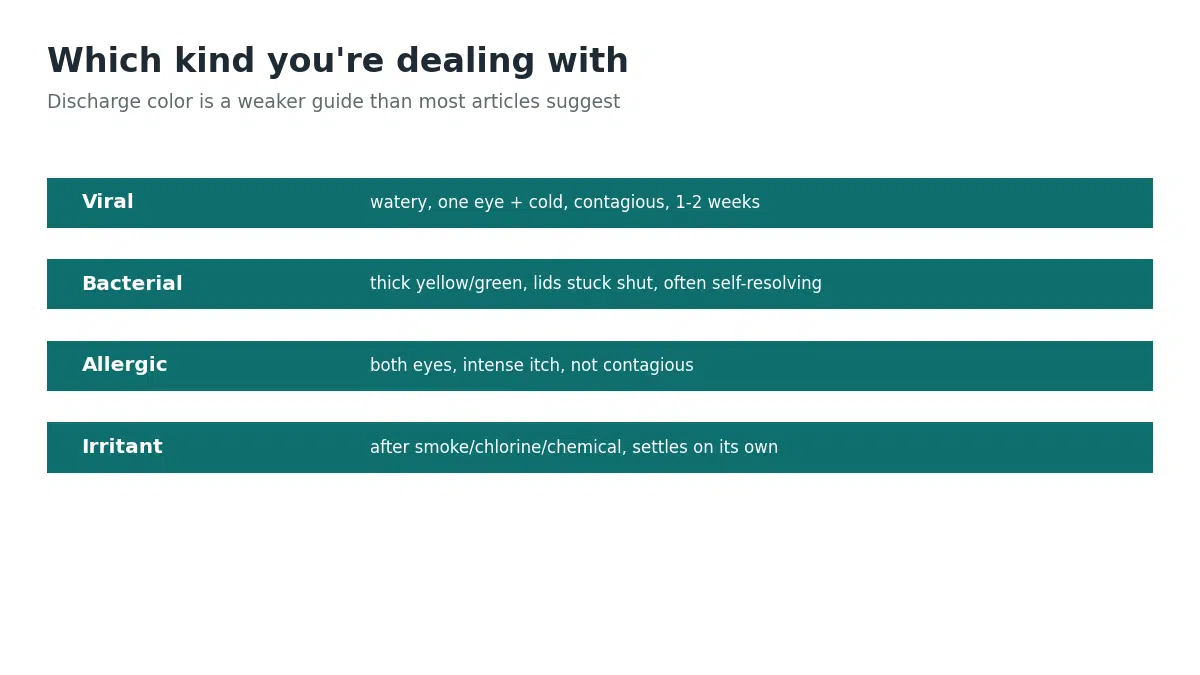
Viral is the most common. Watery discharge, often starting in one eye alongside a cold, highly contagious, and it runs its course in one to two weeks. Antibiotics do nothing for it.[1]
Bacterial produces thicker yellow or green discharge and lids that stick together overnight. Most cases also resolve without treatment, though drops can shorten it.[2]
Allergic affects both eyes, itches intensely, and comes with sneezing or a runny nose. Not contagious.
Irritant follows smoke, chlorine or a chemical splash, and settles once the exposure ends.
Worth knowing: discharge color is a weaker guide than most articles suggest. Viral infection produces yellow-green crusting too. Our guide to red eyes generally covers the wider set of causes, and eye discharge in children deals with the version parents see most.
Pink Eye Home Remedies That Actually Help
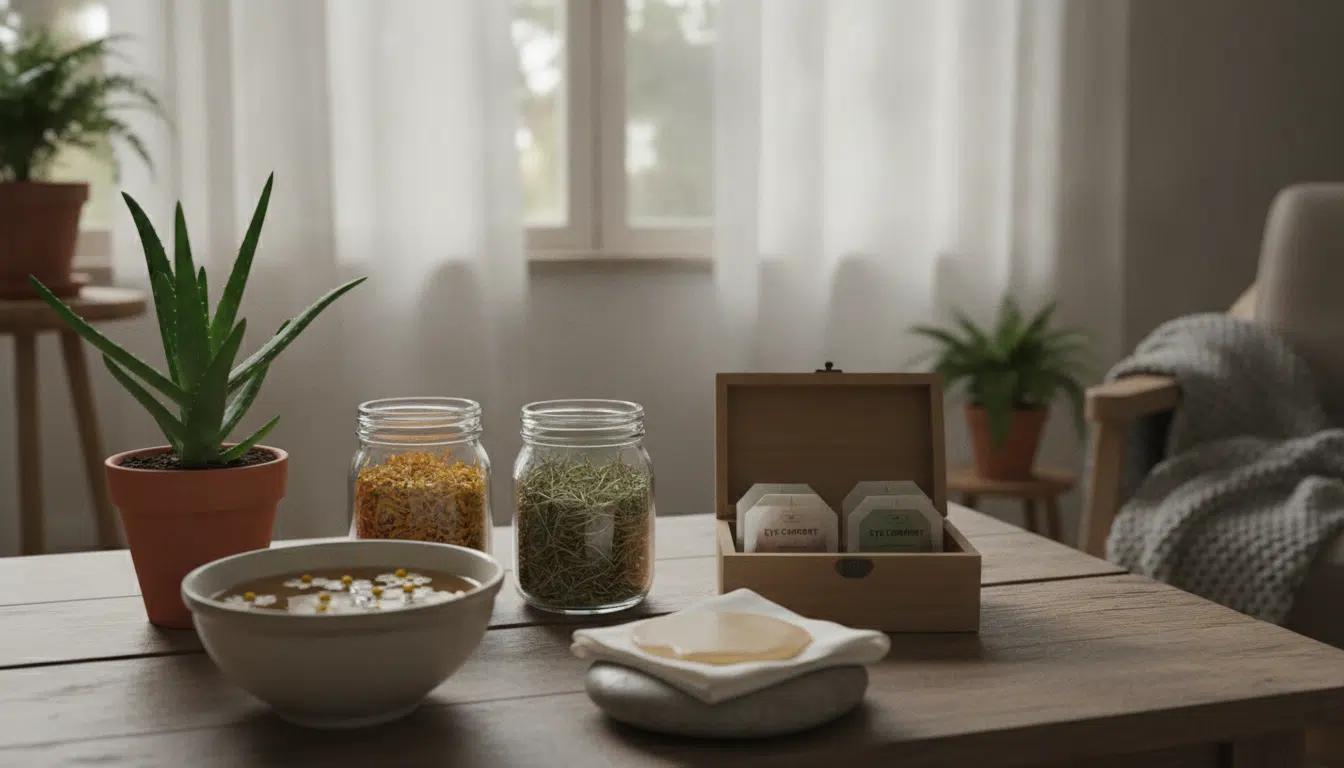
Compresses. Warm ones for infection, which loosen crusting and soothe. Cold ones for allergy, which calm swelling and itching. Clean cloth, five to ten minutes, and a fresh cloth for each eye if only one is affected.
Preservative-free artificial tears from a pharmacy. These are sterile, correctly balanced, and genuinely comfortable.[2] Single-use vials avoid any risk of contaminating a shared bottle.
Wiping discharge away with damp cotton wool, from the inner corner outward, a fresh piece each time.
Antihistamine drops if it’s allergic. They work quickly on the itching.
Time. Unglamorous, and it’s the main treatment for the commonest form.[4]
What to Skip, and Why
Don’t make your own saline eye drops. The recipe passed around online, a teaspoon of salt in a cup of water, produces a solution roughly two to three times saltier than your tears. Tear fluid sits near 0.9% salt; that mixture lands nearer 2.5%. On an inflamed eye it stings and irritates further.
The bigger problem is sterility. Home-boiled water isn’t sterile once it’s cooled in an open container, and the eye is one of the few places where that matters enormously. Non-sterile water is associated with serious eye infections, including organisms that are extremely difficult to treat and can cost sight.[3]
Pharmacy saline and preservative-free artificial tears cost very little and are manufactured sterile. There’s no reason to improvise this one.
Chamomile tea bags, cucumber and other kitchen remedies. Putting non-sterile plant material on an already-infected eye adds bacteria rather than removing them. Chamomile also belongs to the same plant family as ragweed, so it can trigger allergic reactions in exactly the people most likely to have allergic conjunctivitis.
Eye patches. Covering an infected, discharging eye traps warmth and moisture against the surface. Those are the conditions bacteria prefer, and patching isn’t recommended for conjunctivitis. Sunglasses handle light sensitivity without sealing the eye.
Leftover antibiotic drops from a previous infection or another person. They won’t touch a viral infection, they may be the wrong drug or out of date, and the bottle tip has been contaminated since it was opened.
“Redness relief” drops. They constrict blood vessels, treat nothing, and cause rebound redness with regular use.
Breast milk in the eye. Widely shared, not recommended, and not sterile.
Rubbing. It spreads infection between eyes and can scratch an inflamed cornea.
Stopping It Spreading
Viral and bacterial conjunctivitis both spread by touch, so handwashing does more than anything else.[1] Twenty seconds with soap, especially after touching your face or applying anything to the eye.
Separate towels, washcloths and pillowcases while it’s active, and change pillowcases often. Don’t share eye makeup, and throw away mascara or liner used during an infection.
If one eye is affected, treat the unaffected eye first and wash your hands in between.
Wipe down the things everyone touches: door handles, phones, remotes.
Contact Lenses
Stop wearing them at the first sign of symptoms, and don’t restart until the eye has looked and felt completely normal for a full day.
Throw away the lenses you were wearing, the solution and the case. All three can be contaminated and reinfect you.[3]
And if the eye is painful rather than just irritated, that’s not a home-treatment situation. Lens wearers are at real risk of corneal infection, which moves fast and can scar.
Pink Eye in Pregnancy
The safe options are the same ones that are safe for everyone: warm or cool compresses, pharmacy preservative-free artificial tears, careful wiping, and good hand hygiene.
The unsafe ones are the same too. Skip the homemade saline and the tea bags for the reasons above. Neither is safer for being “natural”, and pregnancy is not a reason to prefer improvised preparations over sterile ones.
Check with your midwife or doctor before using any medicated drops, including antihistamine or antibiotic drops. If you’re also dealing with dryness, our guide to dry eyes during pregnancy covers what changes and why.
When to See a Doctor
Beyond the urgent list at the top, get it looked at if:
- It’s no better after a week, or getting worse after two or three days
- There’s significant pain rather than irritation
- You have a fever alongside it
- Your immune system is suppressed, or you’re having chemotherapy
- It keeps coming back
- You have an existing eye condition or recent eye surgery
If your eyes feel gritty long after the redness settles, that’s usually dryness rather than lingering infection, and it’s treated differently.
Common Questions About Pink Eye Home Remedies
Can I make saline eye drops at home?
Pharmacy saline and preservative-free artificial tears are cheap and made sterile.
Do tea bags help pink eye?
Chamomile is also related to ragweed, so it can provoke allergy in the people most likely to have allergic conjunctivitis.
Should I cover the eye with a patch?
Sunglasses deal with light sensitivity without sealing anything in.
How long does pink eye last?
Worsening after two or three days is the point to get advice.
Do I need antibiotic drops?
Never use leftover drops from a previous infection or someone else’s prescription.
Can I wear contacts through it?
A painful eye in a lens wearer needs seeing the same day rather than home treatment.
The Bottom Line
The pink eye home remedies worth using are unexciting: compresses, sterile artificial tears from a pharmacy, careful wiping and thorough handwashing. Most cases resolve on their own within one to two weeks.
The ones to skip are the improvised ones: homemade saline, tea bags, patching, and anyone else’s leftover drops.
And if you wear contact lenses and the eye hurts, none of this applies. Lens out, seen today.
SOURCESOur Editorial Standards
HealthMagHub is built on primary sources: peer-reviewed research, clinical practice guidelines, and health agencies such as the NIH, CDC, and FDA. Read our editorial standards to see how we research, cite, and update our articles.
- Centers for Disease Control and Prevention. Conjunctivitis (Pink Eye). cdc.gov
- American Academy of Ophthalmology. Conjunctivitis: What Is Pink Eye? aao.org
- Centers for Disease Control and Prevention. Contact Lens Health. cdc.gov
- National Eye Institute. Pink Eye. nei.nih.gov
Disclaimer: This article is general information, not medical advice, and doesn't replace assessment by an eye care professional. Do not put homemade solutions, tap water, breast milk or plant material into your eye. Seek same-day care for a painful eye while wearing contact lenses, changed vision, severe pain or light sensitivity, a swollen tender eyelid with fever, any eye discharge in a baby under one month old, or chemical exposure (rinse for 15-20 minutes first). In pregnancy, check with your midwife or doctor before using any medicated eye drops.