The single most useful thing to know is which is which. It comes down to pain and vision rather than how red the eye looks. A dramatic-looking eye can be harmless. A mildly pink eye that hurts and blurs is not.
- Judge a red eye by pain and vision, not color. A dramatic-looking eye can be harmless; a mildly pink one that hurts is not.
- A red, painful eye in a contact lens wearer is treated as sight-threatening until proven otherwise. Lens out, seen the same day.
- “Redness relief” drops treat nothing and cause rebound redness with regular use. Artificial tears are the safe daily option.
- Severe pain with headache, nausea and halos around lights is an emergency, because it can be acute angle-closure glaucoma.
Red Eyes That Need Emergency Care Now
- Severe eye pain with a headache, nausea or vomiting, and halos around lights. This is acute angle-closure glaucoma, meaning pressure inside the eye is rising suddenly. It can destroy sight in a day and needs treating within hours, not at a routine appointment[3]
- Your vision has changed: gone blurry, dimmed, or partly disappeared
- Chemicals splashed in your eye. Start rinsing immediately with clean water or saline and keep going for at least 15-20 minutes, holding the lid open, before you travel. Irrigation first, transport second. Minutes matter more than the journey
- Any penetrating injury, or something embedded in the eye. Don’t try to remove it and don’t press on the eye
- You wear contact lenses and the eye is red and painful. Take the lens out and be seen the same day. More on this below
- Light hurts so much you can barely open the eye
What Red Eyes Actually Are
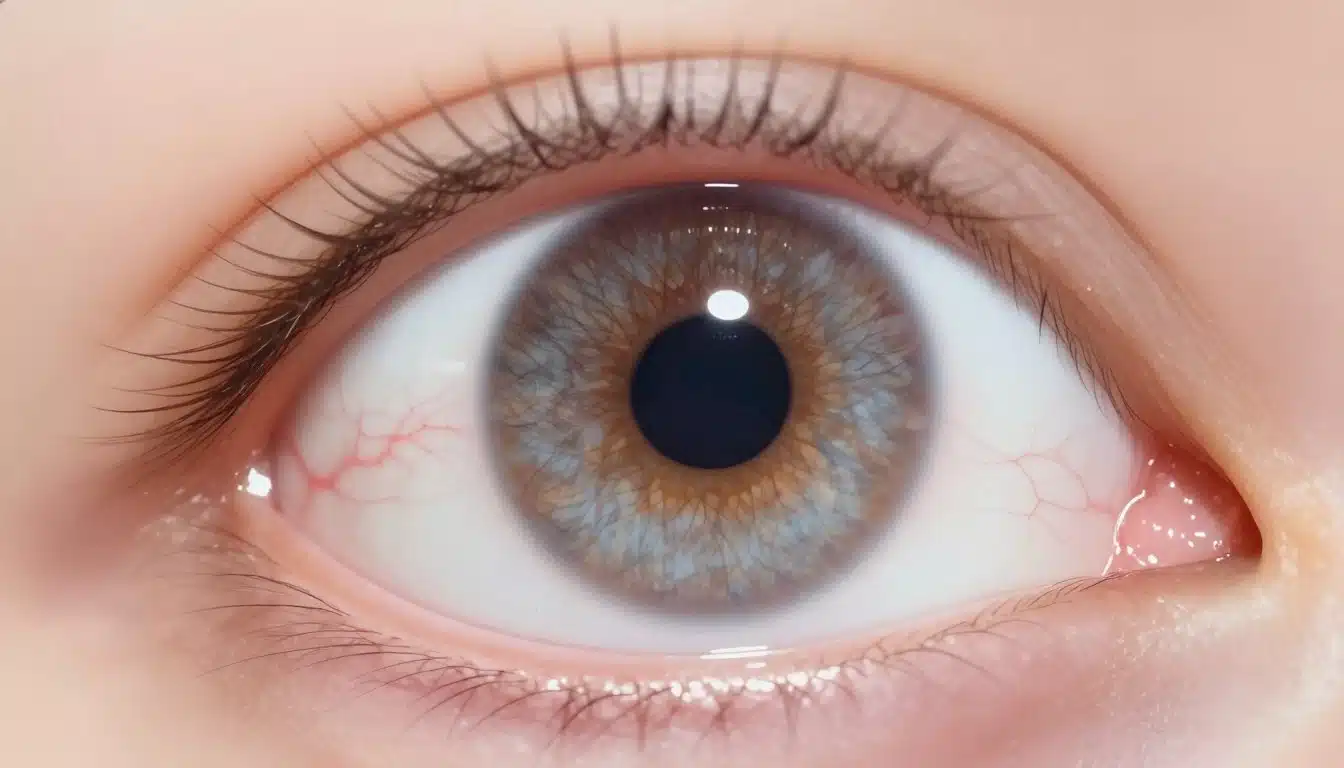
The white of your eye is covered by a thin transparent membrane, the conjunctiva, threaded with tiny blood vessels. Normally you can’t see them. When something irritates the surface, those vessels widen to deliver more blood, and the eye looks pink or red.
So redness is a response, not a diagnosis. It tells you the eye is reacting to something. It doesn’t tell you what.
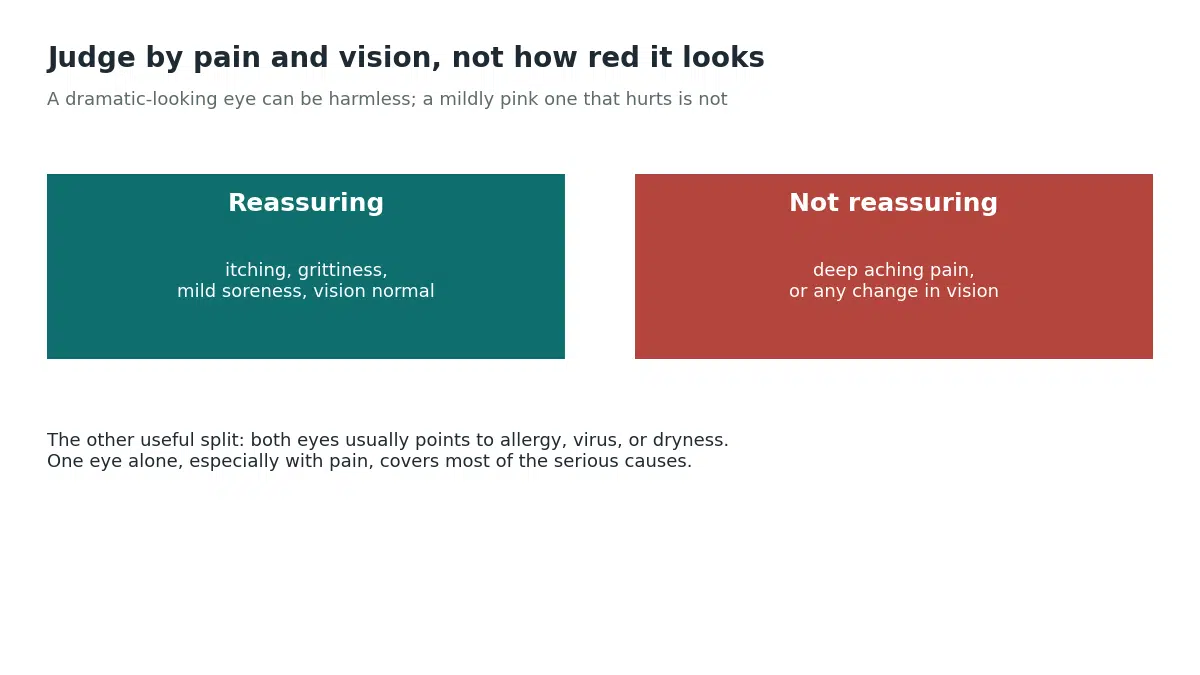
Two questions narrow it down quickly:
One eye or both? Both eyes together points toward allergy, viral infection, dryness or an irritant in the air. One eye alone, particularly with pain, raises the stakes, because most of the serious causes are one-sided.[1]
Does it hurt, and can you see normally? Itching, grittiness and mild soreness are reassuring. Deep aching pain, or any change in vision, is not.
The Everyday Causes of Red Eyes
Dry eye and screen work. You blink far less when concentrating, tears evaporate, and the surface gets irritated. Confusingly, dry eyes often water. Those are reflex tears, arriving too late and draining away too fast. Air conditioning, heating, wind and several common medications make it worse. Our guide to that sandpaper feeling in your eyes goes into the causes and what helps.
Allergy. Pollen, dust mites, pet dander and mold trigger histamine release, which swells the vessels. The giveaway is itching. Allergic eyes itch in a way infected eyes generally don’t, and it’s almost always both eyes.
Conjunctivitis. Viral is the commonest, usually alongside a cold, watery and highly contagious. Bacterial produces thicker yellow-green discharge and lids stuck together in the morning. Allergic isn’t contagious at all.[2] Our guide to what actually helps with pink eye covers the differences, and eye discharge in children deals with the version parents see most.
A burst blood vessel. A vivid scarlet patch on the white of the eye, appearing overnight, looks alarming and is usually harmless. It’s called a subconjunctival hemorrhage. It follows a hard sneeze, a cough, lifting something heavy, or nothing at all. The test is that it doesn’t hurt and doesn’t blur vision. It clears over one to two weeks like a bruise. Worth mentioning to a doctor if it keeps recurring, or if you take blood thinners.
Blepharitis and styes. Inflammation of the lid margins leaves lids red and swollen with crusting on the lashes. It tends to be chronic and responds to daily lid hygiene rather than a course of anything.
Red Eyes in Contact Lens Wearers Are Different
A red, painful eye in a contact lens wearer is treated as sight-threatening until proven otherwise.
Lenses raise the risk of microbial keratitis, an infection of the cornea. It can scar the cornea permanently and it moves quickly, sometimes over a day or two. Sleeping in lenses, topping up old solution, rinsing with tap water and stretching lenses past their replacement date all increase the risk.[4]
If your eye is red and sore: take the lens out, leave it out, and get seen the same day. Don’t wait to see whether it settles overnight, and don’t put a fresh lens in over an irritated eye. Keep the lens and its case, since they can be cultured.
Chronically red eyes in a lens wearer without pain are worth an appointment too. Lenses limit oxygen reaching the cornea, and over time new vessels can grow in where they shouldn’t. Daily disposables, or simply more days in glasses, usually help.
What Helps
Artificial tears are the sensible first step for dryness and irritation. If you need them more than four times a day, choose preservative-free, because preservatives themselves irritate with frequent use.
Antihistamine drops work quickly for allergic redness and itching. Combination drops that also stabilize mast cells last longer and suit seasonal use.
Cool compresses for allergy and general irritation; warm compresses for styes and blepharitis. It’s worth getting that the right way round.
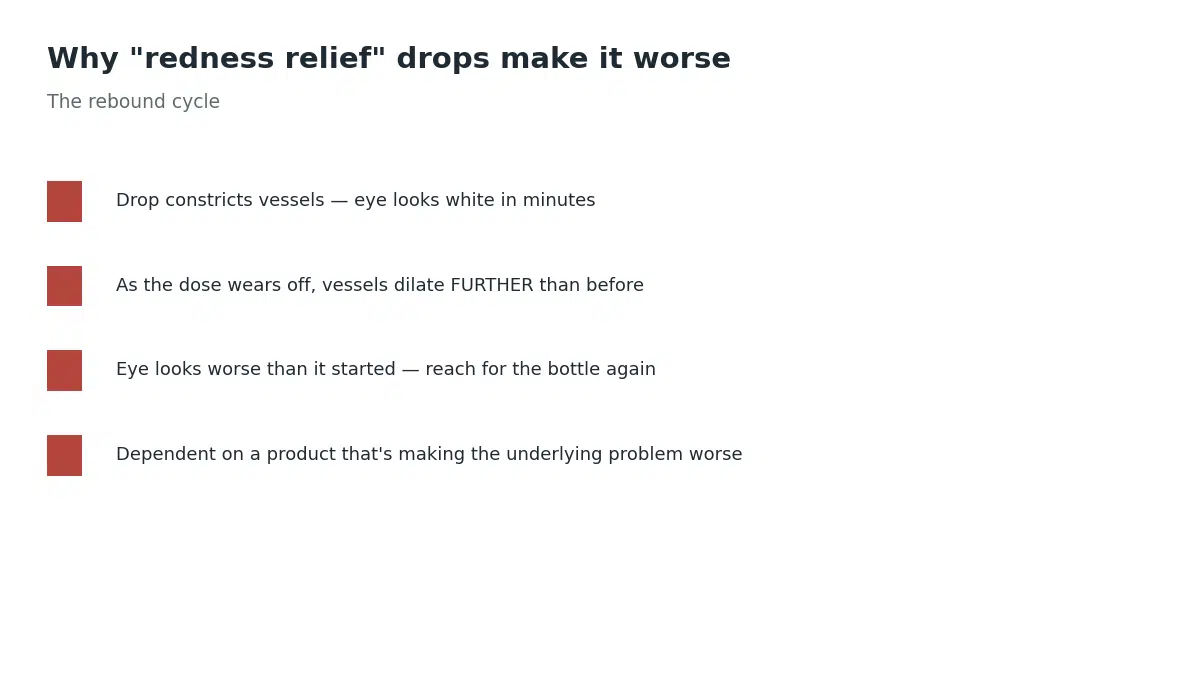
The one product worth avoiding. “Redness relief” drops work by constricting the blood vessels. They whiten the eye within minutes and treat nothing.
Used regularly they cause rebound redness. As each dose wears off the vessels dilate further, the eye looks worse than it started, and you reach for the bottle again. People end up dependent on a product that is steadily making the problem worse while masking whatever caused it.
If your eyes are red often enough that you’re buying these, that’s the reason to get them looked at.
Prescription options exist where those aren’t enough: antibiotic drops for bacterial infection, ciclosporin or lifitegrast for persistent dry eye, and steroid drops for inflammation. Steroids need supervision, because used unsupervised on the wrong diagnosis they can worsen a viral infection or raise eye pressure.
How to Get Red Eyes Less Often
Take screen breaks. Every 20 minutes, look at something roughly 20 feet away for 20 seconds. It works because it restores blinking as much as anything else.
Wear sunglasses outdoors against UV, wind and dust, and goggles when swimming, since chlorinated water strips the tear film.
Start allergy medication before your season rather than after symptoms arrive, keep windows shut on high pollen days, and rinse pollen off before bed rather than taking it to your pillow.
Don’t smoke. It’s a direct risk factor for dry eye and several serious eye diseases. And keep diabetes and blood pressure under control, since both show up in the eye.
When Red Eyes Need an Appointment
Separately from the emergencies above, arrange to be seen if:
- Redness has lasted more than a week without improving
- You’re using drops and nothing is changing
- It keeps coming back
- There’s thick discharge, or lids gluing shut each morning
- Vision seems slightly off, even subtly
- You have diabetes, high blood pressure or an autoimmune condition
Deep, boring pain in the eye, the kind that wakes you, deserves particular attention. Scleritis, inflammation of the eye’s outer wall, causes exactly that and is frequently linked to autoimmune disease.[1]
Common Questions About Red Eyes
How long should red eyes last?
More than a week without improvement is the point to get it checked.
One red eye or both: does it matter?
It’s the most useful thing you can tell a doctor over the phone.
Can I wear contacts if my eye is slightly red?
If it’s red and painful, take the lens out and be seen the same day. Corneal infection in lens wearers can scar sight permanently.
Are redness relief drops safe to use daily?
Artificial tears are the drop that’s safe for daily use.
Is a bright red patch on my eye serious?
See someone if it recurs, if you take blood thinners, or if it followed an injury.
Are red eyes contagious?
When unsure, wash hands often and don’t share towels or pillowcases.
The Bottom Line
Most red eyes are dryness, allergy or tiredness, and respond to artificial tears, a break from the screen and time.
Judge it by pain and vision rather than by color. An eye that itches is usually fine. An eye that hurts, blurs, or belongs to someone wearing contact lenses is not something to sleep on.
And severe pain with halos, headache and nausea is an emergency department visit tonight.
SOURCESOur Editorial Standards
HealthMagHub is built on primary sources: peer-reviewed research, clinical practice guidelines, and health agencies such as the NIH, CDC, and FDA. Read our editorial standards to see how we research, cite, and update our articles.
- American Academy of Ophthalmology. Red Eye: When to See an Ophthalmologist. aao.org
- Centers for Disease Control and Prevention. Conjunctivitis (Pink Eye). cdc.gov
- National Eye Institute. Glaucoma. nei.nih.gov
- Centers for Disease Control and Prevention. Contact Lens Health. cdc.gov
Disclaimer: This article is general information, not medical advice, and doesn't replace assessment by an eye care professional. Seek emergency care for severe eye pain with headache, nausea or halos around lights; any sudden change in vision; chemical exposure (irrigate first, for at least 15-20 minutes); penetrating injury; or a red painful eye while wearing contact lenses.