
The good news is that several natural methods have shown promise in removing surface stains and brightening teeth. These approaches use common household ingredients like baking soda, hydrogen peroxide, and coconut oil. Understanding how these methods work helps you make informed decisions about your oral hygiene routine.
This comprehensive guide explores proven natural ways to whiten teeth safely at home. You’ll discover the science behind each method, proper application techniques, and realistic expectations for results. We’ll also cover important safety considerations to protect your enamel while pursuing a brighter smile.
Understanding What Causes Tooth Discoloration
Before exploring whitening methods, understanding why teeth become discolored helps you choose the most effective approach. Tooth discoloration occurs through two primary mechanisms: extrinsic staining on the tooth surface and intrinsic staining within the tooth structure itself.
Extrinsic stains develop on the outer enamel layer from exposure to certain foods and beverages. Coffee, tea, red wine, and dark-colored berries contain pigmented molecules that adhere to enamel. Tobacco use also creates stubborn surface stains that accumulate over time.
Intrinsic discoloration affects the inner dentin layer of teeth. This type occurs from aging, certain medications, excessive fluoride exposure during childhood, or trauma to teeth. Intrinsic stains prove more challenging to address with natural methods alone.
Common Culprits Behind Stained Teeth
Dietary Factors
- Coffee and black tea consumption
- Red wine and dark sodas
- Berries and tomato-based sauces
- Dark chocolate and soy sauce
- Acidic foods that erode enamel
Lifestyle and Health Factors
- Tobacco smoking and chewing
- Poor oral hygiene habits
- Aging and natural enamel thinning
- Certain antibiotics and medications
- Excessive fluoride during development
How Natural Whitening Methods Work
Natural teeth whitening approaches typically work through one of several mechanisms. Mild abrasives physically scrub away surface stains without damaging enamel. Some ingredients contain natural bleaching properties that break down stain molecules. Others work by reducing bacteria and plaque that contribute to discoloration.
Understanding these mechanisms helps set realistic expectations. Natural methods excel at removing surface stains and preventing new discoloration. They work gradually over weeks or months rather than producing instant dramatic results. Consistency and proper technique determine success with these approaches.

Baking Soda: The Classic Natural Whitening Agent
Baking soda stands as one of the most researched natural ingredients for teeth whitening. This mild abrasive effectively removes surface stains while creating an alkaline environment in your mouth that discourages bacteria growth. Many commercial toothpaste brands include baking soda precisely because of these beneficial properties.
The gentle scrubbing action of baking soda particles helps lift stains from tooth enamel without causing excessive wear. Studies have demonstrated that toothpaste containing baking soda removes plaque more effectively than formulas without it. The alkaline nature also helps neutralize acids that can erode enamel and cause discoloration.
How to Use Baking Soda Safely
Creating a simple baking soda paste requires only two ingredients. Mix one tablespoon of baking soda with enough water to form a thick consistency. The paste should spread easily but not be runny. Some people add a few drops of peppermint oil for improved taste.
- Preparation: Mix 1 tablespoon baking soda with 2-3 teaspoons water to create a paste consistency.
- Application: Use a soft-bristled toothbrush to apply the paste gently across all tooth surfaces.
- Brushing: Brush in circular motions for 2 minutes, focusing on stained areas.
- Duration: Let the paste sit on teeth for an additional minute before rinsing.
- Rinsing: Rinse thoroughly with water to remove all residue from your mouth.
- Frequency: Use this method 2-3 times per week, not daily, to prevent enamel erosion.
Baking Soda Benefits and Precautions
Benefits
- Affordable and widely available
- Mild abrasive that removes surface stains
- Creates alkaline environment discouraging bacteria
- Supported by scientific research
- No harsh chemicals or additives
Precautions
- Overuse can wear down enamel
- May cause sensitivity in some people
- Gritty texture feels unpleasant initially
- Not effective for deep intrinsic stains
- Should not replace regular toothpaste entirely
Research Note: According to the American Dental Association, products containing baking soda have demonstrated safety and effectiveness for stain removal when used as directed. However, proper technique and frequency remain essential for protecting tooth enamel.
Hydrogen Peroxide: Natural Bleaching for Teeth
Hydrogen peroxide works as a natural bleaching agent that can lighten tooth color. This compound breaks down into water and oxygen, with the oxygen molecules penetrating tooth enamel to break apart stain compounds. Many professional whitening treatments use concentrated hydrogen peroxide as their active ingredient.
For home use, a diluted hydrogen peroxide solution provides safer whitening effects. The typical 3% hydrogen peroxide found in drugstores requires further dilution before use in your mouth. This concentration effectively removes stains while minimizing risks of irritation or enamel damage.
Proper Hydrogen Peroxide Application Methods
Using hydrogen peroxide safely requires proper dilution and technique. Never use undiluted peroxide directly on teeth, as this can damage soft tissues in your mouth. Always mix it with equal parts water to create a gentler solution suitable for oral use.
| Method | Dilution Ratio | Application Time | Frequency |
| Mouth Rinse | 1:1 (peroxide to water) | 1-2 minutes | Once daily before brushing |
| Paste with Baking Soda | 2 tsp peroxide to 1 tbsp baking soda | 2 minutes brushing | 2-3 times weekly |
| Direct Application | 1:2 (peroxide to water) | 30 seconds per area | Once every other day |
Safety Guidelines for Hydrogen Peroxide Use
While hydrogen peroxide offers whitening benefits, proper safety measures protect your oral health. Never swallow peroxide solutions, and avoid prolonged contact with gums or soft tissues. Some people experience temporary tooth sensitivity or gum irritation when starting peroxide treatments.
- Always dilute 3% hydrogen peroxide before oral use
- Limit contact time to prevent tissue irritation
- Stop use immediately if sensitivity or pain develops
- Do not use hydrogen peroxide more than once daily
- Rinse mouth thoroughly with plain water after application
- Store hydrogen peroxide in dark bottle away from light
- Consult a dentist if irritation persists beyond a few days
Important Safety Notice: High concentrations of hydrogen peroxide can damage tooth enamel and irritate soft tissues in your mouth. Use only 3% food-grade hydrogen peroxide diluted with equal parts water. If you experience burning, severe sensitivity, or white patches on gums, discontinue use and consult your dentist.
Oil Pulling: Ancient Practice for Modern Whitening
Oil pulling represents an ancient Ayurvedic practice that has gained modern popularity for oral health benefits. This technique involves swishing oil around your mouth for several minutes to remove bacteria and reduce plaque buildup. While primarily used for oral hygiene, many practitioners report teeth whitening as a secondary benefit.
The process works by the oil attracting and trapping bacteria that contribute to plaque formation and tooth discoloration. As you swish the oil around your mouth, it pulls toxins and bacteria from between teeth and along the gum line. Regular practice may gradually reduce surface stains and improve overall oral health.
Best Oils for Oil Pulling
Coconut oil has become the most popular choice for oil pulling due to its pleasant taste and antimicrobial properties. The lauric acid in coconut oil demonstrates effectiveness against harmful oral bacteria. Sesame oil and sunflower oil also work well for this practice, though they lack coconut oil’s antimicrobial benefits.
Coconut Oil Benefits
- Contains antimicrobial lauric acid
- Pleasant taste makes practice easier
- Solid at room temperature for easy measuring
- Reduces harmful bacteria in mouth
- May help reduce plaque and gingivitis
Oil Pulling Technique
- Use 1 tablespoon of oil on empty stomach
- Swish gently for 15-20 minutes
- Do not swallow the oil
- Spit into trash (not sink to avoid clogs)
- Rinse mouth with warm water
- Brush teeth normally afterward
What to Expect from Oil Pulling
Starting oil pulling requires patience and consistency. Most people find the first few sessions challenging due to the unusual sensation and duration. Begin with 5 minutes and gradually increase to 15-20 minutes as you become comfortable with the process.
Whitening results from oil pulling develop slowly over several weeks of daily practice. This method primarily prevents new stains by reducing plaque and bacteria rather than actively bleaching existing discoloration. Many users report fresher breath and healthier gums as additional benefits alongside gradual whitening effects.
More Natural Approaches to Teeth Whitening
Beyond the primary methods of baking soda, hydrogen peroxide, and oil pulling, several other natural ingredients show promise for teeth whitening. These alternatives offer variety for people seeking different approaches or experiencing sensitivity with other methods.
Apple Cider Vinegar Rinse
Apple cider vinegar contains acetic acid that may help break down stains and kill bacteria in your mouth. However, the acidic nature requires extreme caution. Always dilute apple cider vinegar substantially (1 part vinegar to 10 parts water) and limit use to once or twice weekly to prevent enamel erosion.
Activated Charcoal
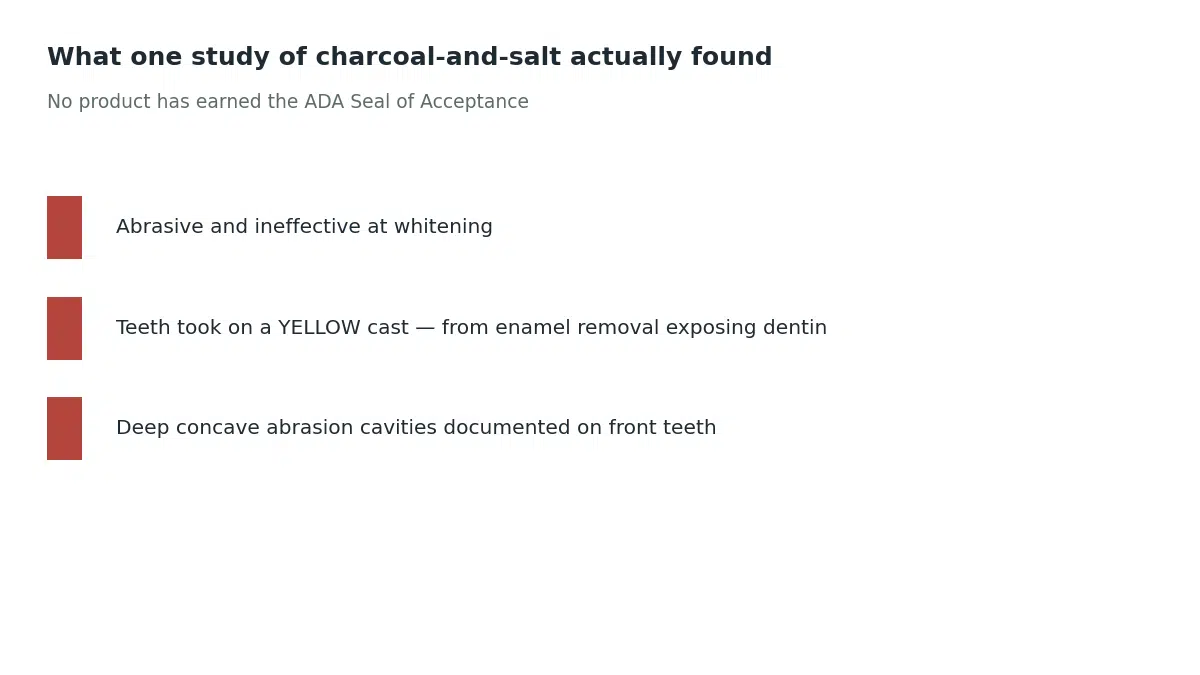
Activated charcoal has gained popularity for teeth whitening despite limited scientific evidence. This highly porous substance may bind to surface stains and remove them through mechanical action. Use food-grade activated charcoal sparingly, as its abrasiveness could potentially damage enamel with frequent application.
Fruit Peels and Strawberries
Some people rub orange or banana peels on teeth or mash strawberries into a paste for whitening. Strawberries contain malic acid that might help remove surface discoloration. However, these fruits also contain sugars and acids that can harm enamel. Limited research supports these methods compared to other approaches.
| Natural Method | Key Ingredient | Safety Level | Effectiveness Evidence |
| Baking Soda | Sodium bicarbonate | High when used properly | Strong scientific support |
| Hydrogen Peroxide | H2O2 (diluted) | Moderate (requires dilution) | Strong research backing |
| Oil Pulling | Coconut or sesame oil | Very high | Moderate traditional evidence |
| Apple Cider Vinegar | Acetic acid | Low (highly acidic) | Limited scientific data |
| Activated Charcoal | Carbon particles | Moderate (very abrasive) | Minimal research |
| Fruit Peels | Various fruit acids | Low (acidic, sugary) | Anecdotal only |
Foods That Help or Harm Tooth Color

Your daily dietary choices significantly impact tooth color over time. Certain foods naturally clean teeth as you eat them, while others contribute to staining and discoloration. Understanding which foods support or hinder whiteness helps you make informed choices for maintaining your smile.
Foods That Naturally Clean and Whiten
Crunchy fruits and vegetables act as natural toothbrushes, scrubbing away surface debris and stimulating saliva production. The increased saliva helps neutralize acids and wash away food particles. These foods also contain vitamins and minerals that support overall oral health.
Teeth-Friendly Foods
- Apples, celery, and carrots (crunchy texture)
- Cheese and dairy products (calcium-rich)
- Nuts and seeds (protein and healthy fats)
- Leafy greens (vitamins and minerals)
- Sugar-free gum with xylitol
- Plain water (rinses away debris)
Stain-Causing Foods
- Coffee and black tea (dark pigments)
- Red wine and dark sodas
- Berries and tomato sauce
- Curry and turmeric dishes
- Soy sauce and balsamic vinegar
- Candy and sugary treats
Strategic Eating for Whiter Teeth
You don’t need to eliminate stain-causing foods entirely from your diet. Strategic timing and habits minimize their impact on tooth color. Drinking water immediately after consuming staining beverages helps wash away pigments before they set into enamel.
Using a straw for dark beverages reduces contact with front teeth surfaces. Eating cheese or crunchy vegetables after meals stimulates saliva production and helps clean teeth naturally. Brushing 30-60 minutes after eating acidic or staining foods protects enamel while removing potential discoloration.
Essential Oral Hygiene for Maintaining White Teeth
Natural whitening methods work best when combined with excellent oral hygiene practices. Daily care prevents new stains from forming and maintains results achieved through whitening efforts. These fundamental habits form the foundation of any successful teeth whitening strategy.
Proper Brushing Technique
Effective brushing removes plaque and surface stains before they set into enamel. Use a soft-bristled toothbrush to avoid damaging gums and enamel. Hold your brush at a 45-degree angle to the gum line and use gentle circular motions rather than harsh back-and-forth scrubbing.
- Timing: Brush for a full 2 minutes twice daily, morning and before bed.
- Toothpaste Amount: Use a pea-sized amount of fluoride toothpaste on your brush.
- Technique: Angle bristles at 45 degrees toward gum line and use small circular motions.
- All Surfaces: Clean outer surfaces, inner surfaces, and chewing surfaces of all teeth.
- Tongue Cleaning: Gently brush your tongue to remove bacteria and freshen breath.
- Rinsing: Rinse thoroughly with water to remove loosened debris and toothpaste residue.
Flossing and Additional Tools
Brushing alone cannot reach between teeth where stains and plaque accumulate. Daily flossing removes food particles and bacteria from these tight spaces. This prevents discoloration between teeth and reduces overall plaque buildup that contributes to yellowing.
Consider adding a tongue scraper to your routine to remove bacteria that cause bad breath and contribute to oral health issues. Water flossers provide an alternative for people who find traditional flossing difficult. These tools use pressurized water to clean between teeth and along the gum line.
Natural Methods vs. Professional Teeth Whitening
Understanding how natural approaches compare to professional teeth whitening helps set realistic expectations. Both methods have distinct advantages and limitations depending on your specific situation, budget, and desired timeline for results. For a look at in-office options, see our guide to dental laser whitening.
Advantages of Natural Whitening Methods
Natural approaches offer several benefits that make them attractive for many people. The affordability stands out as a primary advantage, with most methods using inexpensive household ingredients. You can perform these treatments at home on your own schedule without appointments.
- Significantly lower cost than professional treatments
- No dental appointments or time off work required
- Gentler on sensitive teeth and gums
- Control over ingredients and application frequency
- Gradual results that look more natural
- Preventive benefits for oral health beyond whitening
When Professional Whitening Makes Sense
Professional whitening treatments use higher concentrations of bleaching agents under controlled conditions. These procedures deliver faster, more dramatic results than natural methods can achieve. A dentist can also address underlying dental issues that might interfere with whitening success.
Consider professional whitening if you have severe intrinsic stains from medications or trauma. Deep discoloration within tooth structure responds poorly to natural surface treatments. Professional procedures also suit people wanting dramatic improvement for an important upcoming event.
| Factor | Natural Methods | Professional Treatment |
| Cost | $5-20 for supplies | $300-1000+ per treatment |
| Timeline for Results | 4-8 weeks of consistent use | 1-3 sessions over 2-6 weeks |
| Whitening Degree | 1-3 shades lighter | 5-10 shades lighter |
| Best For | Surface stains, maintenance | Deep stains, fast results |
| Sensitivity Risk | Low to moderate | Moderate to high (temporary) |
| Convenience | Home use, flexible timing | Requires appointments |
| Supervision | Self-directed | Dentist monitored |
Safety Guidelines and Potential Risks
While natural whitening methods generally prove safer than harsh chemical treatments, proper technique and moderation remain essential. Understanding potential risks helps you avoid damaging your enamel or irritating soft tissues in your mouth while pursuing a whiter smile.
Protecting Your Enamel
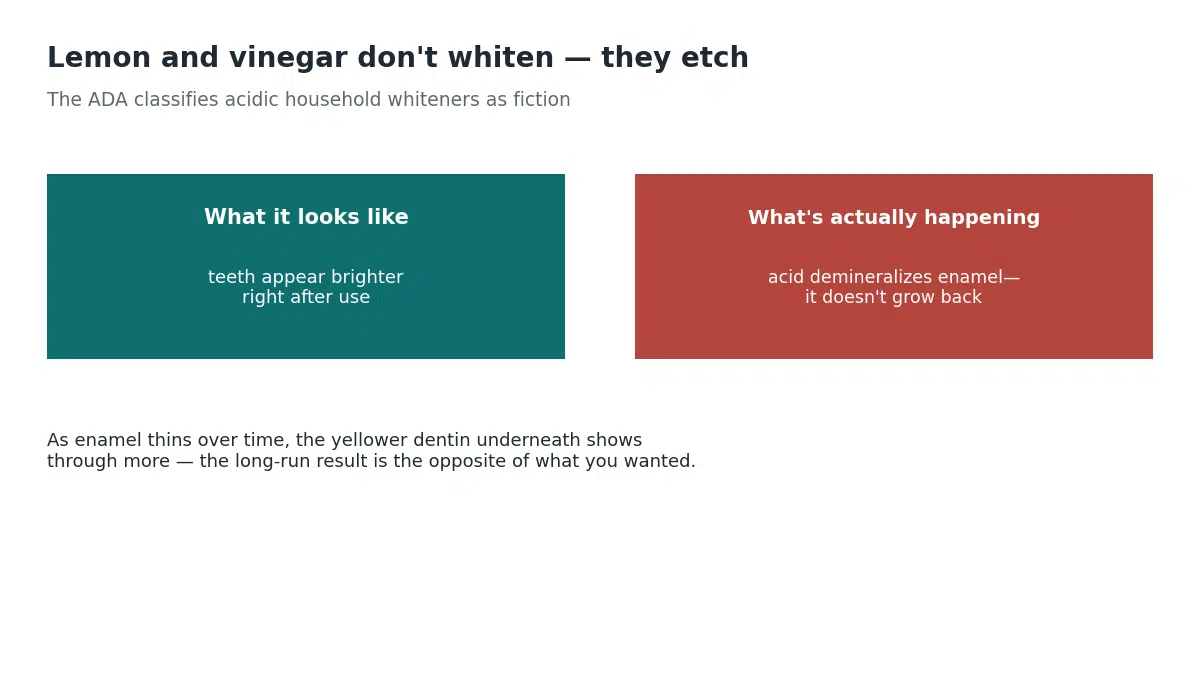
Tooth enamel represents the hardest substance in your body, but it can still suffer damage from excessive abrasion or acid exposure. Once enamel wears away, it cannot regenerate. Thinned enamel exposes the yellowish dentin layer beneath, actually making teeth appear more discolored.
Limit abrasive treatments like baking soda to 2-3 times weekly rather than daily use. Allow at least 30 minutes between consuming acidic substances and brushing to let enamel reharden. Use a soft-bristled toothbrush and gentle pressure to minimize mechanical wear on tooth surfaces.
Recognizing Warning Signs
Pay attention to your body’s signals when trying natural whitening methods. Certain symptoms indicate you should reduce frequency or discontinue a particular approach. Persistent issues warrant professional evaluation to prevent lasting damage.
Stop Immediately If You Experience:
- Sharp pain or increased sensitivity to hot and cold
- Bleeding gums or tissue irritation around mouth
- White patches or burns on gums or cheeks
- Translucent edges appearing on front teeth
- Persistent discomfort lasting beyond treatment time
Special Considerations for Different People
Certain groups should exercise extra caution with natural whitening approaches. Children and teenagers have thinner enamel that’s more susceptible to damage. Pregnant women should avoid hydrogen peroxide and other chemical ingredients as a precautionary measure.
People with dental restorations should know that natural methods won’t lighten crowns, veneers, or fillings. This can create uneven coloration if natural teeth whiten while restorations maintain their original shade. Consult your dentist about whether whitening makes sense with existing dental work.
Setting Realistic Expectations for Natural Whitening
Understanding what natural methods can and cannot achieve prevents disappointment. These approaches work best for removing surface stains and maintaining results rather than dramatically transforming tooth color. Patience and consistency determine success with natural whitening.
Timeline for Visible Results
Natural whitening delivers gradual improvements over weeks rather than instant dramatic changes. Most people notice subtle brightening after 2-3 weeks of consistent daily or alternate-day treatments. Maximum results typically appear after 4-8 weeks of regular use.
The degree of whitening varies based on original tooth color, stain type, and method chosen. Surface stains from coffee or tobacco respond better than intrinsic discoloration teeth. Natural methods typically lighten teeth by 1-3 shades, while professional treatments can achieve 5-10 shades of improvement.
Maintaining Your Results
Once you achieve your desired shade, maintenance efforts preserve your brighter smile. Reduce treatment frequency to once or twice weekly rather than daily application. Continue excellent oral hygiene habits and make strategic dietary choices to prevent new stains from forming.
Consider natural whitening methods as long-term lifestyle practices rather than temporary fixes. Regular maintenance prevents gradual discoloration from accumulating. This approach proves more sustainable and healthier for your teeth than repeated intensive whitening cycles.
When to Consult a Dental Professional
While natural methods work well for many situations, some circumstances require professional evaluation and treatment. Recognizing when to seek dentist guidance ensures you address underlying issues rather than just surface discoloration.
Signs You Need Professional Assessment
Severe or uneven discoloration may indicate underlying dental problems beyond simple staining. Single teeth that darken dramatically could signal internal damage or infection. Professional examination determines whether whitening appropriately addresses your specific situation.
- Sudden darkening of one or more teeth
- Pain or sensitivity accompanying discoloration
- Uneven coloring or spots on tooth surfaces
- Gray or brownish tones rather than yellow
- Discoloration after trauma or dental procedures
- No improvement after 8 weeks of consistent natural treatments
Professional Guidance Enhances Natural Efforts
A dentist can provide personalized recommendations based on your specific tooth condition and oral health status. Professional cleaning removes tartar buildup that natural methods cannot address. This creates a better foundation for natural whitening approaches to work effectively.
Your dentist can also identify whether existing dental work needs replacement before pursuing whitening. They may suggest professional treatments for severe stains while recommending natural methods for maintenance. This combined approach often delivers the best long-term results.
Frequently Asked Questions About Natural Teeth Whitening
Do natural ways to whiten teeth really work?
Natural ways to whiten teeth can effectively remove surface stains and brighten your smile by 1-3 shades. Methods like baking soda and hydrogen peroxide have scientific research supporting their effectiveness for removing extrinsic stains. However, they work gradually over several weeks rather than producing instant dramatic results.
These approaches excel at maintaining tooth color and preventing new discoloration. They prove less effective for deep intrinsic stains from medications, aging, or trauma. Consistency and proper technique determine success with natural whitening methods.
How long does it take to see results from natural teeth whitening?
Most people notice subtle improvements after 2-3 weeks of consistent daily or alternate-day treatments. Maximum results typically appear after 4-8 weeks of regular use. The timeline varies based on original tooth color, stain severity, and chosen method.
Surface stains from coffee or tobacco respond faster than deeper discoloration. Patience remains essential, as natural methods work gradually rather than producing overnight changes. Consistency matters more than intensity for achieving and maintaining results.
Is baking soda safe for whitening teeth?
Baking soda is generally safe for teeth whitening when used properly. This mild abrasive effectively removes surface stains without excessive enamel damage. Many commercial toothpastes include baking soda precisely because research supports its safety and effectiveness.
However, overuse can wear down enamel over time. Limit baking soda treatments to 2-3 times weekly rather than daily application. Use gentle brushing motions and avoid excessive pressure. People with sensitive teeth or thin enamel should consult a dentist before starting baking soda treatments.
Can I use hydrogen peroxide straight from the bottle?
Never use undiluted hydrogen peroxide directly on your teeth. The typical 3% solution found in drugstores requires dilution with equal parts water before oral use. Undiluted peroxide can irritate gums and soft tissues around mouth while potentially damaging enamel.
Always mix hydrogen peroxide 1:1 with water for mouth rinsing or 2 teaspoons peroxide with 1 tablespoon baking soda for paste application. Limit contact time to 1-2 minutes and rinse thoroughly afterward. Stop use immediately if burning or irritation occurs.
How does oil pulling whiten teeth?
Oil pulling may gradually whiten teeth by reducing bacteria mouth and plaque buildup that contribute to discoloration. The oil attracts and traps bacteria as you swish it around your mouth for 15-20 minutes. This removes stain-causing substances before they accumulate on tooth surfaces.
Coconut oil proves most popular due to antimicrobial properties from lauric acid. However, oil pulling works primarily through prevention rather than active bleaching. Results appear gradually over weeks of daily practice. This method works best combined with other whitening approaches and excellent oral care.
Which foods help naturally whiten teeth?
Crunchy fruits and vegetables like apples, grapes, celery, and carrots act as natural tooth scrubbers. Their texture helps remove surface debris while stimulating saliva production that neutralizes acids and washes away food particles. Dairy products provide calcium that strengthens enamel.
Strawberries contain malic acid that may help remove surface stains teeth. Sugar-free gum with xylitol stimulates saliva and reduces bacteria. Plain water remains your best beverage choice for maintaining white teeth by rinsing away staining substances throughout the day.
What foods and drinks should I avoid for whiter teeth?
Coffee, black tea, and red wine top the list of stain-causing beverages due to dark pigments called tannins. Dark sodas, berry juices, and sports drinks also contribute to discoloration. Foods like curry, turmeric, tomato sauce, and soy sauce contain intense pigments that adhere to enamel.
You don’t need to eliminate these entirely. Drink staining beverages through a straw to minimize contact with front teeth. Rinse your mouth with water immediately after consumption. Wait 30-60 minutes before brushing to avoid spreading acids across tooth surfaces.
Can natural methods damage tooth enamel?
Natural whitening methods can potentially damage enamel if used incorrectly or too frequently. Excessive use of abrasive substances like baking soda or activated charcoal can wear down enamel over time. Highly acidic ingredients like lemon juice or undiluted apple cider vinegar erode enamel quickly.
Protect your enamel by limiting abrasive treatments to 2-3 times weekly, always diluting acidic substances, using soft-bristled toothbrushes, and avoiding excessive pressure. Stop immediately if you experience sensitivity, pain, or notice translucent edges appearing on teeth. Proper technique and moderation keep natural methods safe.
Is activated charcoal effective for teeth whitening?
Activated charcoal has gained popularity for teeth whitening, but scientific evidence supporting its effectiveness remains limited. The highly porous structure may bind to surface stains and remove them through mechanical action. However, charcoal’s extreme abrasiveness raises concerns about enamel damage with regular use.
If you choose to try activated charcoal, use food-grade versions sparingly (once weekly maximum). Apply gently without scrubbing and rinse thoroughly. Better-researched natural methods like baking soda and hydrogen peroxide offer more reliable results with established safety profiles.
Should I brush immediately after eating acidic foods?
Never brush immediately after consuming acidic foods or beverages. Acids temporarily soften tooth enamel, making it vulnerable to abrasion. Brushing during this weakened state can accelerate enamel erosion and increase discoloration risk by exposing yellowish dentin beneath.
Wait at least 30-60 minutes after acid exposure before brushing. During this time, your saliva naturally neutralizes acids and allows enamel to reharden. Rinse your mouth with plain water immediately after acidic consumption to help speed this process. This protective approach maintains enamel integrity while removing staining substances.
How often should I use natural whitening methods?
Frequency depends on the specific method you’re using. Baking soda treatments work best at 2-3 times weekly to avoid excessive enamel wear. Hydrogen peroxide rinses can be used once daily when properly diluted. Oil pulling is safe for daily practice since it doesn’t involve abrasion or chemicals.
Start with lower frequency and gradually increase if no sensitivity develops. Monitor your tooth and gum response carefully. Once you achieve desired results, reduce to maintenance frequency of once or twice weekly. Consistency matters more than intensity for safe, effective natural whitening.
Will natural whitening work on dental crowns or veneers?
Natural whitening methods do not change the color of dental restorations like crowns, veneers, or fillings. These materials maintain their original shade regardless of whitening treatments. If your natural teeth lighten while restorations stay the same color, you may end up with uneven coloration.
Consult your dentist before starting whitening if you have visible dental work on front teeth. They can assess whether whitening makes sense or if you might need restoration replacement to match newly whitened natural teeth. This planning prevents disappointing mismatched results.
Can I combine multiple natural whitening methods?
You can safely combine complementary natural whitening approaches for enhanced results. For example, practice oil pulling daily while using baking soda paste 2-3 times weekly. The gentle oil pulling supports oral health without adding abrasion, while periodic baking soda treatments target surface stains.
Avoid combining multiple abrasive or chemical methods simultaneously, as this increases risk of enamel damage. Don’t use baking soda and activated charcoal on the same day. Space different treatments throughout the week. Monitor sensitivity carefully when using multiple approaches together.
Why are my teeth getting more yellow as I age?
Tooth yellowing with age occurs through multiple natural processes. The outer enamel layer gradually thins over decades of use, allowing the naturally yellowish dentin beneath to show through more prominently. This intrinsic yellowing differs from surface stains and responds poorly to external whitening methods.
Additionally, years of stain accumulation from foods, beverages, and lifestyle habits contribute to progressive discoloration. Microscopic cracks in enamel trap debris more easily over time. While natural methods can address surface concerns, severe age-related yellowing may require professional treatments for significant improvement.
Are whitening toothpastes better than natural methods?
Whitening toothpaste and natural methods work through similar mechanisms – mild abrasives that remove surface stains. Many whitening toothpastes contain baking soda or similar ingredients you’d use in natural treatments. The advantage of commercial products lies in optimized formulations and convenience.
Natural methods offer more control over ingredients and cost significantly less. Whitening toothpastes provide consistent dosing and added fluoride for cavity protection. Consider using whitening toothpaste for daily maintenance while incorporating natural treatments like oil pulling or periodic baking soda applications for enhanced results.
How do I know if tooth discoloration indicates a dental problem?
Certain discoloration patterns warrant professional evaluation. Sudden darkening of a single tooth may indicate internal damage, nerve death, or infection requiring treatment. Gray or brownish tones rather than yellow often signal intrinsic issues beyond surface staining.
White spots or chalky patches can indicate enamel defects or early decay. Uneven coloring or distinct lines on teeth may result from developmental issues or past illnesses. Any discoloration teeth accompanied by pain, sensitivity, or swelling requires prompt dental examination. When in doubt, consult your dentist before attempting whitening.
Can children and teenagers use natural teeth whitening methods?
Children and teenagers should exercise caution with teeth whitening due to thinner, more porous enamel still developing. The American Dental Association recommends waiting until permanent teeth fully develop before pursuing whitening treatments. This typically occurs around age 14-16, though individual development varies.
Focus on prevention and excellent oral hygiene for younger individuals rather than active whitening. If discoloration concerns arise in children, consult a pediatric dentist to identify underlying causes. Good brushing habits, limited staining foods, and regular dental care maintain natural tooth brightness during developmental years.
What should I do if natural whitening causes tooth sensitivity?
Tooth sensitivity during whitening indicates enamel irritation or exposure of underlying dentin. Stop the treatment causing sensitivity immediately and allow several days for teeth to recover. Switch to sensitivity toothpaste containing potassium nitrate, which helps calm nerve responses.
When resuming whitening, reduce frequency and duration of treatments. Ensure proper dilution of any chemical ingredients like hydrogen peroxide. Try gentler methods like oil pulling that don’t involve abrasion or chemicals. If sensitivity persists beyond a week after stopping treatments, schedule a dental examination to rule out underlying problems.
How long do results from natural teeth whitening last?
Results duration depends on your maintenance habits and lifestyle factors. With excellent oral hygiene and limited staining foods, natural whitening results can last 3-6 months before requiring touch-up treatments. Regular consumers of coffee, tea, or tobacco may need more frequent maintenance.
Transition from intensive whitening (several times weekly) to maintenance mode (once weekly) after achieving desired results. Continue good oral care practices and strategic dietary choices. Periodic touch-ups prevent gradual stain accumulation from reversing your whitening efforts. Think of natural whitening as an ongoing practice rather than one-time fix.
Building Your Natural Teeth Whitening Routine

Discovering effective natural ways to whiten teeth empowers you to take control of your oral health and appearance. These time-tested methods offer safe, affordable alternatives to harsh chemical treatments. Success comes from understanding how each approach works and applying proper techniques consistently.
Remember that natural whitening delivers gradual improvements rather than overnight transformations. Patience and realistic expectations prevent disappointment while protecting your tooth enamel. Most people achieve satisfying results by combining multiple complementary methods within a comprehensive oral care routine.
The foundation of any whitening strategy remains excellent daily oral hygiene. Brushing twice daily, flossing regularly, and making strategic dietary choices prevent new stains from forming. Natural whitening methods enhance these fundamental practices by actively removing existing discoloration and maintaining brightness.
Consider starting with well-researched approaches like baking soda paste 2-3 times weekly combined with daily oil pulling. This combination provides both active stain removal and preventive bacterial reduction. Monitor your sensitivity and adjust frequency based on your individual response.
Don’t hesitate to consult your dentist before beginning any whitening regimen, especially if you have existing dental work or underlying oral health concerns. Professional guidance helps you choose the safest, most effective approach for your specific situation while identifying any issues that need addressing before pursuing cosmetic improvements. If gum health is also a concern, our guide on vitamins for receding gums covers complementary care, and if you’re curious about oral probiotics, see our ProDentim review.
Your journey toward a brighter smile starts with informed choices and consistent action. Explore our health and wellness blog for more evidence-based guidance on natural health approaches. Small daily efforts accumulate into lasting improvements that enhance both your appearance and oral health.
Medical Disclaimer
Important Health Information
The content provided in this article serves educational and informational purposes only. It should not replace professional medical advice, diagnosis, or treatment from qualified healthcare providers. Always consult with licensed dental professionals regarding questions about oral health conditions, whitening treatments, or dental concerns.
Individual results from natural teeth whitening methods vary significantly based on tooth condition, stain type, enamel health, and genetic factors. The information presented here may not apply to your specific situation. Before implementing any whitening regimen, especially if you have sensitive teeth, dental restorations, gum disease, or other oral health issues, seek personalized guidance from your dentist.
While research supports various natural whitening approaches, individual responses differ. Some people may experience sensitivity, irritation, or unsatisfactory results. The methods described represent general guidelines, which continue to evolve as new research emerges. No natural approach can guarantee specific whitening outcomes or prevent all dental problems.
If you experience pain, persistent sensitivity, tissue damage, or adverse reactions after using any whitening method, discontinue use immediately and consult dental professionals. Pregnant or breastfeeding women should discuss any oral care changes with healthcare providers before proceeding.
HealthMagHub does not endorse specific products, brands, or commercial interests. Information presented aims to educate readers about natural oral care options and dental health principles. Reliance on any information provided remains solely at your own discretion and risk.
This article does not create a dentist-patient relationship. For personalized dental care, diagnosis, or treatment recommendations, establish relationships with qualified local dental professionals who can assess your individual circumstances and provide appropriate care.